Children’s Room Decor:I’ve designed many spaces—for clients, for friends, and yes, for my kids. The one thing I’ve learned? A child’s room isn’t about perfection. It’s about imagination, practicality, and a place where both can live peacefully (most days).
For years, I chased “Pinterest-perfect” rooms that stayed spotless for exactly five minutes. Now I focus on something else: rooms that grow with my kids, feel comfortable to live in, and can handle snack crumbs, pillow forts, and creative chaos.
What You’ll Learn Here
How I approach children’s room decor without losing my sanity
My go-to ideas for creative furniture that adapts to play and growth
Why I adore a simple wooden wall hanging more than a neon sign
Ways I rotate kids’ wall art without turning it into a full-time job
Bonus tips: color, lighting, storage, and staying realistic
1. Children’s Room Decor: Where Practical Meets Play
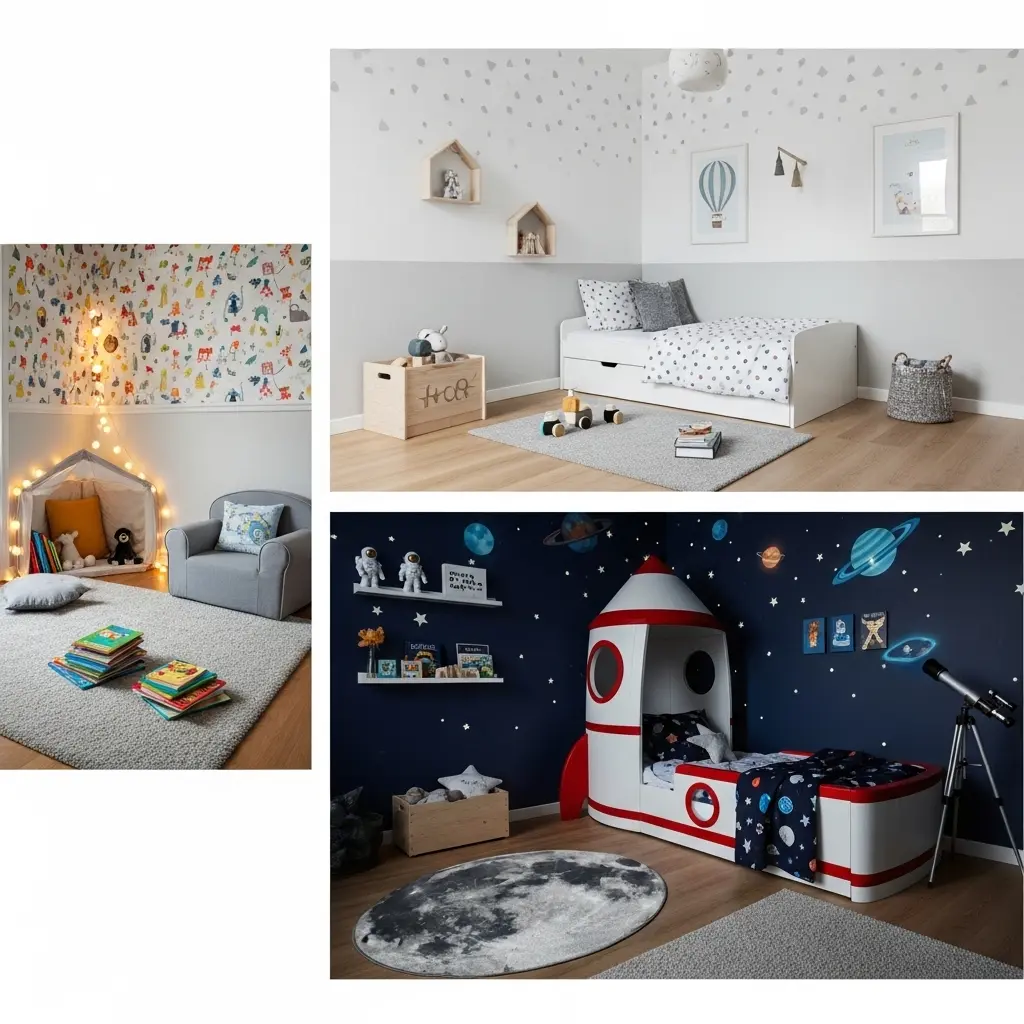
I used to think children’s room decor had to follow a theme. You can incorporate themes such as dinosaurs, princesses, or superheroes into your decor. But my kids taught me otherwise. They grow fast, and their “favorite thing ever” lasts about two months. So I’ve learned to start with a calm base—walls, rug, main furniture—and sprinkle the “fun” in layers that can change easily.
I choose washable paint (because markers happen), rugs that hide crumbs, and neutral storage that can outlive the toy phase. From there, I let personality shine through art, textiles, and lighting.
When I design a kid’s room now, my rule is simple: if it’s too fragile, too white, or too expensive, it belongs somewhere else. The decor should invite play, not panic.
Pro tip: mix shapes and textures rather than matching everything. Kids notice when things feel fun—a round lamp beside a square table adds visual joy without chaos.
2. Creative Furniture That Actually Works for Kids
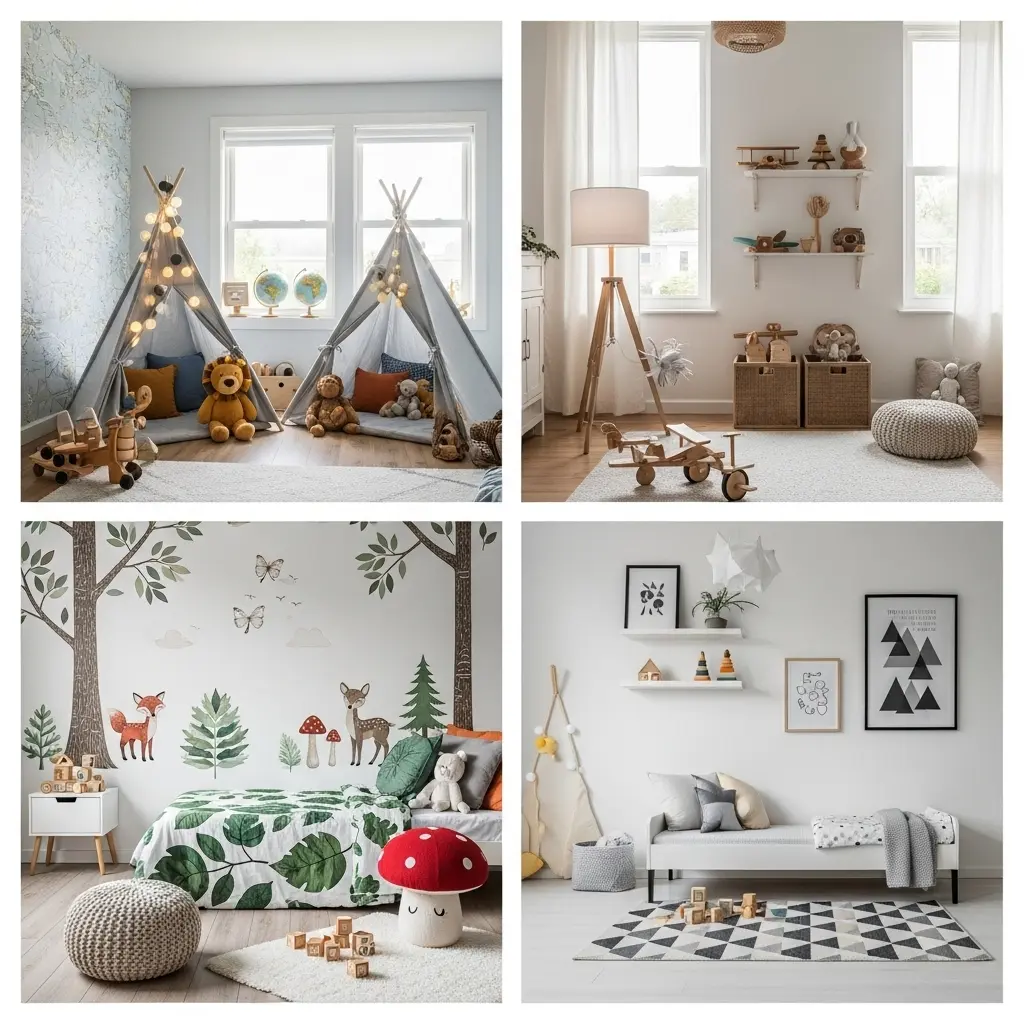
Let’s talk about the furniture part—my favorite and most humbling lesson. I once spent weeks styling a gorgeous reading nook that my son promptly turned into a racetrack. That’s when I learned the power of creative furniture: pieces that look appealing but also make sense in real life.
I now choose furniture that multitasks. One such piece is a bench that incorporates built-in drawers. For art and homework purposes, I opt for a table that can flip over. A low shelf has the potential to transform into a nightstand in the future. Kids’ rooms should grow, not expire.
And yes, I still love the occasional fun piece—like a mushroom stool or a cloud-shaped cushion. But I balance it with solid, useful items that last longer than a trend.
Storage hack: Use open bins with pictures on the labels. Even toddlers can “read” where things go, and cleanup becomes a little game.
For lighting, I learned a trick while testing wireless under-cabinet lights in my kitchen—the same concept works beautifully for shelf and reading areas. (You can check that out here: wireless under-cabinet lighting). Soft, rechargeable lights create cozy corners without cords or chaos.
3. Wooden Wall Hanging: The Unsung Hero of Warmth
I’ve tried all kinds of wall decor—prints, decals, fabric hangings, even yarn pom-poms. But my heart keeps coming back to wooden wall hangings. There’s something timeless and grounding about natural materials in a child’s space.
Wood adds warmth that plastic can’t mimic. It’s tactile, safe, and feels “real” in a world of blinking toys. I’ve used carved animals, wooden rainbows, and even small plaques that kids painted themselves.
When choosing or hanging wood pieces, I think safety first: smooth edges, sturdy hooks, and proper anchors. Heavy items stay low or over solid furniture.
Here’s what I love most—wooden decor ages beautifully. When the kids outgrow one piece, it moves to another room. Some of our favorite wall art started in a nursery and now lives in the hallway.
Styling idea: combine one wooden hanging with a small shelf of rotating items (a favorite toy, a framed drawing, a found rock). It tells a story—their story—and changes with them.
4. Kids’ Wall Art That Encourages Creativity
My kids’ art is… unpredictable. One week it’s inspired, the next it’s mostly glue. But every piece has a story, and that’s what matters. I use kids’ wall art as a way to let them see their creativity celebrated.
Instead of committing to a giant mural, I frame the smaller pieces they make. I keep the frames easy to open so we can swap drawings as their interests change. It keeps the wall alive and meaningful.
I mix their creations with simple prints or postcards that fit their personality—an animal, a quote, or a color they currently adore. When they tire of it, we change it out. That flexibility saves me from repainting walls every season.
Gallery tip: create one “art zone” instead of scattering frames everywhere. It feels intentional and keeps the visual noise low. I hang artwork at their eye level so it feels like their gallery, not mine.
For a touch of humor, I added a small wooden frame labeled “masterpiece of the week.” They take it seriously—sometimes too seriously—but it keeps art fun and fresh.
5. Bringing It All Together: Function, Mood, and Memory
Each element—furniture, art, decor—has a purpose, but the magic is in how they blend. I start with the function: the bed, the desk, and the storage. Then I reflect on my mood: what emotional state do I desire when I wake up or prepare to wind down? Calm? Playful? Curious?
That mood informs my choices in texture and color. I stick to two main colors and one accent. If I crave variety, I add texture instead—linen, knit, wicker, or wood. Small changes create depth without visual overload.
And memory matters most. I include at least one object that connects to our story—a toy from my childhood, a trip souvenir, or something we made together. That’s what turns decor into something lasting.
6. My Personal Tips for Lasting Children’s Room Decor
Plan zones, not themes. Reading, playing, and resting define small areas instead of one big idea.
Buy light first, color second. Good lighting improves the color look.
Don’t overdecorate. Leave space for imagination (and Legos).
Rotate instead of remodel. Swap textiles or art instead of repainting walls.
Mix old and new. A thrifted chair beside a modern light makes the room feel collected, not copied.
Add something handmade. Even if it’s a little wonky, it brings life and love into the room.
Think ahead. When possible, choose furniture that can age up—a crib that converts, a shelf that becomes a desk.
7. My Color and Light Routine
I start with the lighting before anything else. Warm light = calm kids (most of the time). I keep three layers:
Overhead: for cleanup and chaos.
Lamp: for evening calm.
Tiny night light: for confidence after bedtime stories.
Colors come next. I avoid matching sets and pick tones that make the room feel cozy but bright—soft blues, muted greens, or warm neutrals. Accent colors arrive through pillows, blankets, or art, not paint. That way, change doesn’t require a weekend of repainting.
If you’re ever unsure, look at how daylight hits your wall. Morning light makes cool tones fresher; afternoon light warms everything. Decor works best when it cooperates with the sun, not against it.
8. Practical Storage Tricks I Swear By
Storage can significantly impact a child’s room. I’ve learned that if a system isn’t simple, it fails in three days.
Open baskets for daily items—no lids, no rules.
Clear bins under the bed for lesser-used toys.
A “display shelf” for current obsessions (today it’s robots; next week, who knows).
The hooks are placed low enough for the children to reach them—while independence may create a mess, it is worth it.
I rotate toys seasonally. Fewer choices = calmer space. The bonus? When stored toys come back out, they feel new again.
9. Real Talk: Decorating With Kids Involved
Letting my kids help with design sounds sweet in theory. In reality, it’s a mix of giggles, glitter, and gentle negotiation. I show them two or three pre-approved options—all of which I’m fine with—and let them “choose.” This approach allows them to take control without transforming the room into a carnival.
They also help hang artwork and choose pillows. Are the results perfect? The results are far from perfect. However, the team is proud of their work, and that matters more.
Sometimes I’m brave enough to let them choose paint swatches. We engage in a game where we try to guess which shade appears more appealing in the sunlight. It keeps the process light, and occasionally, they surprise me with great choices.
10. The Balance Between Aesthetics and Reality
At the end of the day, design is meant to support real life. My kids’ rooms aren’t magazine-perfect, and that’s fine. What they possess is a designated area where they can create, relax, and express themselves freely—an environment in which I am not incessantly reprimanding them about clutter.
Perfection doesn’t belong in family design; comfort does. I want a home where the walls show something of the fingerprint history, the furniture carries stories, and the decor feels loved—not staged.
Q&A: Common Questions I Get About Kids’ Room Design
Q1: How do I decorate a small children’s room without making it cramped?
Use fewer large pieces instead of many small ones. Wall-mounted storage and under-bed bins free up floor space. Keep the color palette light and let textures add depth.
Q2: How can I make a shared room feel balanced for two kids?
Provide each child one clear “ownership zone”—a bed, a shelf, or an art area that’s just theirs. Use matching base tones but personal accents for each.
Q3: Is wood safe for kids’ wall decor?
Yes—as long as it’s smooth, sealed, and properly mounted. Wooden wall hangings add natural texture and are far more durable than glass or metal.
Q4: How often should I change kids’ wall art or furniture?
Whenever their interests significantly shift—roughly every
12–18 months—I should change their wall art or furniture. Frame systems that open make updates quick.
Q5: What’s the best lighting setup for bedtime?
The ideal lighting setup for bedtime should include warm white bulbs, multiple layers, and low brightness. Dimmable wireless lights, like the under-cabinet lighting trick I use near bookshelves, truly revolutionize lighting.
Final Thoughts
Children’s rooms don’t need to look like magazine covers—they just need to feel like home. My favorite spaces mix comfort, creativity, and some imperfection. They remind me that a messy room isn’t a failure; it’s proof of imagination at work.
I no longer design for photos. I create spaces for laughter, serene reading nooks, and the small wooden rainbow that has hung crooked for years yet continues to bring us joy.
Ultimately, the essence of beneficial design lies in its ability to be lived in, loved, and brimming with stories.