
Having trouble maintaining your speed during rucking? First, something relevant that I would like to tell you.
It happened that there was a period when even a walk with a backpack was tiresome. I was slow, and my legs were heavy. At that time, I did not know whether I was doing it. I kept on questioning myself, did I come too slowly, or is this the norm? I tried my best, but it didn’t help me improve my speed. That is when I began to read about the right rucking pace.

I figured out the difference between novice and high levels. It was then that everything fell into place. I learned the cooperation of pace, weight, and endurance.
Rucking pace per mile is the time you take to walk 1 mile with a weight. It might seem to be easy, but your speed is a determining factor in losing weight, endurance, and performance.
I will explain it all in this guide, including the average rucking speed and the standards, down to rucking speed under a 20kg weighted vest. You will also learn how to enhance your speed step by step. This guide is for all, whether you are a beginner or an experienced runner.
In This Post……
What Is Rucking Pace Per Mile?
Rucking pace per mile refers to the time it takes you to walk one mile with a weight.
The weight is typically in the form of a backpack or weighted vest. It is an easy method of testing your speed and efficiency to move either with a load or without one.
You are typically measured in minutes/mile or minutes/kilometer. For example, when walking one mile, you take 16 minutes. Its mean your speed is 16 minutes per mile.

The number allows you to measure your speed. It also monitors your stamina and general improvements with time. The lower the number, the higher the pace and vice versa.
What Is a Good Rucking Pace?
The speed of a good rucking pace does not suit all. It is based on your fitness, the weight you are carrying, and experience. There are ranges of pace for beginners, intermediate, and advanced individuals.
A good pace of about 18 to 20 minutes per mile is good for beginners. At this point, the primary objective is to remain consistent. Become accustomed to weight carrying. There is no hurry. Concentrate on posture and develop a habit. It is better to begin slowly to avoid injury. Processing slow allow your body to adapt easily. A 15-17 minute/mile pace is good for those with a little experience. It is also best for those who desire improved fitness outcomes.

This level assists in increasing endurance and calories burned. Your body gets accustomed to the weight. You begin to feel stronger and more confident in your rucks.
To perform at an advanced or military level, a rate of 12-15 minutes per mile is fantastic. This demands lots of power, endurance, and discipline. This is when you are able to support a heavier weight and walk faster over a long distance.
No matter your level, it is important to progress slowly. Pay attention to correct form, breathing, calmness, and practice. Then, in time, you will naturally improve your rucking pace as your strength and endurance increase.
Average Rucking Pace
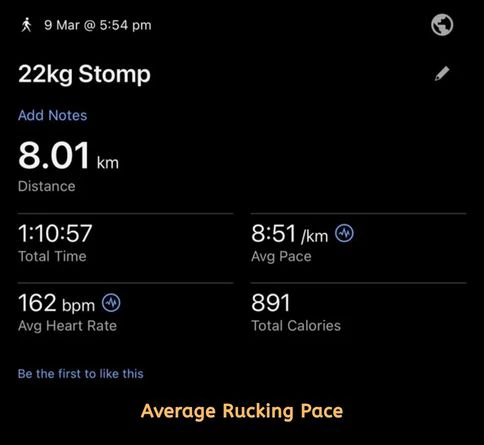
The ideal rucking speed of the majority is between 15 and 20 minutes per mile. This is termed as normal in terms of general fitness and daily training. It is a slow speed that you can work at without undue strain.
But this rate is not predetermined. It is subject to change depending on various crucial factors. The weight of your body is a factor since the weight of a person could affect their speed. It is also important how heavy your backpack is. The greater the load, the slower you can go. Another important factor is the terrain. It is much easier to walk on the flat roads than to walk on the hills or even on the uneven trails.
Moreover, weather conditions such as heat, humidity, or cold may influence your performance and speed.
Due to these reasons, you might have more or less speed on a day-to-day basis. It is aimed at being consistent and having a gradual improvement over time.
Rucking Pace With 20kg Weighted Vest Standards
The weighted vest or backpack with a weight of 20kg is very difficult to ruck. It is said to be a heavy burden and needs proper strength and stamina. Novices must take care and not attempt this with this weight.
A normal pace of approximately 20-24 minutes per mile is normal in beginners using 20kg. At this level, the emphasis is put on becoming slow yet safe. It is important to maintain balance and avoid injury. One has no hurry. The good pace of intermediate individuals is between 16 and 20 minutes per mile. It is at this point that your body is better accustomed to the weight. You will be able to move at a slow and persevering pace and be in correct form.
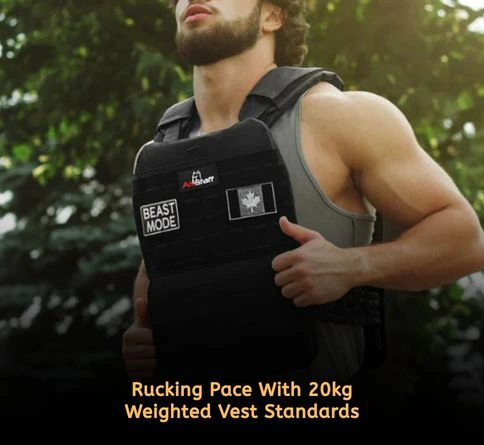
In the case of advanced or experienced ruckers, a 13-16 minutes per mile pace is a good performance. Strength and stamina are needed at this level. It also implies that you are able to deal with a lot of weight at a higher speed.
When you are new to rucking, it is preferable to begin with a lighter weight, e.g., 5-10 kg. When you get stronger, you can gradually add the load. Exercising with excessive weight might cause exhaustion, improper technique, and even a sprain.
How Does Rucking Pace Work?
Rucking pace is a training method based on walking speed + weight resistance.
The way it works is as follows:
- You have weight on your back.
- Your body is overworking itself more than usual when walking.
- Your heart beat goes up.
- You use up more energy in your muscles.
As a result:
- Fat burning increases
- Strength improves
- Endurance builds
Conditions that influence Rucking Pace
Your rucking pace is not always the same. It varies depending on various conditions. Certain things can slow you down, and some make you move faster. Knowing these factors will make you a better climber, safely and gradually.
1. Weight Load
2. Terrain
3. Fitness Level
4. Weather
5. Gear
FAQs
1. What is a good rucking pace for beginners?
An average pace of a beginner is approximately 18-20 minutes per mile. Concentrate on being consistent and in good form. Focus on developing strength rather than walking too fast at the beginning of the process.
2. What can I do to be a better rucker?
To enhance your pace, you should train frequently. Gain weight gradually. Have good posture. Concentrate on slow breathing. The most important aspect of good performance is consistency.
3. Which kind of shoes are best when rucking?
Rucking is done best with comfortable and supportive shoes. Wear shoes that have good grip and cushioning to cushion your feet in case of long walks when you gain weight.
4. Does a quicker rucking rate necessarily help?
No, more rapidity is not necessarily the best. Form, safety, and consistency are more important. Gradually improve to prevent harm and enhance performance in the long term.
5. How many times do I ruck a week?
Beginners should do rucking 2 -4 times a week. It provides sufficient time to rest and assists you in developing strength and endurance over time.
6. Is terrain a factor in rucking pace?
Yes, terrain makes a great difference. Flat roads are much faster, whereas hills, sand, or rough paths are slow and demand more effort and energy.
Final Thoughts
Rucking pace is not about speed. It is consistent and controlling. Begin slowly and gain strength as time goes by. Concentrate on proper form and gradual improvement. Every step matters. Remain patient and continue to train. As time goes on, you will run faster. With consistency, your stamina will increase.

Leave a Reply