
Are you struggling with fatigue, weak endurance, or slow progress? I’ve been there pushing hard with no plan, only to burn out. The fix? A rucking training plan. It gives you structure, steady progress, and real results from day one.
A rucking training plan is a structured program combining weighted walking, strength training, and progression strategies to build patience, strength, and fat loss efficiently.
This is what I wish I knew starting out. I’ll walk through what works, from setting up your first ruck to pushing your limits. The biggest change for me came when I stopped guessing and followed a plan. You’ll see how to build endurance, add weight safely, and train with a clear goal.
Key Takeaways
- A rucking training plan improves endurance, strength, and work capacity.
- Gradual progression prevents injury and burnout.
- Strength, intervals, and recovery all play a role.
- Consistency always beats intensity for long-term success.
In This Post……
- Core Principles of an Effective Rucking Training Program
- Advanced Ruck March Training Plan (Military / Special Forces Style)
- Rucking Exercise Plan: 7 Workouts You Can Use Anywhere
- Strength Training for Rucking Performance
- Rucking Progression Strategy (From Beginner to Elite)
- Specialized Rucking Plans
- Frequently Asked Questions About Rucking Training Plan
- Conclusion
Core Principles of an Effective Rucking Training Program
A good rucking plan comes down to four basics. You need to add weight or distance slowly. You need both strength and cardio. You need to mix long, steady rucks with hard, fast ones. And you need to recover. I see these same ideas in military prep and in real rucking groups.
Breakdown into key principles:
Progressive Overload
Add weight or distance slowly. I usually go up by 5 pounds or about 10 percent in distance each week. When I tried to jump ahead, my pace crashed and I felt it right away. That mistake stuck with me. Slow and steady always works better than trying to rush.
Balance Between Strength Training and Aerobic Base
You need both strength and endurance for rucking. Strength keeps your legs, core, and back solid. Cardio helps you last longer with weight. If you skip one, you hit a wall. I learned that the hard way.
Mixing Distance and Intensity
Long rucks build endurance. Short, hard intervals build speed and work capacity. My progress stalled until I started doing intervals twice a week. After that, my pace and recovery both got better.
Importance of Recovery
Recovery is what makes you better. If you skip rest, you get tired and hurt.
I learned to treat rest days like training days.
Sleep and spacing out sessions matter just as much as the ruck.
Quick Summary:
- Build gradually, not aggressively.
- Train strength and endurance together
- Combine long rucks with intervals.
- Recovery determines long-term progress.
Rucking Training Plan for Beginners (4 Weeks)
Start light. Build up slowly. Stay consistent.
That’s how I improved endurance and strength without getting hurt.
I noticed most good plans use this same approach.
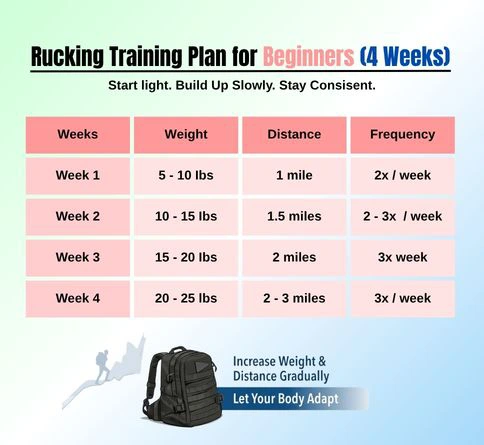
Here’s how I break it down over four weeks:
Week-by-Week Plan (Weight, Distance, Frequency)
| 1 | 5-10 lbs | 1 mile | 2x/week |
| 2 | 10-15 lbs | 1.5 miles | 2-3x/week |
| 3 | 15-20 lbs | 2 miles | 3x/week |
| 4 | 20-25 lbs | 2-3 miles | 3x/week |
Adding weight slowly lets your body adapt. When I started lighter than I thought I needed. I made better progress. Every time I tried to go heavy too soon. I burned out fast and had to back off.
Simple Beginner Tips for Safe and Effective Rucking
Posture comes first.Try to Keep your back straight, core tight, and shoulders relaxed. I always pack my ruck high and close to my spine. If you overload or let your pack hang loose, you’ll feel it in your form and recovery. I learned that the hard way. Form always beats load.
Intermediate Rucking Training Plan & Schedule
When I moved to an intermediate rucking plan, I started adding more structure to my weeks.
I increased the weight, changed up the terrain, and pushed the intensity. That’s when I noticed my performance actually improved.
Weekly Training Structure
- 1 Long ruck (endurance, steady pace)
- 1 Interval session (speed + load work)
- 1 Strength day (legs, core, back)
- Optional recovery or light ruck
At this point, I only saw real progress after I started adding intervals. My pace picked up. I stopped hitting plateaus. This is the stage where you move from just building a base to actually getting better.
Adding Ruck Runs, Hills, and Stairs
The addition of hills and stairs together with short ruck runs will help develop power and resilience. The two elements increase training intensity while they create conditions that replicate actual outdoor environments. Like coaches say: train hard, train specific.
Advanced Ruck March Training Plan (Military / Special Forces Style)
Advanced ruck training means heavy packs, long distances, and hard work. It is about pushing your limits. You need to handle stress, stay tough, and keep moving when it gets hard. That is what military and Special Forces training is built on.
Key Training Methods for Advanced Ruckers
Train heavy 45 to 70+ lbs. Mix long rucks (8-12+ miles) with intervals. Push yourself when you’re tired.
This is where it gets mental. Strength helps, but showing up under load, again and again, is what counts. Like they say in selection prep: Embrace the suck.

Weekly Advanced Training Example
- 1 Heavy long ruck (8–12+ miles)
- 1 Interval or ruck run session
- 1 Strength + work capacity day
Include hills, stairs, and uneven terrain to reflect real-world conditions and build true field readiness.
Rucking Exercise Plan: 7 Workouts You Can Use Anywhere
Rucking is not just about piling on miles. I found that mixing up workouts builds endurance, strength, and keeps things interesting. Here are seven rucking workouts I use to stay challenged and make steady progress.
1. Basic Ruck
This is your foundation. Walk at a steady pace with moderate weight. It builds endurance and reinforces proper posture. I still use this regularly to stay consistent and recover between harder sessions.
2. Hill Rucking
Take your ruck up hills or stairs. This builds leg strength and cardio fast. From what I’ve seen, hills challenge you more than just walking farther.
3. Speed Intervals
Switch between fast and slow paces. I use 2 minutes hard, 3 minutes easy. This helps me sharpen my pacing and build conditioning, especially when I’m training for a time goal.
4. Ruck Run
Jog short stretches with lighter weight. This builds speed and work capacity. I always start slow to protect my joints and keep control.
5. Ruck + Exercises
Add bodyweight moves like lunges, squats, and push-ups during your ruck. This mix builds total-body strength and keeps the workout from getting stale.
6. Long March
Long rucks test endurance and mental grit. These sessions taught me to hold my pace, even when I get tired.
7. HIIT (Tabata) Ruck
Go hard for 20 seconds, rest for 10, and repeat. This pushes your limits and ramps up conditioning fast.
Add these workouts to your plan. They keep rucking effective, challenging, and simple to do anywhere.

Strength Training for Rucking Performance
Strength training is essential in any rucking training plan because it improves load capacity, stability, and resistance to injury under load.
Here’s how to make strength training work for your rucking:
Essential Strength Exercises
Stick to basics. Squats made my legs stronger for long rucks. Deadlifts helped my back and hips handle the weight. Lunges forced me to balance better, especially on rough ground. Core work kept my posture solid. Once I trained these moves regularly, rucking felt smoother and less tiring.
Why Strength Training Matters for Rucking
Stronger muscles let you carry more weight without getting hurt.
When I skipped strength work, I got tired fast and my form fell apart. Now, I focus on building strength first. It keeps me moving better and helps me avoid injuries.

Rucking Progression Strategy (From Beginner to Elite)
Progress in rucking comes from adding weight or distance slowly. I learned that structure matters. Without it, burnout and injury show up fast.
How to Safely Increase Weight and Distance
Add 5 pounds each week or bump distance by 10 percent. Never both at once. I tried pushing both and burned out fast. When I slowed down, I kept making progress. Like Mountain Tactical Institute says, progression should be steady, not rushed.
Avoiding Overtraining and Using Periodization
Stick to a simple cycle: Base, Build, Peak. Base builds endurance. Build adds intensity. Peak gets you ready for your best effort. I see the same advice everywhere: overtraining ruins progress faster than taking it slow. Recovery and structure make the difference.
Quick Summary
- Increase weight or distance, not both.
- Follow Base → Build → Peak phases.
- Avoid overtraining to sustain progress.
Specialized Rucking Plans
A specialized rucking plan targets a clear goal. Sometimes it is long-distance endurance. Sometimes it is getting ready for an event. In both cases, performance, pacing, and durability matter most.
Here is what has worked best for different rucking goals, based on what I have seen and tested.
Marathon Ruck Training Plan
A marathon ruck, anything over 12 miles, is a different challenge. I found that building distance slowly each week works best. Keep the weight moderate. Pacing matters more than speed, especially after mile 8. That is when fatigue hits. Most endurance plans I have seen focus on steady effort, not big bursts. As they say, “Endurance is built through consistency, not bursts.”
Event-Based Training (GORUCK Challenge, Star Course, Pathfinder)
Events like GORUCK Challenge,Star Course, and Pathfinder are not just about distance. They test teamwork, navigation, and how you perform when tired.
I noticed that adding intervals, heavy carries, and random workouts helped most. As people say, “Train for the unknown, not just the plan,” because real events never go perfectly.

Frequently Asked Questions About Rucking Training Plan
Can you build muscle by rucking?
Yes, rucking builds muscle, mostly in your legs, glutes, and core. Carrying weight works like resistance training. I found that adding squats and deadlifts helps even more. That way, you get stronger all over.
How many times a week should you ruck?
I recommend rucking 2 to 4 times a week. If you are just starting, go for 2 sessions. Once you get used to it, try 3 or 4. Take rest days. They matter more than you think.
Is rucking good for seniors?
Yes, a light rucking training plan helps seniors. It improves balance, bone strength, and heart health. Start with a small weight and short walks. Focus on good posture. Go slow and add more only when it feels right.
Is rucking good for osteoporosis?
Yes, rucking is good for your bones because it works them. Over time, it can help strengthen bones. If you have osteoporosis, start with very light weight. Talk to your doctor before adding more.
Conclusion
A good rucking plan does more than build muscle. It builds endurance and mental grit, too. I found that slow progress works best. Focus on small steps, good form, and rest. When I tried to do too much, I hit a wall. Consistency always wins. Mix things up, pay attention to how you feel, and train smart.
Simple takeaway: consistency beats intensity.

Leave a Reply