
Bento box meals turn an ordinary packed lunch into a mix-and-match meal that feels more fun to open and easier to finish.
The best bento box lunches combine a protein, fruit or vegetable, a filling grain or starch, and one small extra, giving you plenty of variety without making lunch complicated.
For kids or adults, the simplest formula is four compartments, one dependable main, two colorful sides, and one snack-sized treat.
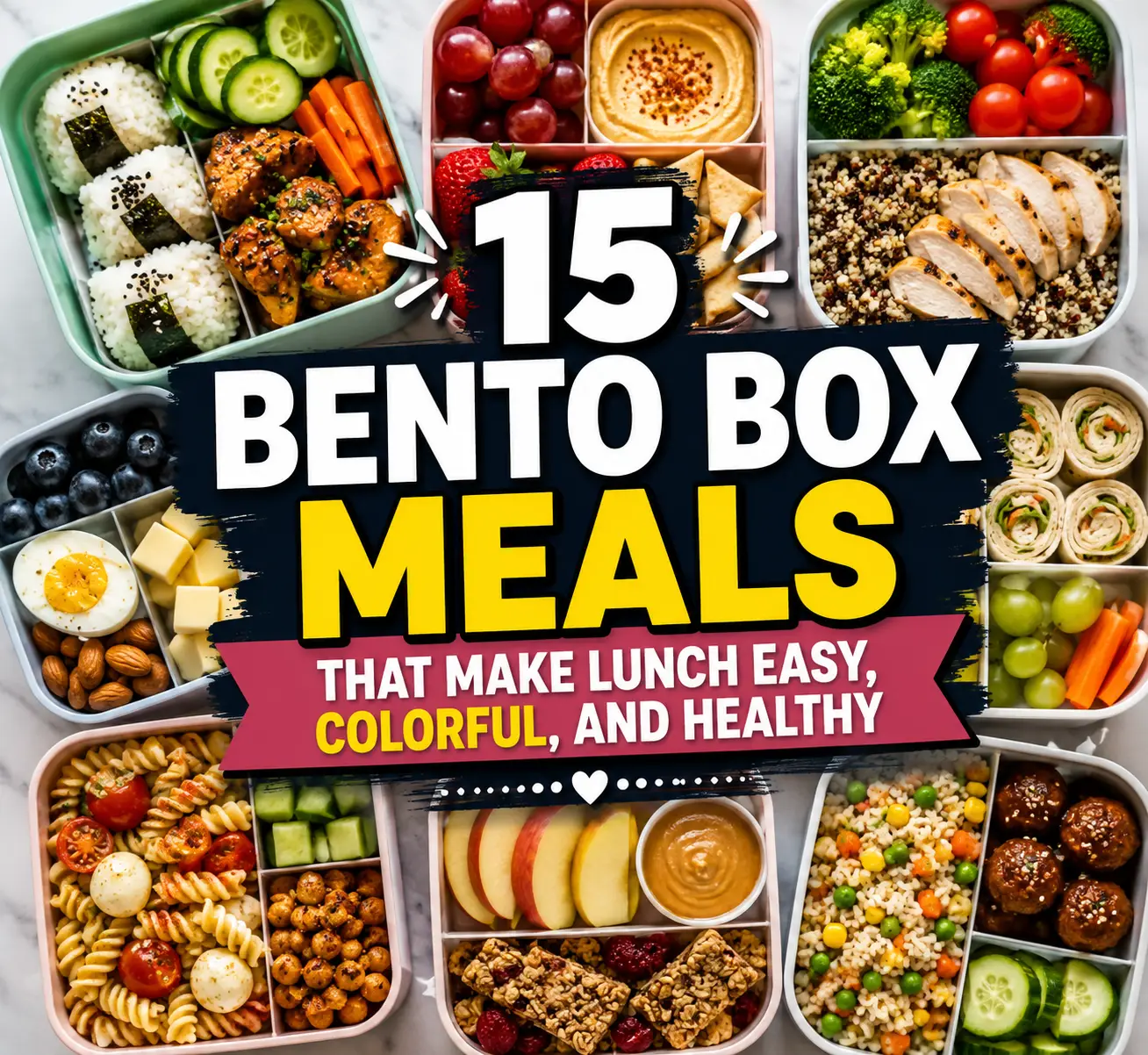
That structure works for quick school lunches, office meals, road trips, and busy afternoons when a full sit-down meal is not realistic.
Bento box meals are compartmentalized lunches that combine several small foods in one portable container. A practical box includes protein, fruit or vegetables, a grain or starch, and an optional dip or treat. Keeping wet foods separate and perishable ingredients cold helps the meal stay appealing, balanced, and safe until lunchtime.
Key Takeaways
- Build each box around protein and colorful produce.
- Use bento box lunch ideas to simplify planning.
- Keep sauces separate to protect texture.
- Chill perishable foods with two cold sources.
- Prep reusable components instead of complete weekly boxes.
Byline: Fitspire Life Editorial Team, practical healthy-living and meal-planning guidance. Replace with the author’s name and relevant credential before publishing, if available.
In This Post……
- What Makes Bento Box Meals Healthy and Satisfying?
- How Do You Pack Bento Box Lunches Safely?
- Which Bento Box Meals Are Worth Trying First?
- 1. Turkey Hummus Roll-Ups: Why Does This Bento Work?
- 2. Egg and Avocado Snack Box: What Makes It So Filling?
- 3. Chicken Pasta Salad: Can Leftovers Become a Better Lunch?
- 4. Mini Pita Pizza Box: How Do You Make Lunch Feel Fun?
- 5. Rainbow Chicken and Rice Bento: Why Is Color So Helpful?
- 6. Greek Mezze Bento: Can a Snack Plate Count as Lunch?
- 7. Apple Sunflower Butter Sandwich Bites: Is This School-Friendly?
- 8. Tuna Cucumber Cracker Bento: What Keeps It From Getting Soggy?
- 9. Breakfast-for-Lunch Bento: Why Save Pancakes for Morning?
- 10. Bean and Cheese Quesadilla Box: Can It Be Made Ahead?
- 11. Teriyaki Tofu Bento: How Do You Make Tofu Appealing?
- 12. DIY Nacho Bento: Can Nachos Become a Balanced Meal?
- 13. Salmon Rice Ball Bento: What Makes It Different?
- 14. Yogurt Granola Fruit Bento: Is It Lunch or a Snack?
- 15. Homemade Lunchable Bento: How Do You Upgrade the Classic?
- How Can You Prep Healthy Bento Boxes Faster?
- What Should You Avoid When Packing a Bento Snack Box?
- Frequently Asked Questions About Bento Box Meals
What Makes Bento Box Meals Healthy and Satisfying?
A satisfying bento combines protein, produce, an energy-giving grain or starch, and one enjoyable extra.
At a Glance
- Start with a dependable protein.
- Add one or two produce colors.
- Include a practical grain or starch.
- Finish with a dip or small treat.
A healthy bento does not need to look perfect or contain expensive ingredients. It needs enough variety to make lunch appealing and enough substance to prevent the meal from feeling like a random pile of snacks.
For this guide, Fitspire Life uses a simple four-part method:
- Protein: chicken, eggs, tuna, beans, tofu, yogurt, cheese, or nut-free seed butter
- Produce: at least one fruit or vegetable, ideally two colors
- Energy food: whole-grain bread, rice, pasta, crackers, pita, tortilla, or potatoes
- Fun extra: dip, trail mix, dark chocolate, popcorn for older children, or a homemade bite
The CDC describes healthy eating patterns as including vegetables, fruits, protein foods, dairy, healthy fats, and whole grains while limiting foods high in sodium and added sugars. That is a useful framework for building a healthy bento box without turning lunch into a strict nutrition project.
| Bento component | Easy choices | Why it helps |
|---|---|---|
| Protein | Eggs, chicken, beans, tuna, cheese, tofu | Makes the meal more filling |
| Fruit or vegetables | Berries, grapes, cucumber, carrots, peppers | Adds color, texture, and variety |
| Grain or starch | Brown rice, pita, wraps, crackers, pasta | Provides lasting energy |
| Dip or healthy fat | Hummus, yogurt dip, guacamole, seed butter | Adds flavor and helps dry foods feel more satisfying |
| Small extra | Mini muffin, a few chocolate chips, dried fruit | Keeps the box enjoyable rather than overly restrictive |
USDA MyPlate materials encourage including foods from fruits, vegetables, grains, protein foods, and dairy. You do not need every food group in every box, but using the five groups as a rotation guide can prevent bento box meals from becoming repetitive.
How Do You Pack Bento Box Lunches Safely?
Pack perishable bento foods cold, use an insulated bag with two cold sources, and prepare age-appropriate shapes for children.
At a Glance
- Refrigerate ingredients before packing.
- Use two cold sources for perishables.
- Keep cold food at 40°F or below.
- Cut round foods safely for young children.
Cold ingredients need more attention than shelf-stable snacks. The USDA Food Safety and Inspection Service recommends packing perishable lunches in an insulated bag with at least two cold sources, such as frozen gel packs or a gel pack plus a frozen water bottle.
The FDA advises keeping cold food at 40°F or below to slow bacterial growth. Pack yogurt, cooked chicken, eggs, cheese, tuna, and similar foods straight from the refrigerator, then keep the lunch chilled until it is time to eat.
For young children, also adjust foods for safe chewing. The CDC lists whole grapes, uncut cherry tomatoes, hard raw produce, popcorn, and thick spoonfuls of nut or seed butter among potential choking hazards; cut round foods lengthwise, soften firm produce, and spread butters thinly according to the child’s developmental stage.
Which Bento Box Meals Are Worth Trying First?
Begin with familiar foods in varied formats, such as roll-ups, snack boxes, rice bowls, quesadillas, or build-your-own combinations.
At a Glance
- Choose familiar ingredients first.
- Vary textures without overcomplicating preparation.
- Separate wet and crisp components.
- Rotate proteins, produce, and grains.
1. Turkey Hummus Roll-Ups: Why Does This Bento Work?
Turkey hummus roll-ups make a familiar sandwich feel lighter, tidier, and much more interesting.
Instead of stacking thick bread around the filling, spread hummus over a tortilla, add turkey and spinach, then slice it into pinwheels.
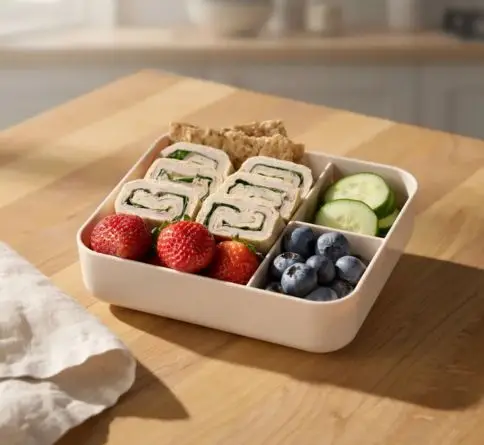
I like this one for mornings when there is no time to cook but a plain sandwich feels too boring. Add cucumber coins, strawberries, and a few whole-grain crackers, and the box looks complete without any extra fuss.
Special Tip: Chill the rolled tortilla for 10 minutes before slicing so the pinwheels stay neat.
2. Egg and Avocado Snack Box: What Makes It So Filling?
The egg and avocado snack box delivers the creamy-crunchy combination that many cold lunches are missing.
A hard-boiled egg brings protein, while avocado adds richness that makes simple vegetables and crackers taste like a real meal.
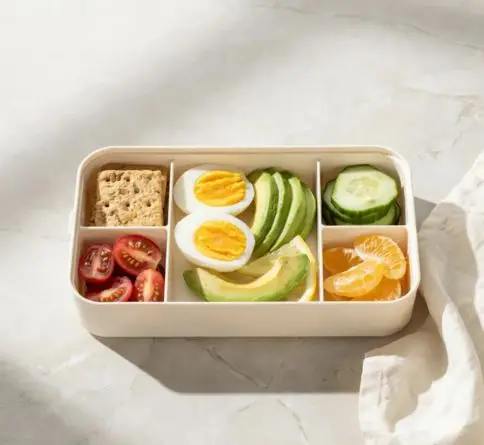
Pack the avocado with a squeeze of lemon, then add cherry tomatoes, whole-grain crackers, and orange slices. It is especially useful for adults who prefer grazing through lunch rather than eating one large item.
For younger children, quarter tomatoes lengthwise and mash or slice the avocado into an age-appropriate texture.
3. Chicken Pasta Salad: Can Leftovers Become a Better Lunch?
Chicken pasta salad is proof that last night’s dinner can become one of the easiest bento box meals in the morning.
Toss cooked pasta with chopped chicken, peas, cucumber, and a light yogurt or olive-oil dressing.
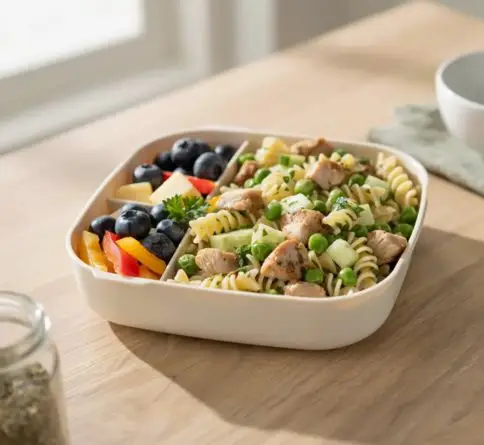
Unlike a heavy mayonnaise-based salad, this version stays fresh-tasting and leaves room for fruit or a small snack. Pack it when you know the lunch needs to survive a busy school or workday without feeling skimpy.
Add blueberries and a cheese cube compartment for a balanced box with very little preparation.
4. Mini Pita Pizza Box: How Do You Make Lunch Feel Fun?
Mini pita pizzas instantly give lunch a build-your-own feel. Pack small pita rounds with pizza sauce, shredded mozzarella, sliced peppers, and cooked chicken or turkey pepperoni in separate compartments.
The obvious alternative is a cold slice of pizza, but this version gives the eater control over every bite.
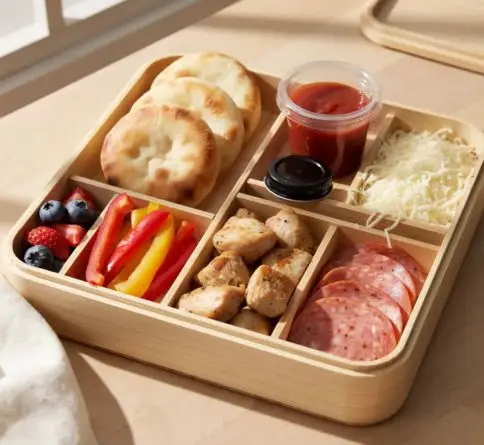
It works beautifully for picky eaters who are more willing to try vegetables when they get to assemble the food themselves.
Use a divided container with a tight lid so the sauce cannot wander into the fruit section.
5. Rainbow Chicken and Rice Bento: Why Is Color So Helpful?
This rainbow chicken and rice bento earns attention before the first bite. Start with seasoned brown or white rice, then add sliced chicken, shredded carrots, cucumber, purple cabbage, and mango.
A typical rice bowl can become soggy once everything is mixed together, but a bento keeps each texture distinct.
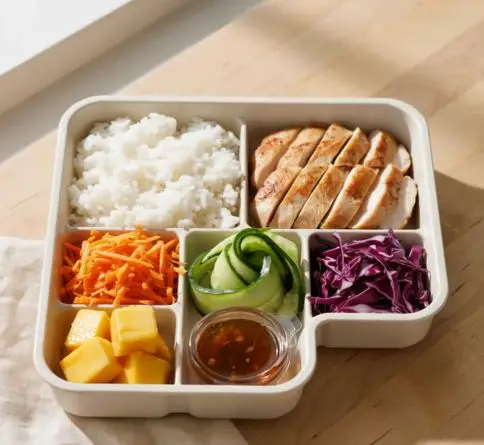
I would pack this for someone who likes variety and gets bored halfway through a single-flavor lunch.
A small cup of sesame-free soy-ginger dressing brings the entire box together.
6. Greek Mezze Bento: Can a Snack Plate Count as Lunch?
A Greek mezze bento turns snack box ideas into a full meal with almost no cooking.
Combine hummus, pita triangles, cucumber, tomato, olives, feta, and chickpeas for a box that is salty, crisp, creamy, and fresh all at once.
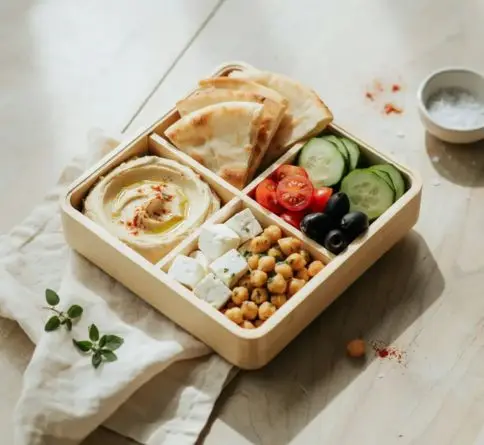
The chickpeas make the difference here; without them, the box can feel more like an appetizer than lunch. This is a strong option for meatless days or hot afternoons when a warm meal sounds unappealing.
For children, choose lower-sodium olives or use only a few, and cut firm foods to a safe size.
7. Apple Sunflower Butter Sandwich Bites: Is This School-Friendly?
Apple and sunflower butter sandwich bites bring the comfort of a classic spread without relying on peanuts.
Use whole-grain bread, spread the sunflower butter thinly, add very thin apple slices, and cut the sandwich into small squares.
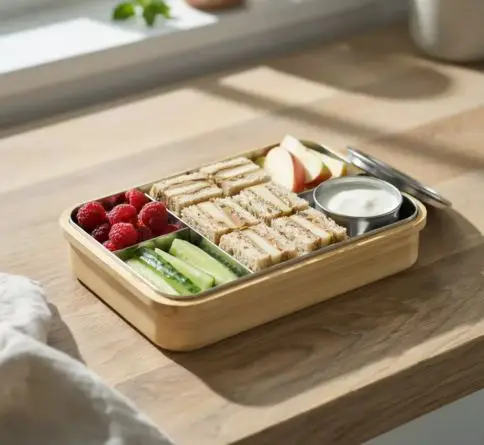
The apple adds a juicy crunch that jam cannot, so the bites taste fresh rather than overly sweet. Pack them with yogurt, cucumber sticks, and raspberries for one of the easiest healthy bento box combinations.
Always check the school’s allergy rules and the product label before packing seed or nut alternatives.
8. Tuna Cucumber Cracker Bento: What Keeps It From Getting Soggy?
The tuna cucumber cracker bento separates everything until lunchtime, which means the crackers stay crisp. Mix tuna with Greek yogurt, lemon, and a little black pepper, then pack it beside cucumber slices and whole-grain crackers.
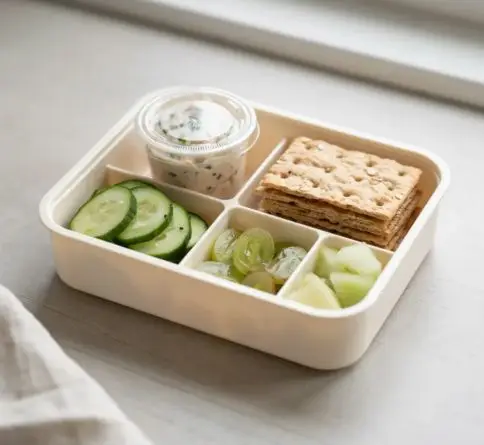
Instead of eating a dense tuna sandwich, you get small crunchy stacks that can be assembled bite by bite. This bento box lunch idea is ideal for anyone who likes interactive food but wants more protein than a standard snack box.
Include grapes or melon on the side, cut appropriately for young children.
9. Breakfast-for-Lunch Bento: Why Save Pancakes for Morning?
A breakfast-for-lunch bento is the box that usually comes home empty. Pack mini whole-grain pancakes, scrambled egg bites, berries, and a small container of yogurt for dipping.
It feels like a treat, yet it still covers protein, grain, fruit, and dairy.
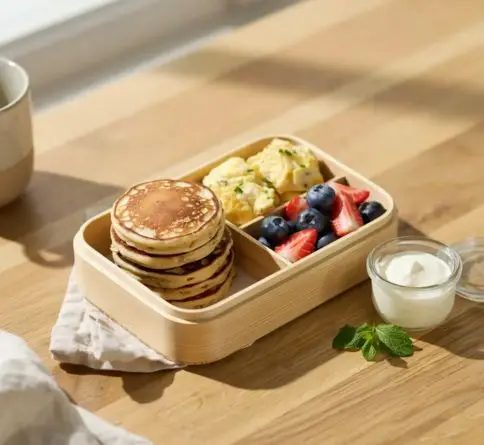
I use this style when lunch fatigue is setting in and another wrap or sandwich would be ignored.
Special Tip: Make extra pancakes on the weekend and freeze them in pairs for fast weekday packing.
10. Bean and Cheese Quesadilla Box: Can It Be Made Ahead?
Bean and cheese quesadilla wedges hold up surprisingly well when served cold or at room temperature within safe handling limits.
Spread mashed black beans over a tortilla, add cheese, cook until crisp, then cool before slicing.
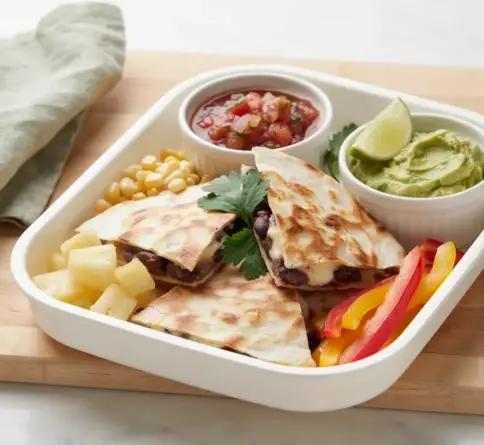
Beans give this box more staying power than a cheese-only quesadilla, while salsa or guacamole prevents it from tasting dry. Add corn, bell pepper strips, and pineapple for a bright, satisfying lunch.
Cool the quesadilla completely before closing the box to prevent trapped steam from making it soft.
11. Teriyaki Tofu Bento: How Do You Make Tofu Appealing?
Teriyaki tofu becomes much more inviting when it is baked until the edges are caramelized. Pair small tofu cubes with rice, steamed edamame, shredded carrots, and pineapple for a sweet-savory healthy bento.
Plain tofu can feel bland, but a glossy sauce and crisp exterior give it a clear identity.
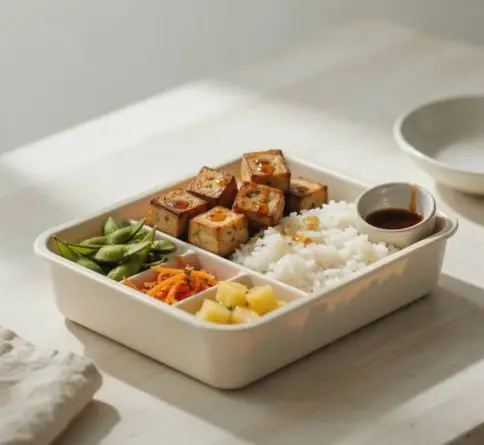
This box suits vegetarians, adventurous kids, or adults who want a meal-prep lunch that still feels colorful.
Pack extra sauce in a leakproof mini cup rather than pouring it over the rice in advance.
12. DIY Nacho Bento: Can Nachos Become a Balanced Meal?
A DIY nacho bento keeps the playful part of nachos while making the portions easier to manage. Fill the compartments with baked tortilla chips, seasoned black beans, shredded cheese, corn, salsa, and guacamole.
Compared with a tray of fully loaded nachos, every ingredient stays crisp and fresh until lunch.
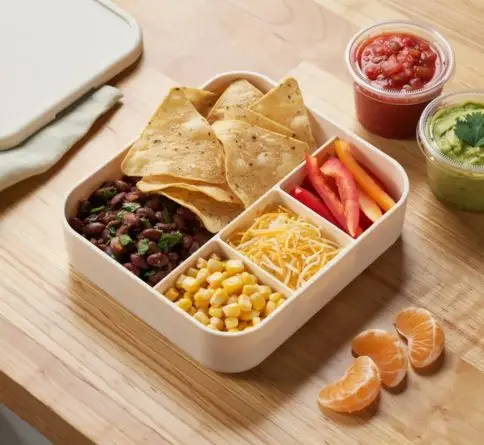
It is a smart Friday box for children or adults who want something fun without turning the whole meal into chips.
Add sliced peppers or mandarin segments to increase color and variety.
13. Salmon Rice Ball Bento: What Makes It Different?
Salmon rice balls are compact, flavorful, and easy to eat without a fork. Mix cooked flaked salmon into warm rice, shape small balls, and add a strip of nori if you enjoy the seaweed flavor.
This beats a loose rice bowl when lunch needs to be portable and mess-free.
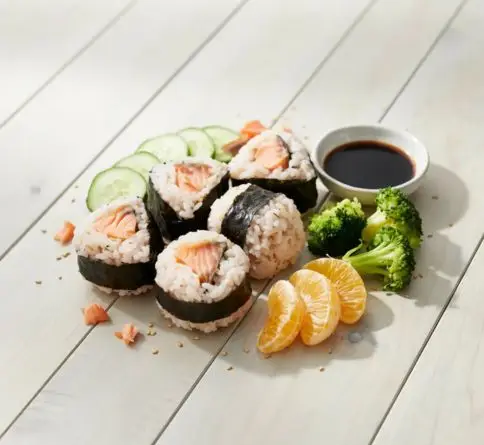
Pack it with cucumber, steamed broccoli, and orange slices for a bento box meal that feels special but uses basic ingredients.
Keep cooked salmon chilled with cold packs, and prepare the rice balls with clean hands or food-safe gloves.
14. Yogurt Granola Fruit Bento: Is It Lunch or a Snack?
A yogurt granola fruit bento can be either, depending on the portions and what you add beside it. Use thick Greek yogurt, keep the granola separate, and pack berries, banana slices, and a small whole-grain muffin.
Most yogurt cups turn repetitive after a few spoonfuls, but separate toppings create different textures in every bite.
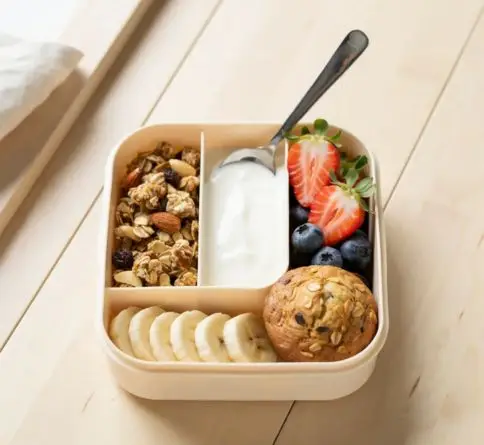
This is a useful bento snack box for lighter appetites, early lunches, or after-school activities.
Choose yogurt with less added sugar when possible, then let ripe fruit provide most of the sweetness.
15. Homemade Lunchable Bento: How Do You Upgrade the Classic?
The homemade Lunchable-style bento takes the convenience of a packaged snack meal and gives you better control over the ingredients. Add whole-grain crackers, turkey or chicken slices, cheese squares, cucumber, grapes, and one small cookie.
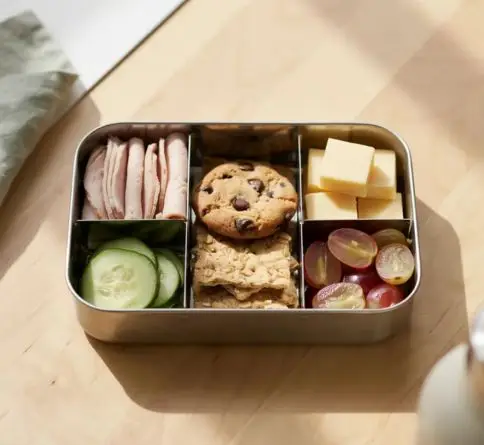
The upgrade is not about making lunch perfect; it is about including fresher produce and a more satisfying protein portion. This box works for picky eaters because nothing touches, yet every compartment still has a purpose.
Let children choose one fruit and one vegetable the night before so they feel involved without controlling the entire menu.
How Can You Prep Healthy Bento Boxes Faster?
Prepare versatile ingredients in batches, then assemble different combinations instead of making every lunch from scratch.
At a Glance
- Cook one reusable grain.
- Prepare one or two proteins.
- Wash and cut produce.
- Portion sauces in small containers.
The easiest method is to prepare components rather than complete boxes. Cook one grain, wash two fruits, cut two vegetables, and prepare one or two proteins at the start of the week.
Then use a simple mix-and-match system:
- Choose one protein.
- Add one fruit and one vegetable.
- Add one grain, cracker, wrap, or rice portion.
- Finish with a dip or small treat.
Keep wet ingredients in mini containers, cool cooked foods before packing, and use leftovers within safe storage periods. Rotate shapes and combinations rather than buying a completely different grocery list for every lunch.
What Should You Avoid When Packing a Bento Snack Box?
Avoid unbalanced, overly dry, unsafe, or overfilled boxes that ignore the eater’s appetite and preferences.
At a Glance
- Avoid packing only dry snack foods.
- Introduce one unfamiliar food at a time.
- Match portions to the eater.
- Keep age and allergy needs in mind.
Avoid packing only dry beige foods, because crackers, pretzels, cereal, and cookies may look abundant while still feeling unsatisfying. Also avoid introducing several unfamiliar foods at once; one new item beside two dependable favorites is usually less overwhelming.
Do not overfill every compartment. A bento should match the eater’s appetite, age, schedule, and dietary needs, not the size of the container.
Finally, remember that healthy bento box meals can still include enjoyable extras. A few chocolate chips or a mini homemade cookie can make the box feel generous without taking over the entire lunch.
Frequently Asked Questions About Bento Box Meals
What can I put in a bento box for lunch?
Start with a protein, add a fruit or vegetable, include a grain or starch, and finish with a dip or small extra. Examples include chicken with rice and cucumber, hummus with pita and vegetables, or eggs with crackers and fruit.
These bento box lunch ideas are easy to adjust for different ages, appetites, and dietary needs.
Are bento box lunches healthy?
They can be healthy when the compartments include varied, nutrient-dense foods rather than only snack foods. Use the sections to balance protein, produce, whole grains, and enjoyable extras.
A simple collection of bento box lunch ideas can also make that balance easier to repeat throughout the week.
What are good bento box snack ideas for kids?
Try cheese and crackers, yogurt with berries, hummus with soft vegetables, mini sandwiches, fruit, egg bites, or quesadilla wedges. Adjust shapes and textures for the child’s age and follow school allergy policies.
How do I keep a bento box cold until lunch?
Use an insulated lunch bag and at least two cold sources for perishable foods, following USDA guidance. Refrigerate the box before leaving home and place it in a refrigerator at school or work when one is available.
Can I prepare bento box meals the night before?
Yes. Pack dry and sturdy ingredients in advance, keep sauces separate, and add foods that brown or soften quickly, such as avocado or sliced banana, closer to serving time.
Final Thoughts
Packing lunch does not have to mean making the same sandwich every day. With the right mix of protein, fresh produce, grains, and a small treat, bento box meals make it easy to create lunches that are balanced, colorful, and enjoyable for both kids and adults. Whether you meal prep on weekends or assemble lunch in just a few minutes each morning, these ideas give you plenty of flexibility without adding extra stress. Start with a few favorite combinations, rotate ingredients throughout the week, and you’ll soon have healthy lunches that are just as satisfying to pack as they are to eat.

Leave a Reply