
Rucking is an effective exercise to build muscle strength, improve endurance and fitness levels. Rooted in its military origins, rucking evolved from ruck marching, where soldiers carried a loaded backpack across long distances to build resilience and stamina.
If you are new to rucking and looking to know the physical benefits of rucking, a query may arise in your mind: how many calories does rucking burn?
Rucking burns 2 to 3 times more calories than walking, which is around 400-700 calories per hour. Rucking with a heavier load, hills, and a faster walking pace can increase calorie burn to up to 800 calories per hour. So, it varies depending on your weight, training load, pace, time, and intensity.
Running can burn 400-800 calories per hour, which is almost the same as rucking. But there is a minimal risk of being injured compared to rucking. According to health professionals, for people who can’t run and want to lose weight, rucking is recommended as a safer cardiovascular exercise option.
In this article, I will explain how many calories rucking burns per hour, how to calculate your calorie burn, the factors that affect calorie burn, how it actually works, and the most efficient way to maximize your calorie burn using the latest, science-based information.
- Rucking burns around 400–700 calories per hour, which is 2-3 times more than walking.
- Calorie burn varies with body weight, backpack load, pace, terrain, and workout intensity.
- Alternate3–5 minutes at a faster pace with 2–3 minutes at a slower recovery pace to boost overall calorie burn and improve cardiovascular endurance.
In This Post……
How Many Calories Does Rucking Burn Per Hour?
Rucking burns 2 to 3 times calories more than walking. It burns around 400-700 calories per hour. Rucking with heavier load, hills, faster walking pace and greater elevation change can increase the calorie burn up to 800 calorie per hour.
During my rucking, I got 400 to 650 calories burned per hour. The average is 400 to 700. It is not 100% true. The number can fluctuate depending on activities such as load, time, pace etc.
One major thing is that the vigorous intensity of your ruck directly affects the amount of calorie burn. A proper rucking pace helps maximize energy expenditure because walking speed and consistency strongly influence overall energy use.
But, the question is: How many calories does rucking burn vs walking?
Compared to walking, it burns at least 2 times more calories than walking. Walking burns around 200-300 calories per hour, while it burns 400-700 on average.
On the other hand, how many calories does rucking burn compared to running?
According to force fitness professionals, running, or other high-intensity exercise such as martial arts or a faster pace can burn 400-800 calories per hour which is almost the same as running. But, why is rucking good? In rucking, there is a minimum chance of risk of being injured.
According to the American Council on Exercise (ACE), adding external load significantly increases metabolic demand, heart rate elevation, and total energy expenditure during walking.
| Activity | Calories Burned Per Hour |
| Walking | 200–300 |
| Rucking | 400–800 |
| Running | 600–900 |
Rucking Calorie Burn Calculator
It is important to know how many calories are burned during rucking. From now on, you will get new hope and new desire, and if calorie burning is not working properly, you will have a chance to fix your problem. So, it is very important to know how many calories does rucking burn calculator.
To calculate the rucking calorie burn, follow these 3 steps–
- Calculate the BMR Value
- Choose the METs Value
- Use the Calorie Burn Formula
Rucking Calorie Burn Formula-
Calories Burned = (BMR × METs ÷ 24) × Hours of Exercise. For example,
Your BMR is 1800, the MET value is 6, and you are rucking for 2 hours, you will burn = (1800×6/24)×2= 900 calories.
Here,
- BMR is the amount of calories burned during rest.
- METs show the amount of intensity of the activity.24 converts daily calories into hourly calories.
- Hours represent your exercise time.
Don’t know your BMR and METs Value? Don’t worry! I will break it down to calculate these as quickly and simply as possible.
Step 1: Calculate the Basal Metabolic Rate (BMR)
BMR is the number of calories your body burns per day while completely at rest.
BMR for Men,
BMR = 66 + (6.2 × weight in pounds) + (12.7 × height in inches) − (6.76 × age in years)
BMR for women,
BMR = 655.1 + (4.35 × weight in pounds) + (4.7 × height in inches) − (4.7 × age in years)
Let’s see an example,
Suppose your weight is 180 lbs, height is 75 inches and age is 30 years. So, the BMR value for Men will be:
= 66 + (6.2 ×180) + (12.7 ×75) − (6.76 × 30) = = 1,931.7 calories/day
Step 2: Choose the Metabolic Equivalent of a Task (MET) Value
MET value depends on the activity intensity. You don’t have to calculate it. For light rucking, 4.5 METs; for moderate, 6 METs; and for Heavy rucking, 7.5 to 8 METs.
Step 3: Calculate the Calorie Burn
Now, just put the BMR and MET value in the calorie calculator formula-
Calories Burned = (BMR × METs ÷ 24) × Hours of Exercise
Factors Affecting Calorie Burn During Rucking
It is easy to calculate calorie burn, but the actual amount varies depending on the condition of the ruck. But, how many more calories does rucking burn– 4 factors significantly affect calorie burn during rucking:
- Weight of the loaded backpack
- Intensity and pace
- Terrain and incline
- Body weight and composition
Let’s clear-
Weight on the Backpack
The most important factor is that you have to understant how much weight should you carry for rucking. The more weight you can carry while maintaining the rules, the more energy you will need to carry it. So, higher calorie burn.
Suppose your weighted backpack is around 20 lbs, and your friend is carrying 10 lbs. Because you are carrying more weight than your friends, your muscles need to work harder to support the extra load, which will burn more calories.
However, you have to understand how much weight for rucking is good. Rucking is not bad for your back. But, overload can lead to injury and back pain. So, increase weight gradually to build muscle power and muscular endurance.
Intensity and Pace
The more you run, the more calories your body burns. It is simple, your body needs more energy for a faster pace.
But, follow a short trick to boost up: try short bursts of faster walking or even light jogging while carrying a weighted vest. Just make sure your fitness level is ready for it. This increases overall training load and improves stamina safely.
Haven’t understood? For example,
If you normally run for 2 hours at a moderate pace and burn 900 calories, adding 15 minutes of faster walking or jogging in the middle could increase your total burn to around 1,000 calories.
This way, you get more calorie burn without adding extra time.
Terrain and Incline
It is easy to walk on flat ground compared to the rugged conditions. Rucking on trails Loblolly Trail or Umstead State Park with natural elevation change demands more effort.
Hills and incline rucking force your lower-body and core muscles to work harder, especially the calves, glutes and quads. So, a small change can make a big difference in calorie burn.
Body Weight and Composition
Your body weight and composition play a crucial role in rucking. Suppose your weight is 90 kg, and your friend’s weight is 80 kg. Will the same number of calories be burned for both of you?
No. You will lose more calories in the same rucking, because your muscles will need more energy to move than your friends’. Muscle is also a crucial factor. People with more muscle tissue require more energy to move, which means they burn more calories than fat, even at rest. This is why rucking strengthens lower-body and core muscles while improving total-body endurance.
So, focus on these major factors before calculating calorie burn to achieve your fitness goals.
How Rucking Actually Burns Calories
Here are some points that help to burn calories during rucking-
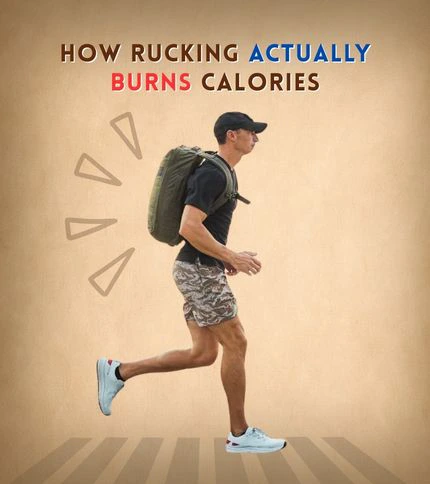
- When we walk, every step requires fuel because our leg muscles contract repeatedly to move the body forward. Therefore, this muscle contraction burns calories.
- During rucking, the extra weight forces your body’s muscles to work harder compared to normal walking. So, energy demand increases as well.
- The heart needs to work harder. Rucking improves aerobic capacity and increases oxygen demand.
- Core strength, lower back, shoulders, and hips engage continuously to stabilise the pack, which effectively burns calories.
- Faster pace or interval bursts force the physical activity to use more energy per minute.
- Sustained effort over longer sessions increases cumulative calorie expenditure.
- Rucking combines aerobic capacity with load-bearing resistance, which makes it burn more calories than standard walking alone.
- Spending time outdoors in fresh air also enhances mood and recovery.
Experts like Robert Linkul, Erin Nitschke of Warrior 1 Body, and Jason McCarthy highlight the benefits of rucking for improving strength and endurance without extreme joint stress.
Maximize Calorie Burn with Rucking
Here are the best 14 steps to improve calorie burn safely during rucking:
- Extend the rucking duration before increasing weight. Try to increase the ruck time from 30 minutes to 1-2 hours as your body fitness improves.
- Increase backpack weight. Try to add2.5 to 5 lbs every week and make sure that your body is fitted to adjust.
- Include slight inclines or structured intervals in your routine. For example, alternate 3–5 minutes at a faster pace with 2–3 minutes at a slower recovery pace to increase overall calorie burn and cardiovascular benefit.
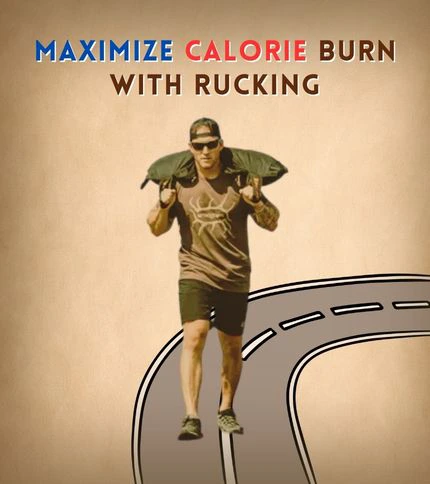
- Add some terrain or hills with a moderate pace to fast calorie burn.
- Maintain good posture for efficient rucking.
- Try for shorter steps to maintain efficiency.
- Add 0.5 to 1 mile per session until you reach 3.5 miles.
- Heart rate monitor is crucial, and aim to stay within 60–70% of your maximum heart rate to maintain a moderate and sustainable calorie-burning intensity.
- Schedule rucking sessions two to three times per week, as steady consistency leads to better long-term fat-loss and endurance results.
- Gradually progress your training. As your fitness level improves, increase the load, pace, or total distance to continue challenging your body.
- Maintain proper hydration by drinking water before, during, and after your ruck to support performance and reduce the risk of overheating.
- Monitor your heart rate to remain within an aerobic range for longer workouts.
- Breathing deeply in fresh air improves oxygen efficiency and supports cardiovascular adaptation.
- Wear proper hiking shoes to support foot stability and reduce injury risk. Choose durable hiking shoes suited for trails and uneven surfaces.
However, the crucial thing is to start rucking with proper management. Gradually increase the backpack weight, speed, distance and duration. Must prioritise your body’s recovery between sessions. It burns a lot of calories. So, take nutritious food to keep well. Every session is enough to burn at least 100 calories.
Common Mistakes in Rucking for Calorie Burn
I have seen beginners make common mistakes to achieve fast calorie burn. I suggest you avoid this hard-
- Don’t increase your weight too quickly, as it can lead to injury and overuse.
- Don’t lean your body forward excessively. It can cause neck and back pain.
- Always use well-fitted socks and footwear. It will help you reduce the blisters.
- Follow the rucking guideline properly.
Frequently Asked Questions (FAQs)
Is rucking a good way to burn calories?
According to the Army Research Institute, at the same pace, running can burn 30-45% more calories than walking. For people who can’t run and want to lose weight, rucking is recommended.
Will rucking burn belly fat?
Yes, rucking is an effective exercise to burn belly fat and improve your fitness and health.
How many calories does rucking burn per mile?
Rucking burns around 100 to 200+ calories per mile. It is generally 2 to 3 times more than normal walking.
Where do you lose fat first?
Men lose their torso weight first, while women are seen to lose leg weight first. It also varies widely and differs from person to person.
Final Thoughts
As a beginner, you should understand how many calories does rucking burn. Calorie burn varies with your body weight, load carriage, distance, pace and time. It will help you improve your rucking to achieve the goal. Even a moderate ruck with 10–20% of your body weight can significantly boost energy expenditure while building strength and endurance. Stay consistent, progress gradually, and focus on proper form to maximise results. Over time, rucking can become a sustainable workout for fat loss and overall fitness.

Leave a Reply