
I used to walk 4 to 5 kilometres every day. I thought it was enough for me. Steps were high, sweat was low, and the result was average! Running hurt my knees, gym workouts felt inconsistent, and all the motivation dipped fast.
I got frustrated!
At this moment, my friend told me to walk with a weighted backpack, initially developed for military training to build strength, endurance, and resilience to reduce injury risk, rather than running for a short time. Today, civilians use it for fat loss, cardiovascular fitness, posture improvement, and mental toughness.
But, how much weight for rucking?
As a beginner, start rucking with 10% of your body weight. Then, gradually increase the load to 15% and up to 20% or more over time, depending on your fitness level and goals. Soldiers carry 30-45% of their BW and even 50%+ during the march approach.
In this article, I will discuss rucking in detail, including key elements, weight, how to start, time, and how to pack a rucking backpack. So, let’s read-
- Rucking is walking with a weighted backpack to improve strength, endurance, and fat loss.
- Beginners should start with 10–15% of their body weight and gradually increase the weight, time, speed, and distance.
- Experienced ruckers carry 25–30% of body weight, depending on goals and conditioning.
- Military starts rucking at 35-45% of their body weight percentage and even 50%+ during emergency load.
Table of Contents
In This Post……
What Is Rucking?
Rucking means walking or hiking with a weighted backpack. You have to carry a weighted backpack, also known as a rucksack. Originally developed by the military to build strength, endurance, and resilience, reducing injury risk compared to running.
It is a simple modification to your walk that will turn your regular work into a high-intensity workout. The beautiful thing about rucking is that it is straightforward and beginner-friendly, and an excellent way to lose weight and keep your fitness and posture in perfect condition. As it also burns calories more quickly than walking, it is also known as resistance training.
Key Elements of Rucking
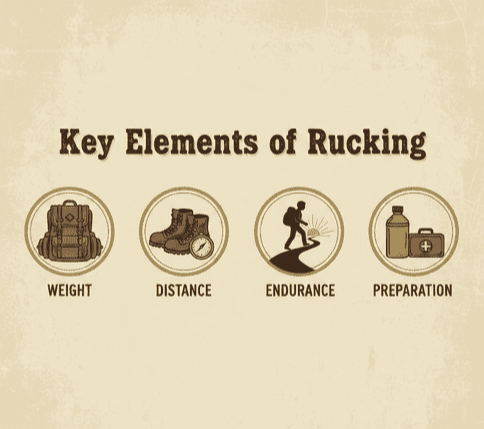
The 4 key elements of rucking are-
- Rucking Load
- Rucking Backpack/ Weighted Walking Pack
- Distance and Terrain
- Pace and Posture
Let’s see in detail-
Rucking Load
Rucking load means the amount of backpack weight you can carry easily. It makes walking a good exercise.
But, how much weight is good for rucking?
As a beginner, it is best to start with a lighter weight such as 10-15% of your body weight. Then, with the improved strength and endurance exercise, gradually increase the weight to minimise the risk of injury.
Rucking Backpack / Weighted Pack
The most essential thing is to choose a perfect rucking backpack. It helps to distribute the weight evenly and reduces strain on the shoulders and back. A weighted pack with sturdy straps, good padding, and secure compartments are perfect for longer rucking sessions.
Distance & Terrain
The intensity of rucking depends significantly on distance and terrain. Flat surfaces are easier to ruck on than hills, trails, and uneven terrain. But the uneven terrains will help you build strength, endurance, and resilience shortly. So, start with a shorter distance and gradually increase it over time.
Pace & Posture
The right pace and posture are essential elements of safe and effective rucking. Always keep your torso upright, shoulders back, and core engaged to reduce fatigue and lower the risk of injury.
How Much Weight For Rucking?
Are you a beginner? Don’t know how much weight for rucking beginner?
As a beginner, start rucking with 10% of your body weight. Gradually increase the load to 15% and up to 20% or more over time, depending on your fitness level and goals.
If you are planning to join the Military, you may think: how much weight to start rucking for Military Style?
In this case, the rucking loads are significantly heavier than civilian rucking.
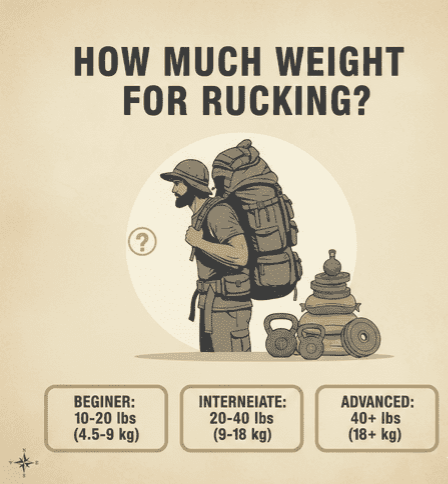
Soldiers carry 30–45% of their body weight during standard operations, 50%+ during the ruck march approach or emergency loads. These loads often range from 70 to 100+ pounds, depending on mission requirements and gear carried.
According to Force Fitness,
They recommend that beginner rucking weight should start with 10% of their body weight. Make your body adjust to the movement, duration, and weight. Once you’re comfortable, gradually increase the load to 15% or higher, depending on your fitness goals.
According to the Rucking World,
As a beginner, start with about 10–15% of your body weight. Over time, you will become experienced and progress toward 25–30% depending on your goals and functional fitness level.
According to the r/Goruck discussion on Reddit,
He started rucking at 20lb, which means 15% of his body weight. He suggested beginning beginner ruckers at 10–15% BW and experienced ruckers at 25–30% BW, depending on goals and conditioning.
Quick Summary:
- Beginners: 10–15% of body weight
- Experienced ruckers: 25–30% of body weight
- Military rucking: 30–45% usually, 50%+ (70–100+ lbs) in heavy operations
How to Start Rucking?
Now it’s time to start rucking. To start rucking, you need only 3 things-
- A Rucksack Backpack
- Add Weight
- Start Walking
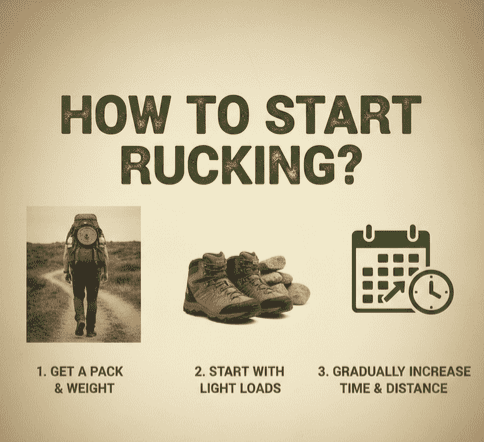
Let’s break down-
1. Get a Rucksack Backpack
Are you confused about the type of rucksack? There is no reason for overthinking!
Get a pack that fits you well to start. But if you want to use it for long-distance, try to get a pack with an extra pocket for essentials like snacks, a water bottle, etc.
2. Add Weight
At the beginning, I discussed how much weight to put in the backpack for rucking. Once you have got the bag, don’t overthink about how much weight for hiking.
Simply, add some weight.
I recommend you use the Weight Plates, especially those designed to fit GORUCK Rucksacks. It is not mandatory; you can start with whatever you have, such as books, bricks, sandbags, or dumbbells. Just add weight to anything, wrap it with any cloth for a cushion, then keep it in the bag.
If you are in doubt how much weight to use for rucking, start at 10% of your body weight and gradually increase it to find what works for your body.
3. Start Walking
It is time to start walking. Focus on comfort, pace, and consistency rather than speed. Once you adopt, increase the weight, speed and distance.
How Long Should You Ruck For?
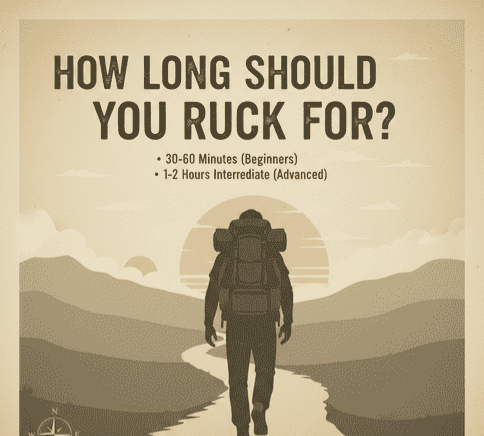
Are you a beginner wondering how long you should ruck? Confused about the rucking for time or distance-based? The time-based ruck is suitable for beginners. Once you are comfortable, you can easily move to a distance-based ruck.
Let’s break it down-
Time-Based Rucks (Beginner-Friendly)
For the first time, start with 20-30 minutes at a comfortable pace. Remember, the goal is not your speed; it is consistency.
If you lead a busy life, a perfect short-term ruck can help you to reach your goal.
According to the Pathfinder Ruck training guide,
Predictable effort over a set time is also great for weight loss and overall fitness.
Distance-Based Rucks (Intermediate to Advanced)
Are you now comfortable with 30-60 minutes of rucking? This is the time to switch to distance-based rucks.
I will suggest focusing just on two things–
- Start with 3–5 miles of rucking,
- Gradually increase as your endurance improves.
Advanced ruckers may aim for 6–10 miles during weekly long sessions. The Pathfinder guide suggests maintaining around 17 minutes per mile at moderate effort.
According to the Pathfinder Ruck Training Guide,
The key to safe and effective rucking is gradual progression. Start with manageable loads and short sessions. Then slowly increase time, distance, and weight to avoid injury. Make sure to include one long ruck per week to build endurance and balance your rucking with recovery and strength training.
Here’s a simple progression guide to follow:
| Level | Duration | Distance | Load | Notes |
| Beginner | 20–30 min | 1–2 miles | 8–10 lbs | Focus on posture; avoid overloading early. |
| Intermediate | 30–60 min | 3–5 miles | 15–25 lbs | Add one weekly long ruck (60+ min). |
| Advanced | 60–120 min | 6–10 miles | 30–45 lbs | Train for endurance events; maintain steady pace. |
Are you a woman? Don’t know how much weight for rucking women?
The recommendation is the same, start with 10–15% of body weight. With consistent training and proper recovery, an experienced female ruckers can comfortably carry 20–25% of body weight, and sometimes more with advanced conditioning.
What Is the Best Way to Carry Weight for Rucking?
The best way to carry weight for rucking is to use equipment designed for load-bearing movement.
Some people also use weighted vests, but a ruckpak is a better option. It helps distribute the weight evenly, sit closer to the body, and maintain proper posture and balance during long walks or hikes.
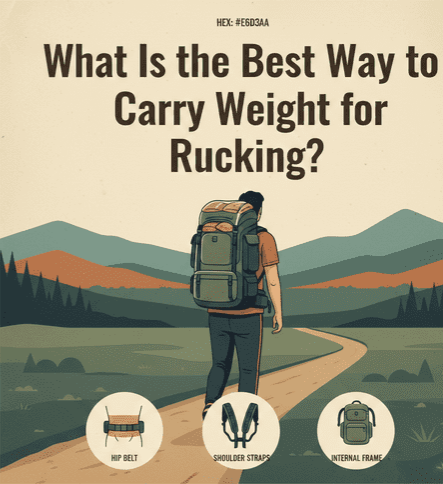
Choose rucking gear that includes a padded shoulder strap, adjustable chest straps, waist straps, and other features that reduce pressure points and prevent the load from shifting. This will minimise the rubbing, chaffing, and unnecessary risk of injury.
Overall, it will help you build comfort, stability, and safety for both short and long distances.
How to Pack a Rucking Backpack Properly
I never thought I’d have to ruck after the military. You know that rucking is good for cardiovascular endurance and muscle strength. For this reason, most people, from veterans to civilians, now make it a daily routine.
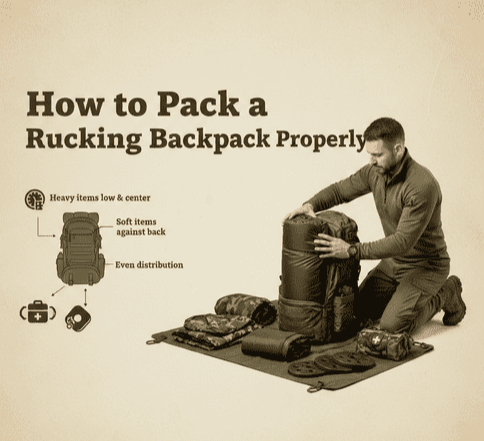
Whether you are rucking on long-distance terrain or hiking, it is essential to know how to pack a ruck for comfort, stability, and overall performance.
So, how do you pack a rucking backpack properly for comfort, stability, and accessibility?
To pack a rucking backpack, follow these easy 3 steps-
- Keep the lightest weight at the Bottom
- Heaviest at the top, and
- Stuff the pockets
Let’s see in detail-
1. Lightest at the Bottom
When packing a rucksack, put the least important and lightest items at the bottom. This is crucial for weight distribution and stability.
How does it distribute weight evenly?
When we keep the lighter equipment at the base, the rucksack maintains a lower centre of gravity. This prevents the pack from becoming top-heavy, balances the overall load, and reduces strain on your lower back.
2. Heaviest at the Top
Put the heaviest item at the top and close to your shoulders. Heavier items should always sit near your back to improve stability and weight distribution.
When we keep the heaviest stuff at the top, it-
- Keep the weight close to your body’s centre of gravity.
- Improves balance and overall stability.
- Prevents the load from shifting while rucking.
- Reduces strain and discomfort on your back and shoulders.
3. Stuff the Pockets
It is better to choose a rucksack that has pockets. It will help you to organise gear and keep items accessible.
Try to place frequently used items, such as snacks, a water bottle, and a map, etc., in the external pockets. It will save you time, and you won’t need to unpack everything.
Frequently Asked Questions (FAQs)
What Is the Ideal Weight for Rucking?
The ideal weight for rucking is 10-15% of your body weight. So, you can start from 10-15 lbs, depending on your fitness level and goals. If you are in doubt, start with a lighter weight, then increase gradually.
How far should I ruck as a beginner?
I suggest starting at a shorter distance, such as 1 to 2 miles. Over time, when improving muscle strength and endurance, gradually increase it.
Is rucking harder than running?
No, rucking is better than running. Rucking is low-force walking that helps you burn calories easily and improve strength, stability, and endurance. Running puts a lot of pressure on the joints and increases the risk of injury.
What are the negatives of rucking?
Rucking is a low-impact exercise and is easier on the joints than high-impact activities like running, but it still carries some risk. Rucking too far, too often, or with more weight can lead to pain in the lower body, back, shoulders, or neck.
How Much Weight for Rucking Men?
For men, a safe starting point is 10–15% of body weight. As strength and endurance improve, most men can gradually progress to 20–30% of body weight, depending on fitness level, rucking frequency, and goals.
Final Thoughts
Rucking is better than running. It helps keep your body fit, build strength, and improve endurance. As it is a low-impact method, as a beginner, it is essential to know how much weight for rucking. I suggest you start with a light weight, such as 10-15% of your body weight, then gradually increase the weight, speed, time, and distance.

Leave a Reply