
Puff Pastry Tarts are one of the easiest ways to turn a sheet of pastry and a few everyday ingredients into something that looks bakery-worthy.
From berry-filled desserts and creamy fruit combinations to savory tomato, mushroom, and cheese toppings, most of these ideas start with ready-made puff pastry and require very little shaping.
The biggest trick is keeping the pastry cold before baking and avoiding overly wet toppings. Store-bought puff pastry is especially useful when you want crisp, flaky layers without making laminated dough from scratch.

Once you know those two basics, you can switch between sweet fruit puff pastry recipes and savory tarts without learning a completely different technique.
Key Takeaways
- Keep puff pastry cold before assembling and baking.
- Dry juicy toppings to help prevent soggy pastry.
- Use thin fruit slices for more even baking.
- Pre-cook watery vegetables before topping the pastry.
- Try fruit puff pastry for simple seasonal desserts.
- Leave pastry borders uncovered so they can rise.
In This Post……
- What Are the Best Puff Pastry Tarts to Make at Home?
- How Do You Keep Puff Pastry Tarts Crisp?
- 1. Strawberry Cream Cheese Puff Pastry Tarts
- 2. Blueberry Lemon Pastry Tart
- 3. Apple Cinnamon Puff Pastry Tart
- 4. Peach and Honey Puff Pastry Tarts
- 5. Mixed Berry Puff Pastry Tart
- 6. Pear and Almond Pastry Tart
- 7. Raspberry White Chocolate Puff Pastry Tart
- 8. Cherry Vanilla Pastry Tart
- 9. Blackberry Cream Cheese Puff Pastry Tarts
- 10. Mango Coconut Pastry Tart
- 11. Plum and Brown Sugar Puff Pastry Tart
- 12. Apricot Honey Pastry Tart
- 13. Fig and Goat Cheese Puff Pastry Tart
- 14. Lemon Cream Puff Pastry Tart
- 15. Chocolate Strawberry Puff Pastry Tart
- 16. Tomato Mozzarella Puff Pastry Tart
- 17. Mushroom Gruyère Puff Pastry Tarts
- 18. Caramelized Onion and Goat Cheese Pastry Tart
- 19. Spinach Feta Puff Pastry Tart
- 20. Pesto Vegetable Puff Pastry Tart
- 21. Asparagus Parmesan Puff Pastry Tart
- 22. Roasted Red Pepper Ricotta Tart
- 23. Zucchini Parmesan Puff Pastry Tart
- 24. Brie Cranberry Puff Pastry Tart
- 25. Pear Brie and Honey Puff Pastry Tart
- What Fruit Works Best for Puff Pastry Fruit Tarts?
- Should You Thaw Puff Pastry Before Making a Pastry Tart?
- What Temperature Should You Bake Puff Pastry Tarts?
- How Do You Stop a Puff Pastry Tart From Getting Soggy?
- Can You Make Puff Pastry Tarts Ahead of Time?
- How Should You Store Leftover Puff Pastry Tarts?
- FAQ About Puff Pastry Tarts
- Final Thoughts
What Are the Best Puff Pastry Tarts to Make at Home?
The best Puff Pastry Tarts combine cold pastry, flavorful toppings, and controlled moisture so the layers can bake crisp and flaky.
At a Glance
- Choose fruit for easy sweet tarts.
- Use cheese and vegetables for savory versions.
- Keep toppings relatively thin and evenly distributed.
- Dry or pre-cook ingredients that release excess liquid.
- Match seasonal produce with simple complementary flavors.
The best Puff Pastry Tarts balance three things: flaky pastry, a flavorful topping, and just enough moisture to keep the center tender without making the bottom soggy.
Fruit versions work beautifully with berries, apples, peaches, pears, citrus, and stone fruit, especially when you want easy summer desserts built around seasonal produce. Savory pastry tart ideas can use tomatoes, mushrooms, onions, herbs, pesto, and different cheeses.
| Tart Idea | Main Flavor | Best For | Difficulty |
|---|---|---|---|
| Strawberry Cream Cheese | Sweet, creamy | Brunch | Easy |
| Blueberry Lemon | Bright, fruity | Dessert | Easy |
| Apple Cinnamon | Warm, spiced | Fall baking | Easy |
| Peach Honey | Juicy, floral | Summer | Easy |
| Mixed Berry | Tart-sweet | Parties | Easy |
| Pear Almond | Nutty, elegant | Holiday dessert | Easy |
| Tomato Mozzarella | Fresh, savory | Lunch | Easy |
| Mushroom Gruyère | Rich, earthy | Appetizer | Moderate |
| Caramelized Onion Goat Cheese | Sweet-savory | Entertaining | Moderate |
| Pesto Vegetable | Herby, colorful | Light meal | Easy |
Puff pastry is also flexible enough for both homemade and store-bought dough. Sally’s Baking demonstrates this approach in its mushroom tart recipe, where either homemade rough puff or thawed store-bought pastry can be used.
How Do You Keep Puff Pastry Tarts Crisp?
Keep the dough cold, reduce moisture in the toppings, and leave enough exposed pastry for the edges to rise and brown.
At a Glance
- Chill pastry until assembly.
- Pat fruit and vegetables dry.
- Pre-cook watery savory toppings.
- Avoid excessive sauces and fillings.
- Keep the outer border mostly uncovered.
Keep the pastry chilled until you are ready to assemble it, and avoid piling on ingredients that release large amounts of liquid.
For fruit, pat washed fruit dry before adding it. For mushrooms, onions, spinach, or other vegetables with substantial moisture, cooking them first can help evaporate excess liquid.
You can also lightly score a border around the pastry without cutting all the way through. The outer edge can then rise higher while the center holds your filling.
A light egg wash on the exposed pastry creates a deeper golden finish. Sally’s Baking similarly uses egg wash on puff pastry before assembling its mushroom tarts.
1. Strawberry Cream Cheese Puff Pastry Tarts
Strawberry cream cheese Puff Pastry Tarts are the kind of dessert that looks like you spent all afternoon baking even though the ingredient list can stay remarkably short. The creamy layer gives the berries somewhere to sit while also creating a richer contrast than simply placing sliced strawberries directly on pastry.
I like these most for late-spring brunches,
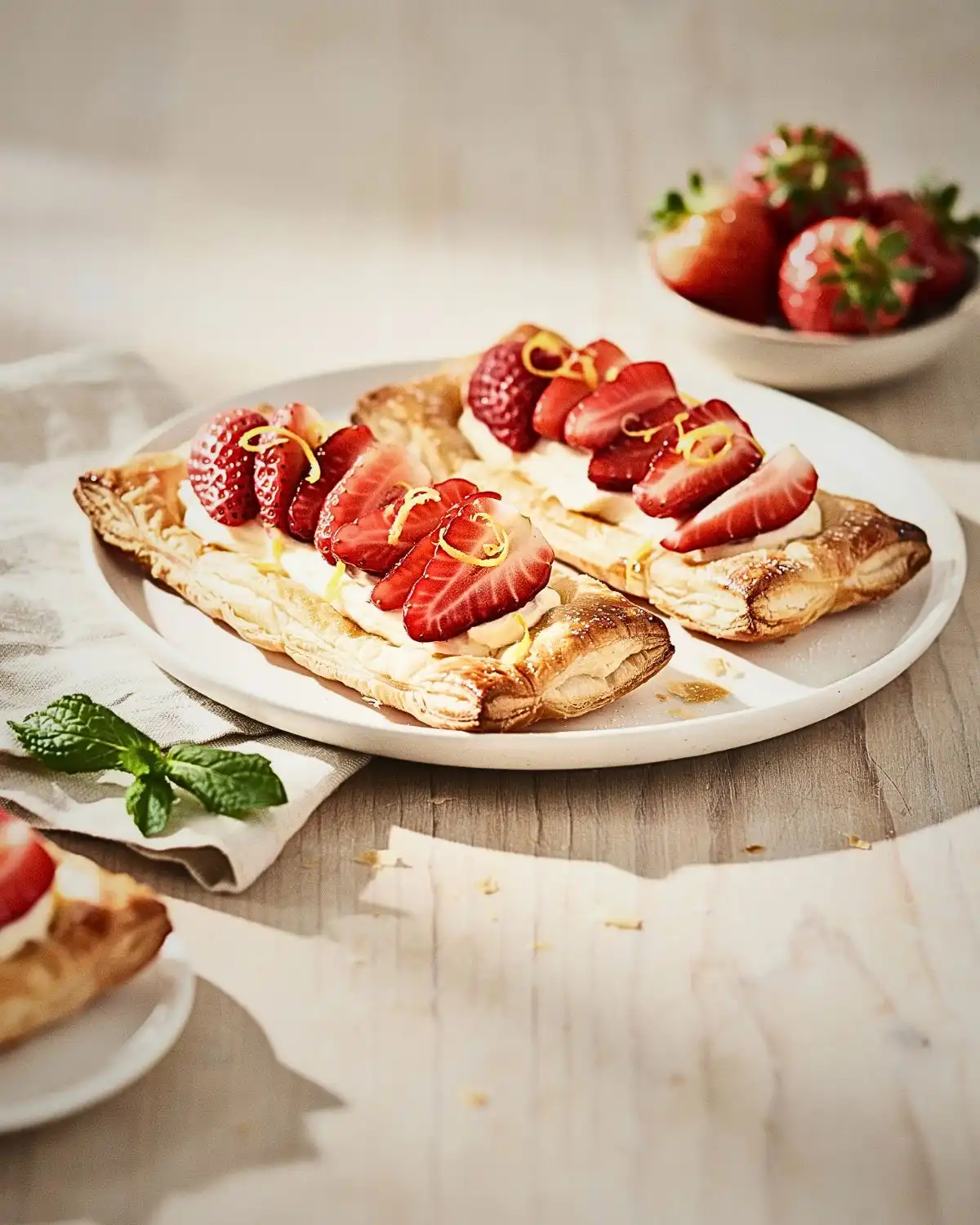
especially when strawberries are naturally sweet enough that they do not need much added sugar. A little lemon zest in the cream cheese keeps the filling from tasting heavy.
Spread sweetened cream cheese inside a lightly scored pastry border, arrange thin strawberry slices over the top, and bake until the edges are deeply puffed and golden.
Special Tip: Pat the strawberry slices dry before arranging them. Less surface moisture means a crisper pastry tart.
2. Blueberry Lemon Pastry Tart
Blueberry and lemon make an especially useful combination when you want a fruit puff pastry dessert that tastes bright instead of overly sweet. Blueberries soften as they bake, while lemon zest cuts through the buttery richness of the pastry.
Instead of using a heavy pie-style filling, keep the berries mostly whole. This gives the tart juicy pockets of fruit without turning the center into a thick sauce.
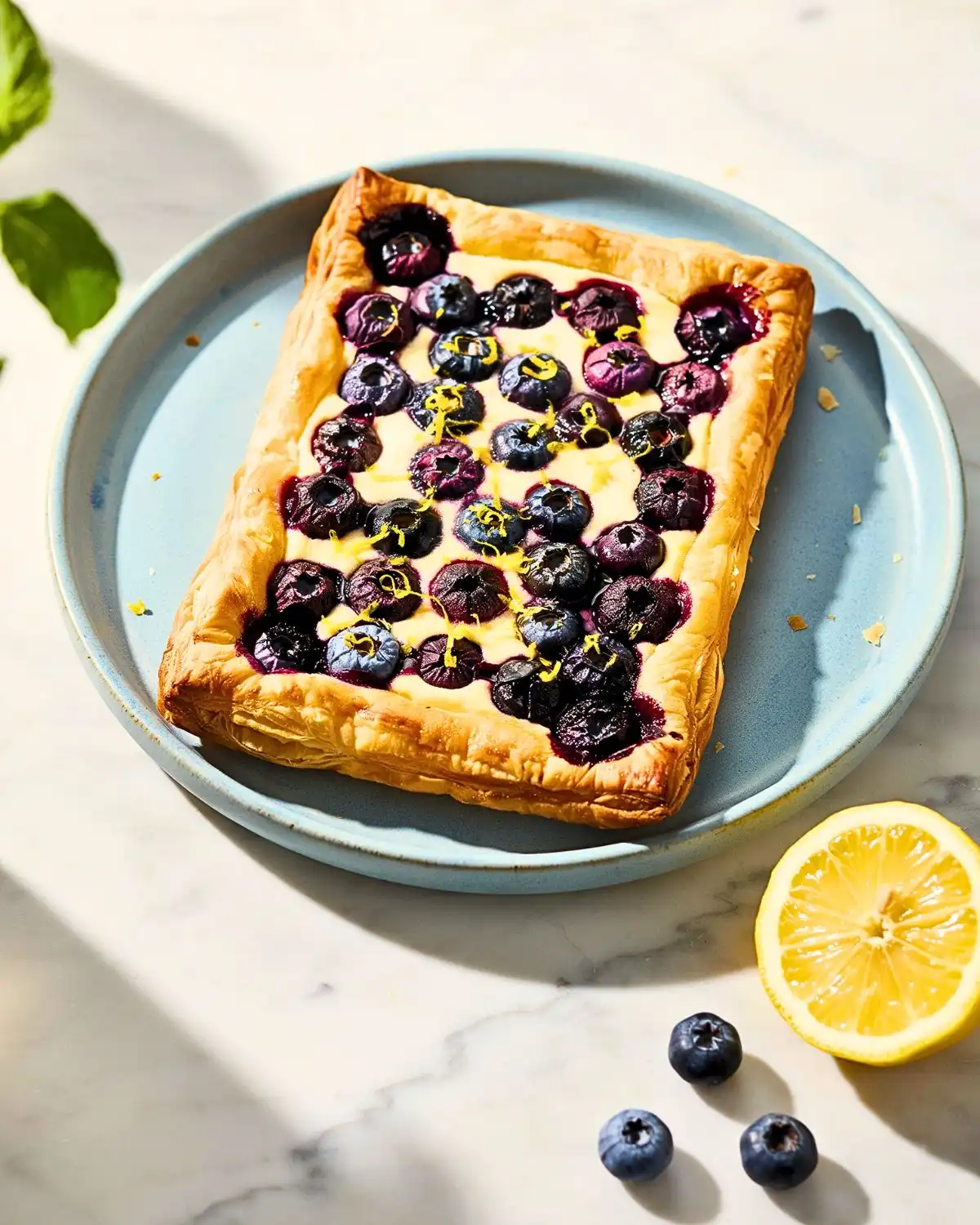
A thin cream cheese or mascarpone base works beautifully underneath, though you can also keep it simple with berries, sugar, and lemon.
Finish the baked pastry tart with extra lemon zest just before serving for a fresher aroma.
3. Apple Cinnamon Puff Pastry Tart
An apple cinnamon puff pastry tart gives you many of the flavors of apple pie with considerably less assembly. Thin apple slices cook quickly and create a neat layered pattern across the pastry.
This is one of my favorite options when I want a warm dessert but do not want to prepare a full pie crust. Tart apples work particularly well because their flavor stays noticeable beside cinnamon and brown sugar.
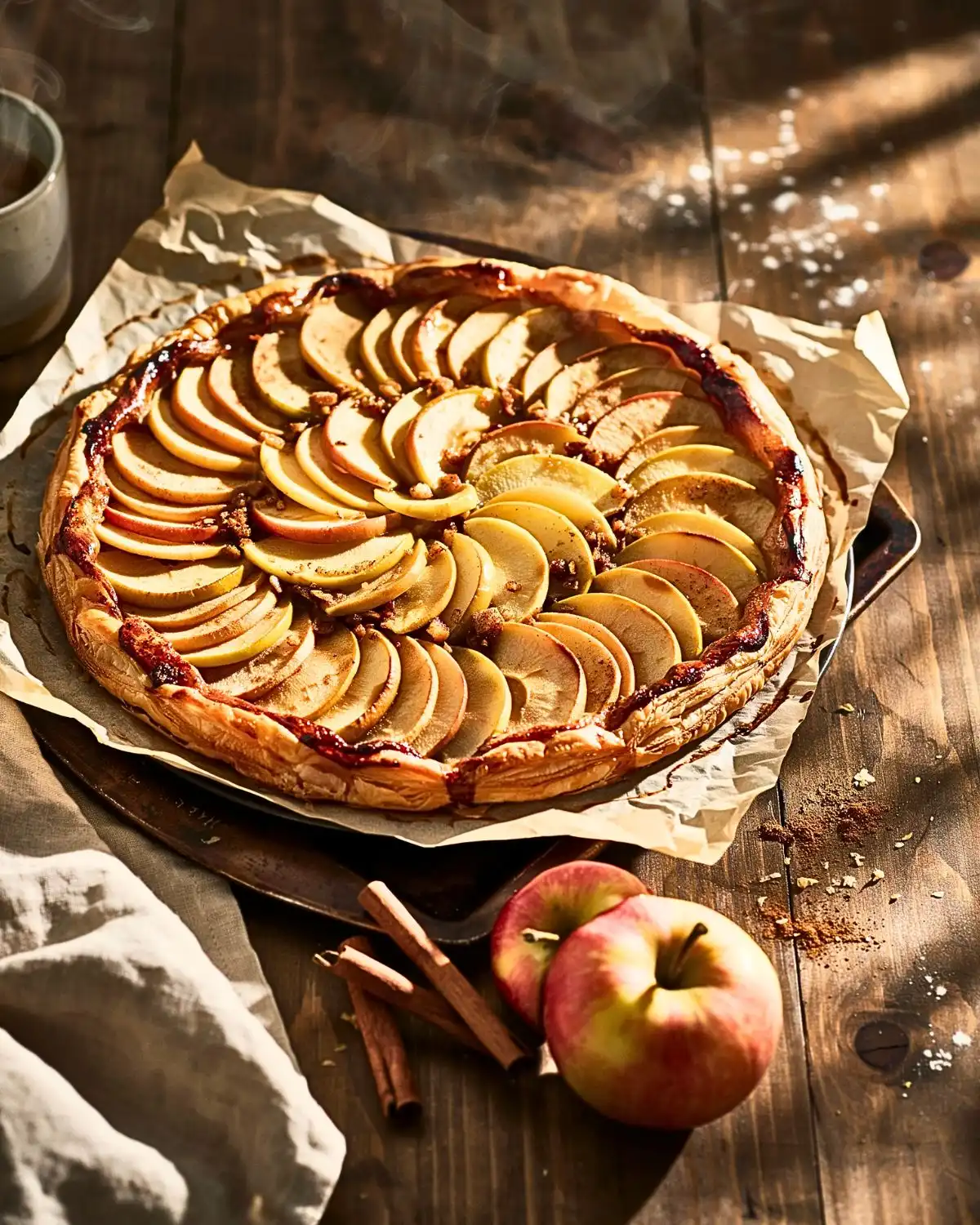
Toss thinly sliced apples with cinnamon, a small amount of sugar, and just enough lemon juice to brighten them. Arrange the slices in slightly overlapping rows before baking.
Serve it warm with yogurt, whipped cream, or vanilla ice cream if you want to turn it into a fuller dessert.
4. Peach and Honey Puff Pastry Tarts
Ripe peaches already have plenty of flavor, so this pastry tart does not need much decoration. A small drizzle of honey complements the fruit instead of hiding it.
The result feels lighter than a pastry filled with custard or thick cream. I especially like this version during summer when peaches are fragrant enough to perfume the whole tart as they bake.
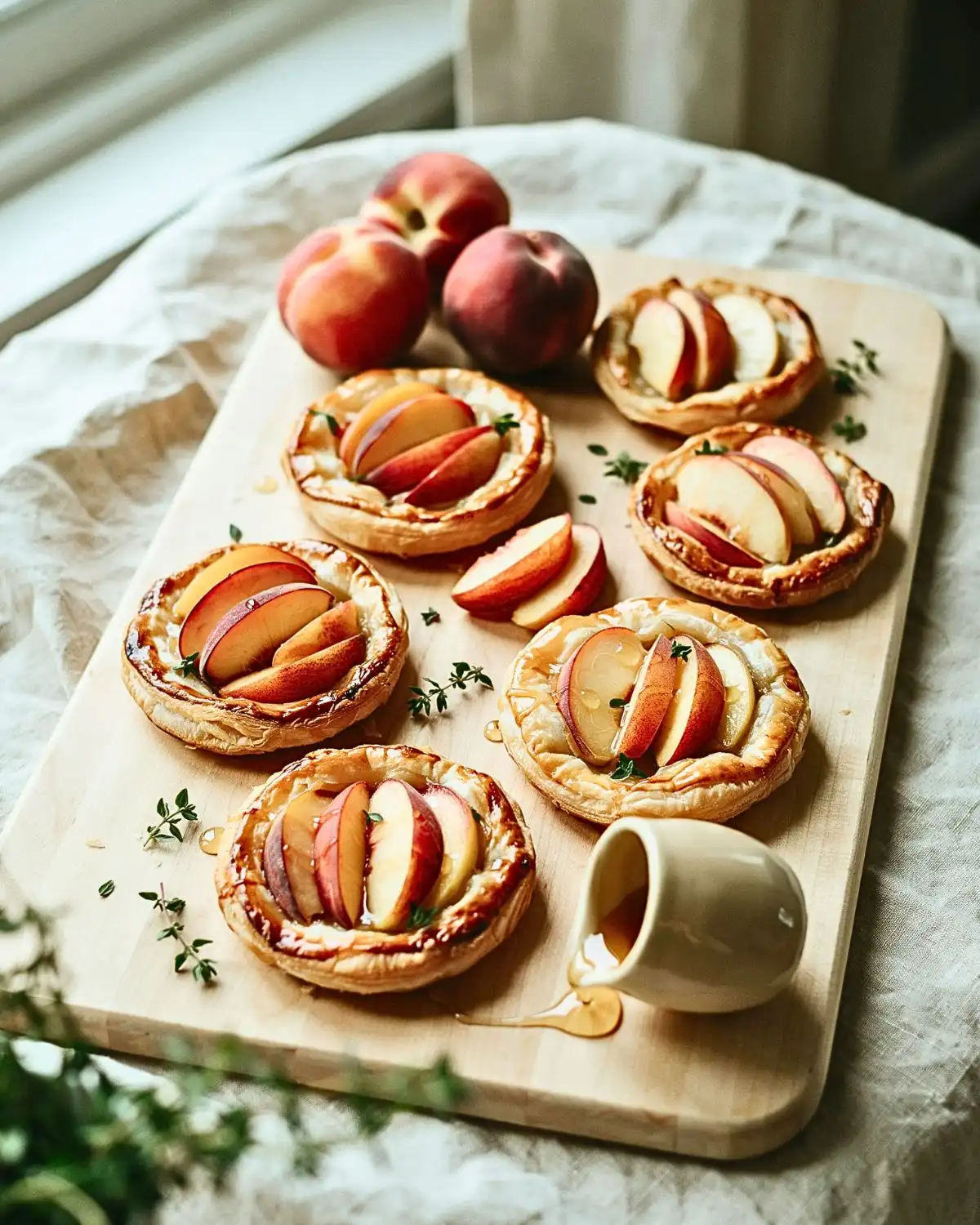
Use thin wedges rather than thick chunks so the fruit softens at roughly the same rate as the pastry cooks.
Add the honey after baking rather than soaking the raw dough with it. You will get the flavor without adding unnecessary moisture to the pastry base.
5. Mixed Berry Puff Pastry Tart
A mixed berry pastry tart is perfect when the fruit drawer contains several small amounts of berries but not enough of any one variety for a full dessert. Strawberries, blueberries, raspberries, and blackberries each bring a different level of sweetness and acidity.
Unlike a traditional berry pie, you do not need to cook the fruit into a thick filling first.
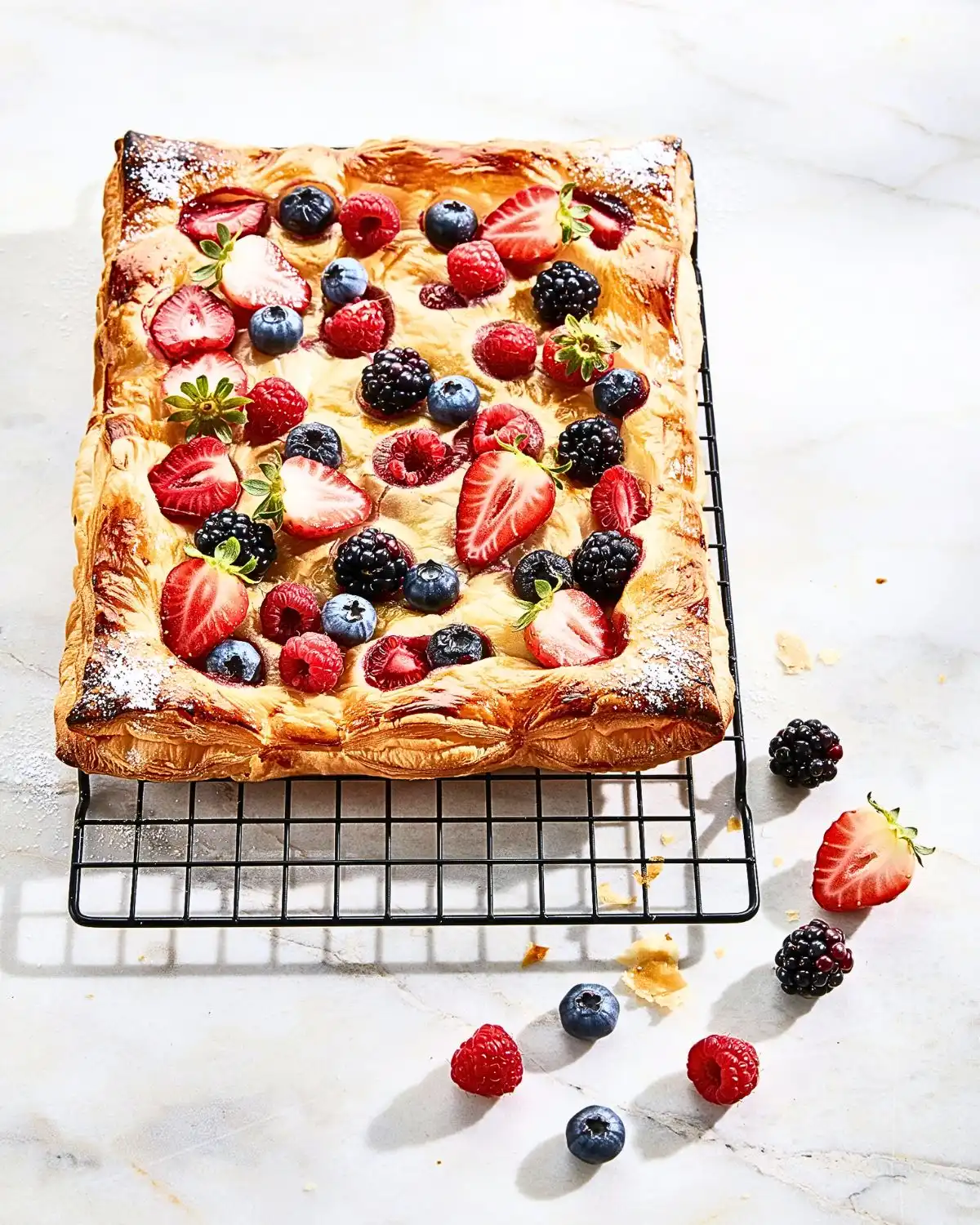
Keeping the berries more intact gives the finished tart a brighter, fresher appearance.
For the prettiest arrangement, scatter small berries whole and cut large strawberries into halves or slices.
Fresh-cut fruit needs careful handling because cutting fruit can increase opportunities for contamination. FDA guidance emphasizes hygienic preparation and appropriate cold storage for fresh-cut produce.
6. Pear and Almond Pastry Tart
Pear and almond is one of those combinations that immediately makes a simple pastry tart feel more polished. The pears turn tender while sliced almonds add a contrasting crunch.
I prefer this when I want something less sweet than an apple tart but still suitable for dessert. A very thin layer of almond paste or almond cream underneath can make the tart richer without requiring much extra decoration.
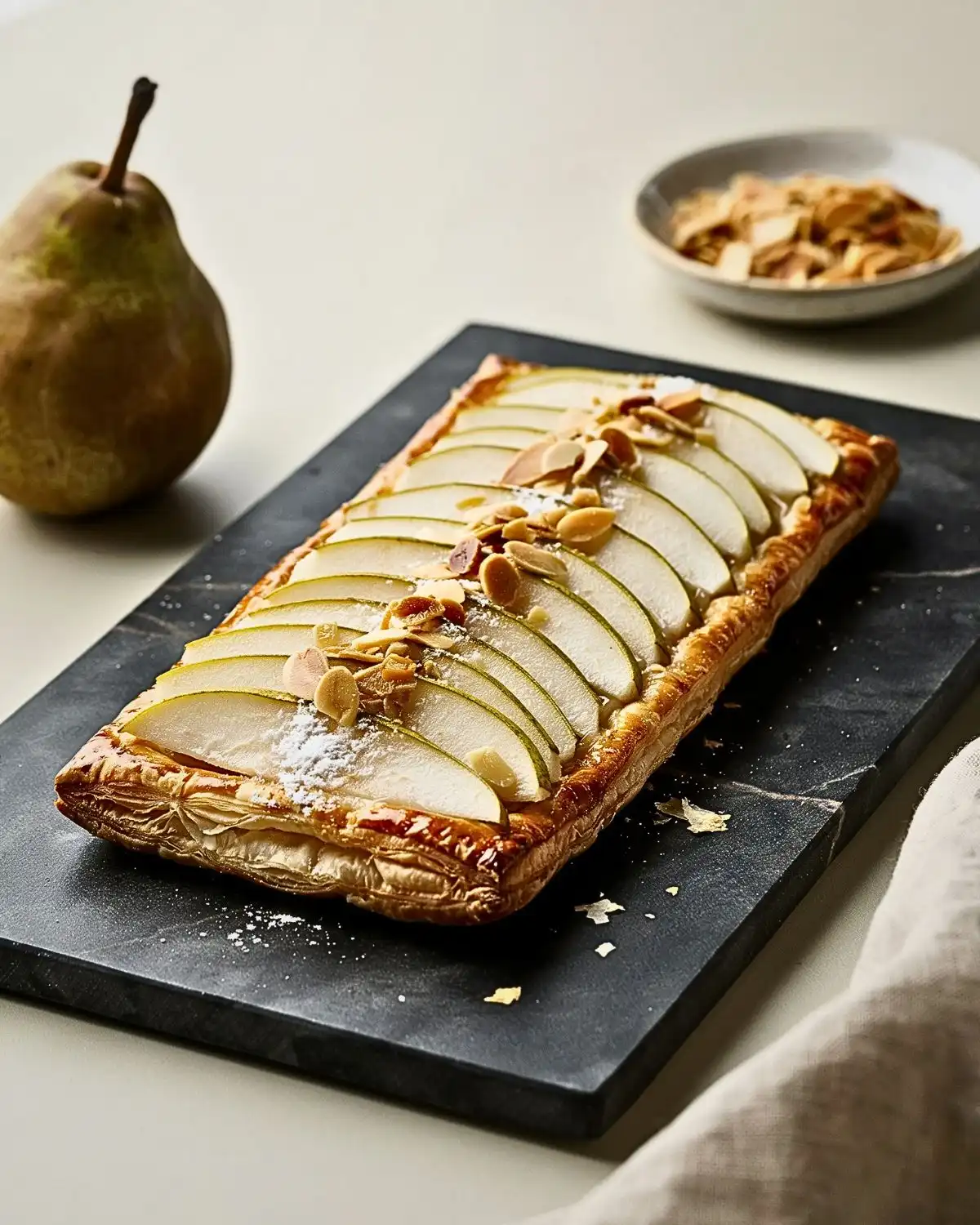
Arrange pear slices like overlapping shingles rather than scattering them randomly. That simple step gives the tart a bakery-style finish.
A dusting of powdered sugar after cooling is usually all it needs.
7. Raspberry White Chocolate Puff Pastry Tart
Raspberry and white chocolate work because one is sharp and tangy while the other is sweet and creamy. Puff pastry keeps the whole dessert from becoming too dense.
Instead of loading the pastry with chocolate before baking, use a restrained amount. Too much can overwhelm both the berries and the flaky crust.
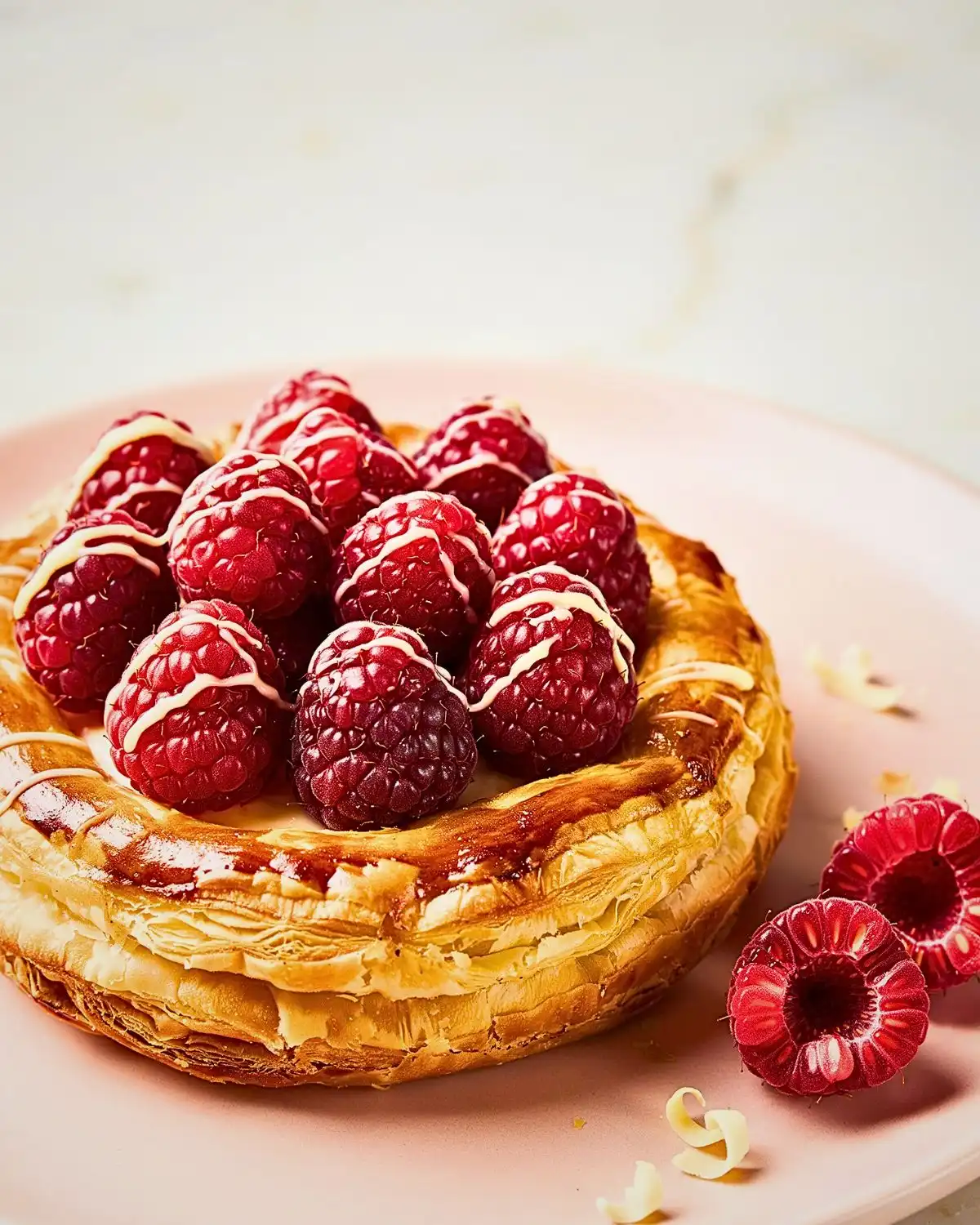
I like to bake the raspberry tart first and finish it with a small white-chocolate drizzle once it has cooled slightly.
This is especially useful for Valentine’s Day, birthdays, showers, or any occasion where you want dessert to look festive without making a layer cake.
8. Cherry Vanilla Pastry Tart
Cherries bring a deeper fruit flavor than many berries, which makes them especially good in a simple pastry tart. Vanilla rounds out their tartness without competing with them.
If using fresh cherries, remove the pits and halve the fruit before arranging it over the pastry. Frozen cherries can also work, but excess liquid should be drained well.
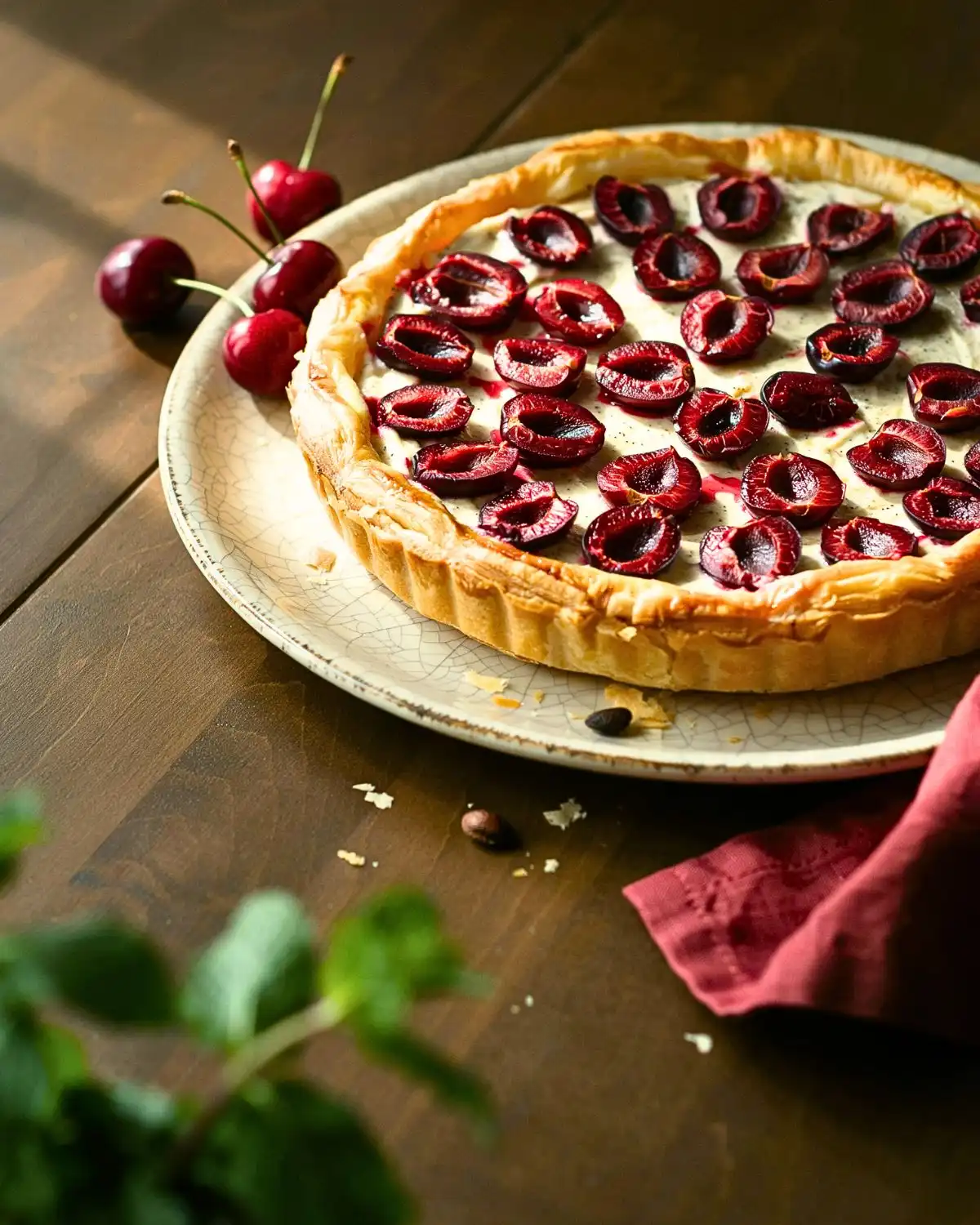
The differentiator here is simplicity. Instead of turning the cherries into a heavy pie filling, you let the pastry stay crisp and keep the fruit recognizable.
A small amount of vanilla-scented cream cheese underneath makes it feel almost like a shortcut cherry Danish.
9. Blackberry Cream Cheese Puff Pastry Tarts
Blackberries have enough acidity to balance both buttery pastry and cream cheese. That makes this puff pastry tart particularly good for people who prefer desserts that are not intensely sweet.
Leave a few berries whole and lightly crush others. You get both attractive berry shapes and little streaks of juice across the filling.
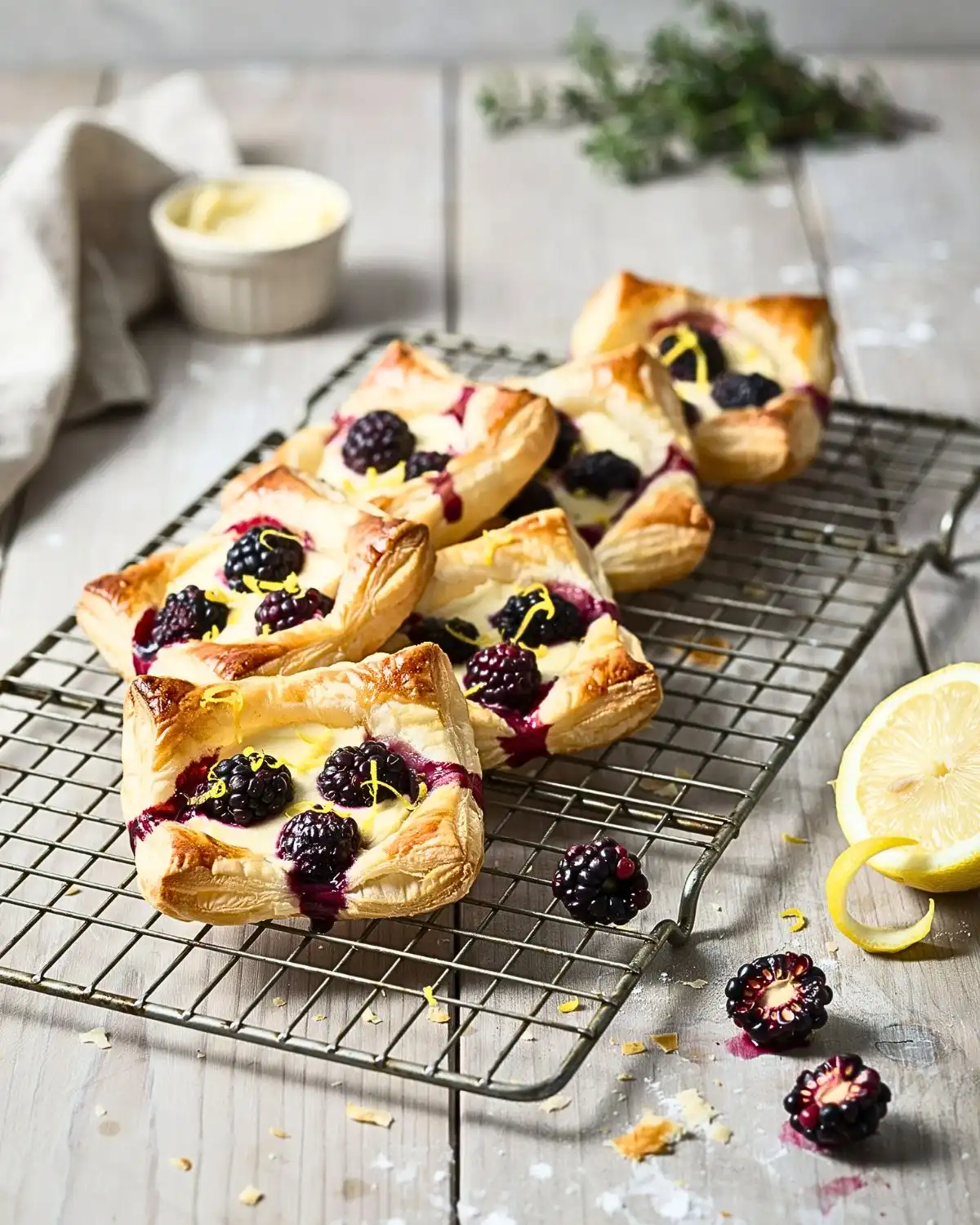
These are especially good as individual tarts for brunch because everyone gets their own crisp pastry border, and they pair naturally with other baked brunch options like scone varieties.
Finish with lemon zest or a small amount of powdered sugar rather than a heavy glaze.
10. Mango Coconut Pastry Tart
Mango brings a tropical direction to Puff Pastry Tarts that you do not see as often as apple or berry versions. Coconut makes the flavor feel even more distinct without requiring a complicated filling.
This tart works best when the mango is ripe but still firm enough to slice cleanly. Very soft mango can release too much juice and make the center messy.
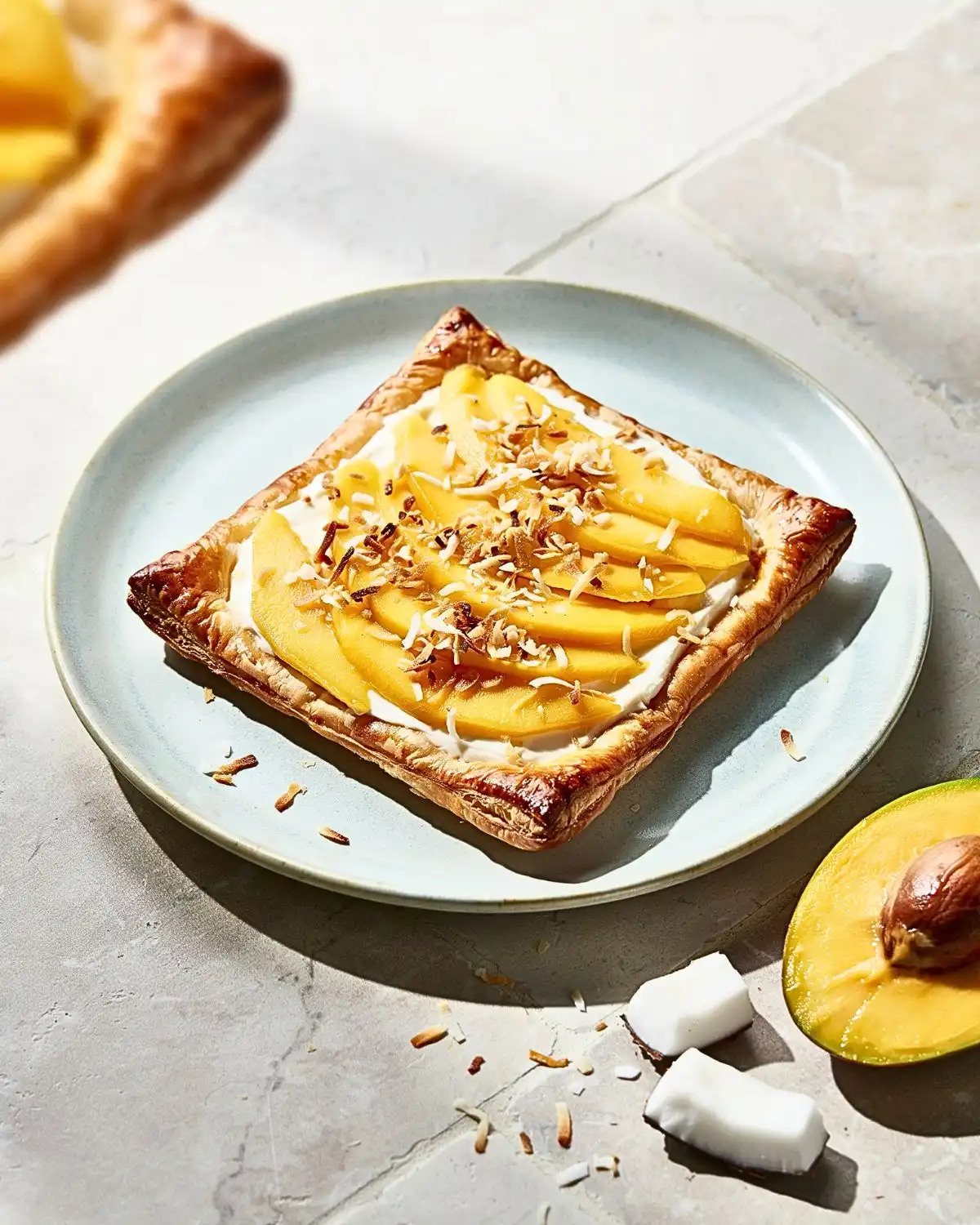
Try a thin layer of lightly sweetened cream cheese underneath the fruit and sprinkle toasted coconut over the tart after baking.
If you want something different for a summer brunch table, this one stands out immediately.
11. Plum and Brown Sugar Puff Pastry Tart
Plums become beautifully jammy around their edges in the oven, but they still keep enough acidity to stop the tart from tasting flat. Brown sugar adds a gentle caramel note that suits the fruit better than an overly sweet glaze.
This is particularly useful when you have plums that are ripe but still slightly firm. Baking softens them and concentrates their flavor.
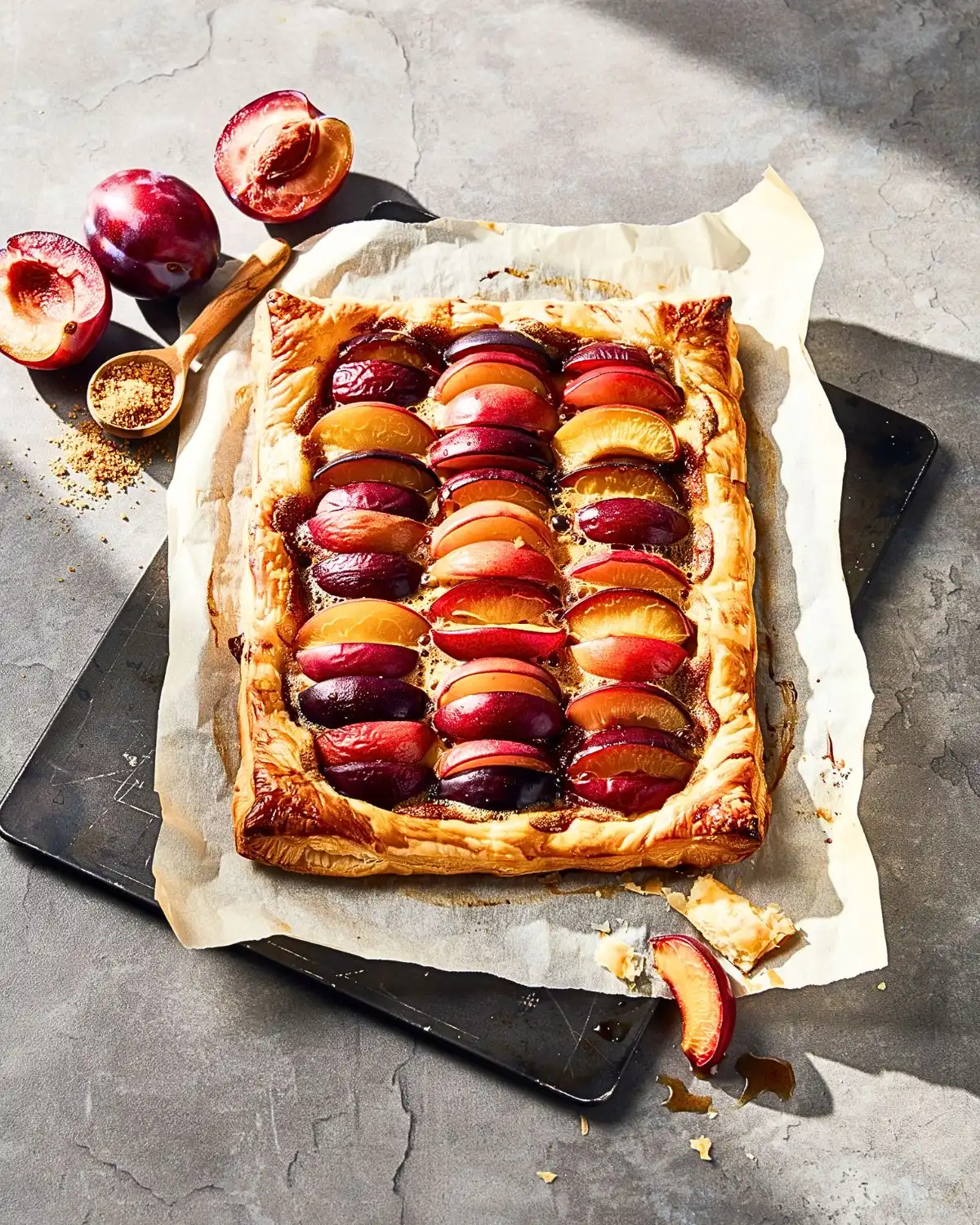
Arrange alternating red and golden plum slices if you have multiple varieties available.
The finished pastry fruit tart looks especially good served as one large rectangle and sliced at the table.
12. Apricot Honey Pastry Tart
Apricots offer a sweet-tart flavor that is strong enough to stand beside puff pastry without disappearing. Honey supports their natural sweetness while keeping the ingredient list simple.
I like this one because it feels slightly more refined than a standard berry tart while being no harder to prepare.
Cut the apricots into thin wedges and keep the center layer relatively light.
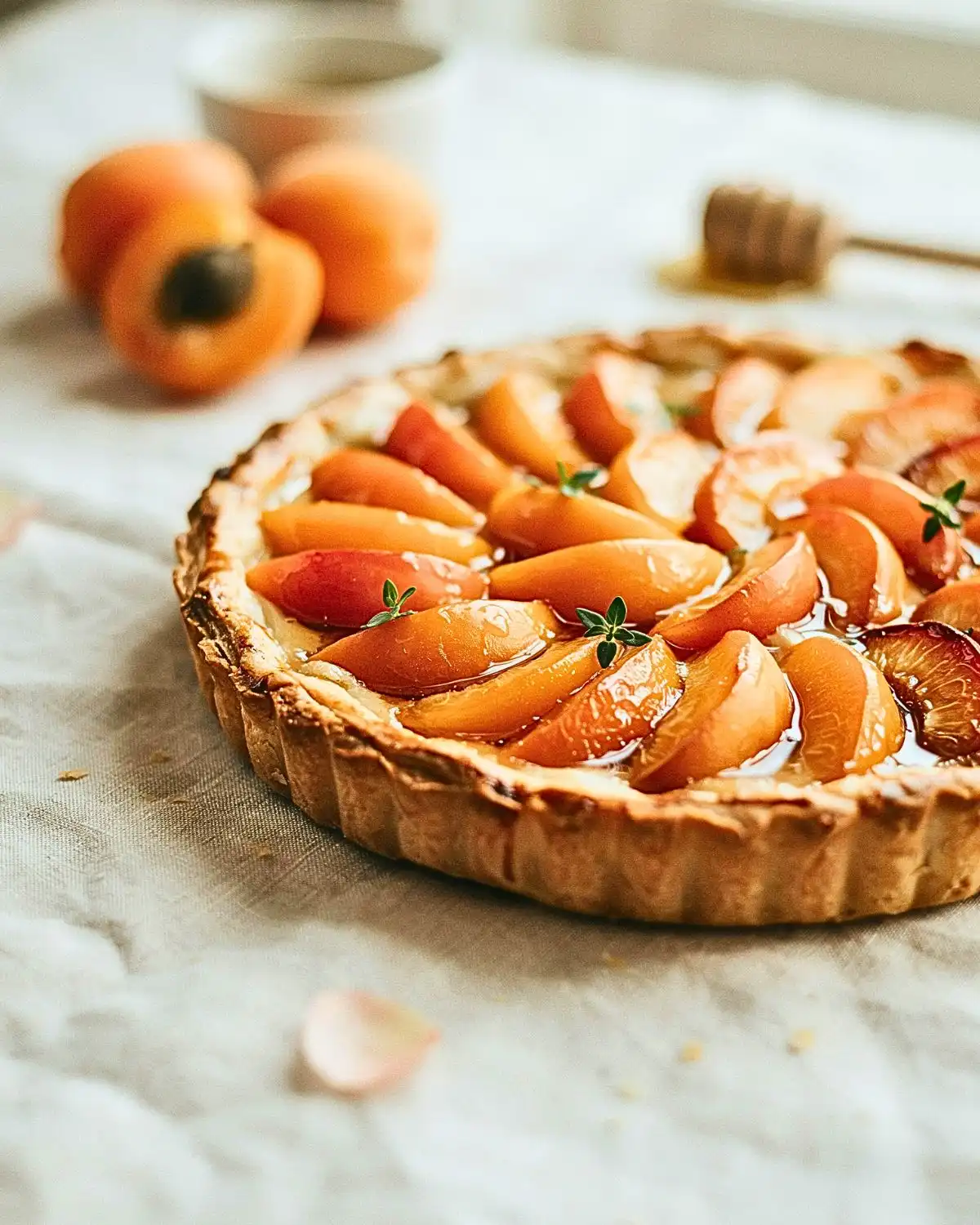
Puff pastry needs room to expand around the filling.
After baking, brush or drizzle just enough honey over the warm fruit to give it a glossy finish.
13. Fig and Goat Cheese Puff Pastry Tart
Fig and goat cheese takes pastry tart territory in a sweet-savory direction. The figs bring natural sweetness while goat cheese adds tanginess and a creamy texture.
This beats a heavily sweetened fig dessert when you want something that can work as either an appetizer or a light course. Fresh thyme adds another savory note without overpowering the fruit.
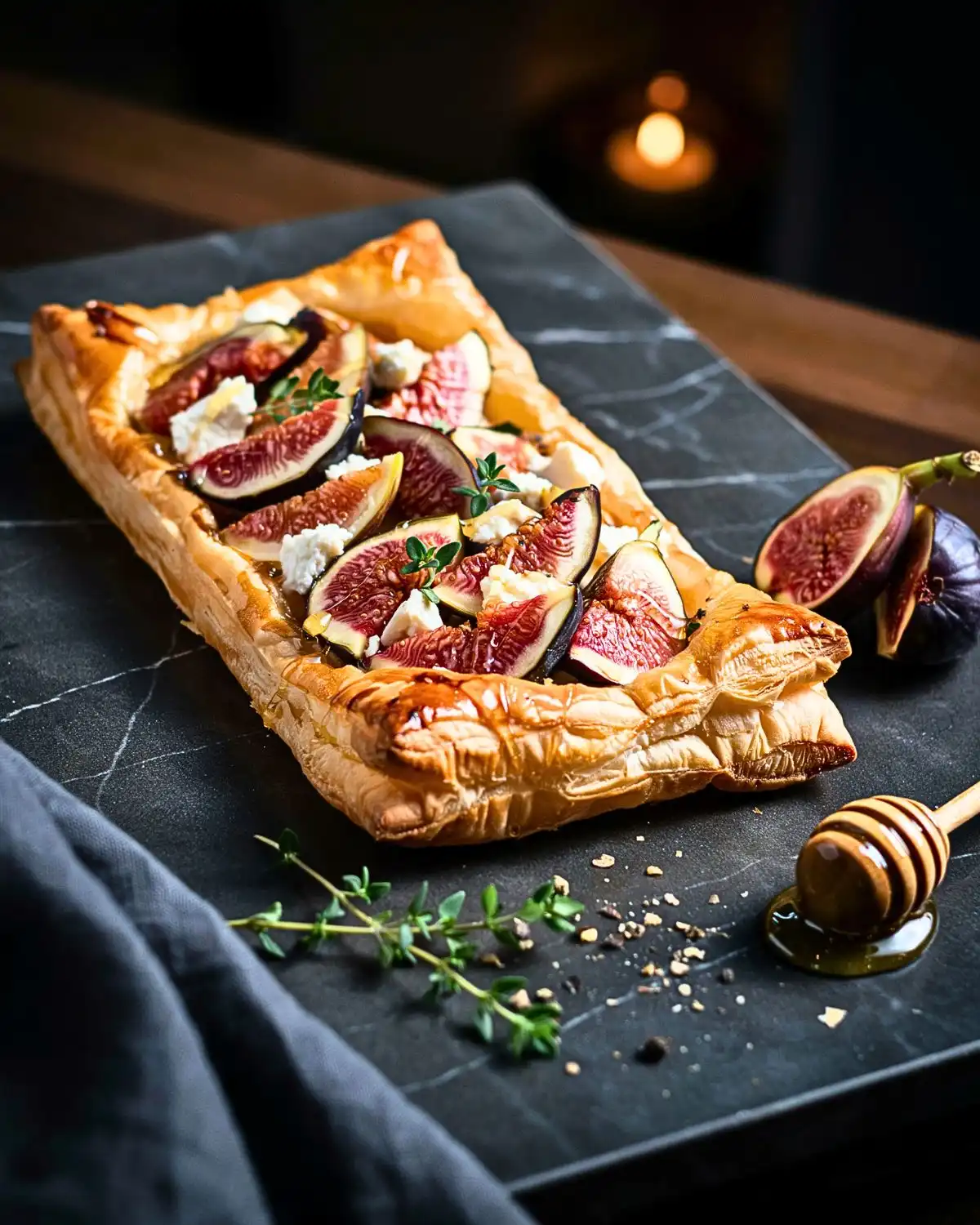
Arrange sliced figs over small pieces of goat cheese, then bake until the pastry is golden.
A tiny honey drizzle after baking ties everything together.
14. Lemon Cream Puff Pastry Tart
Lemon cream gives you a pastry tart that tastes clean, sharp, and refreshing after a heavier meal. The important difference here is that the pastry can be baked first and filled after cooling.
That approach keeps a wet lemon filling away from the dough while it is trying to puff. You end up with crisp pastry surrounding a smooth cream instead of a soggy center.
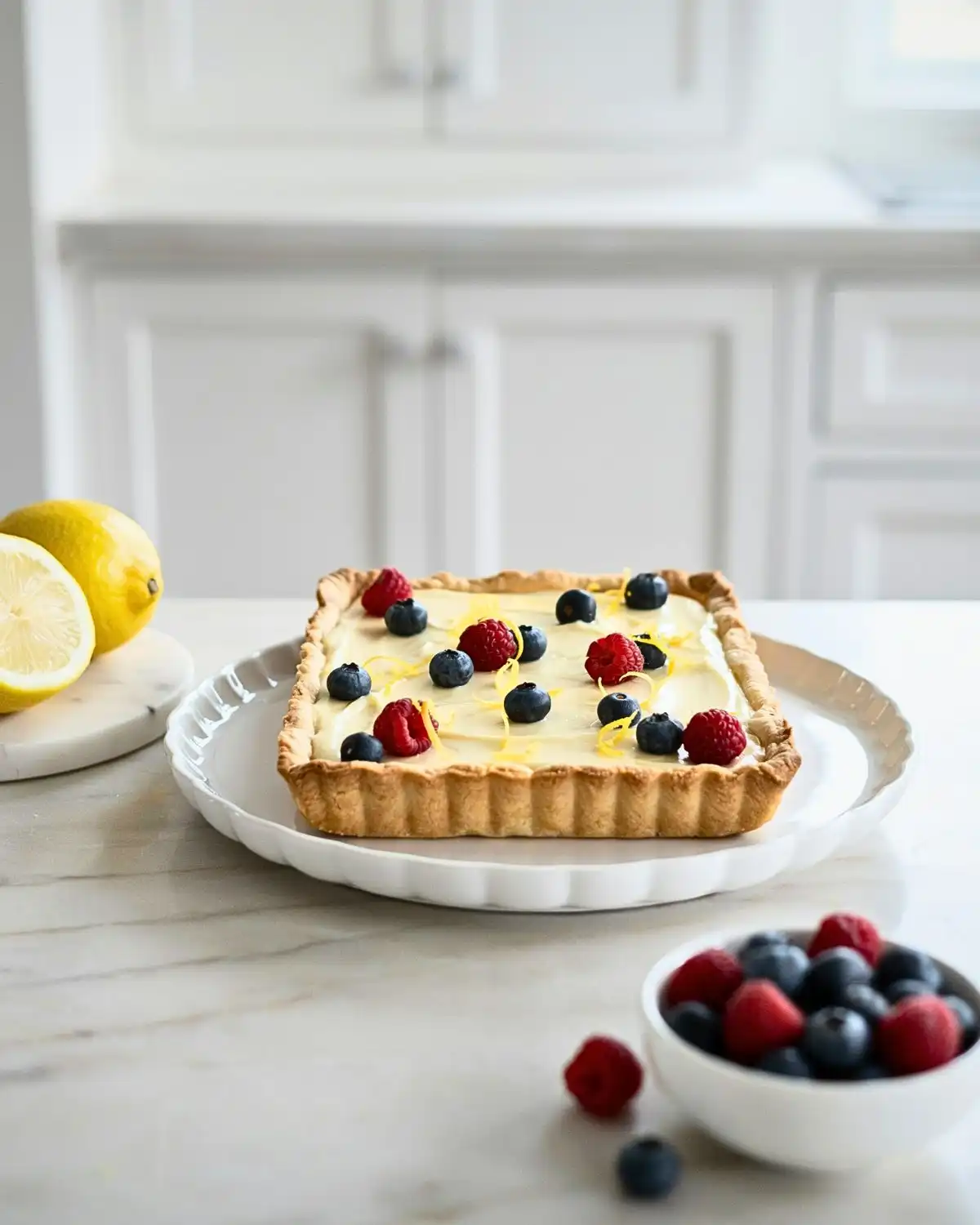
Use homemade lemon curd if you already have it, or a prepared version for a faster dessert.
Top with berries for color, but keep the lemon as the main flavor.
15. Chocolate Strawberry Puff Pastry Tart
Chocolate-covered strawberries are already a classic combination, and this pastry tart turns the same idea into something you can slice and share.
Rather than baking the strawberries beneath a thick chocolate layer, keep the chocolate restrained. A thin spread or drizzle gives you the flavor without making the puff pastry heavy.
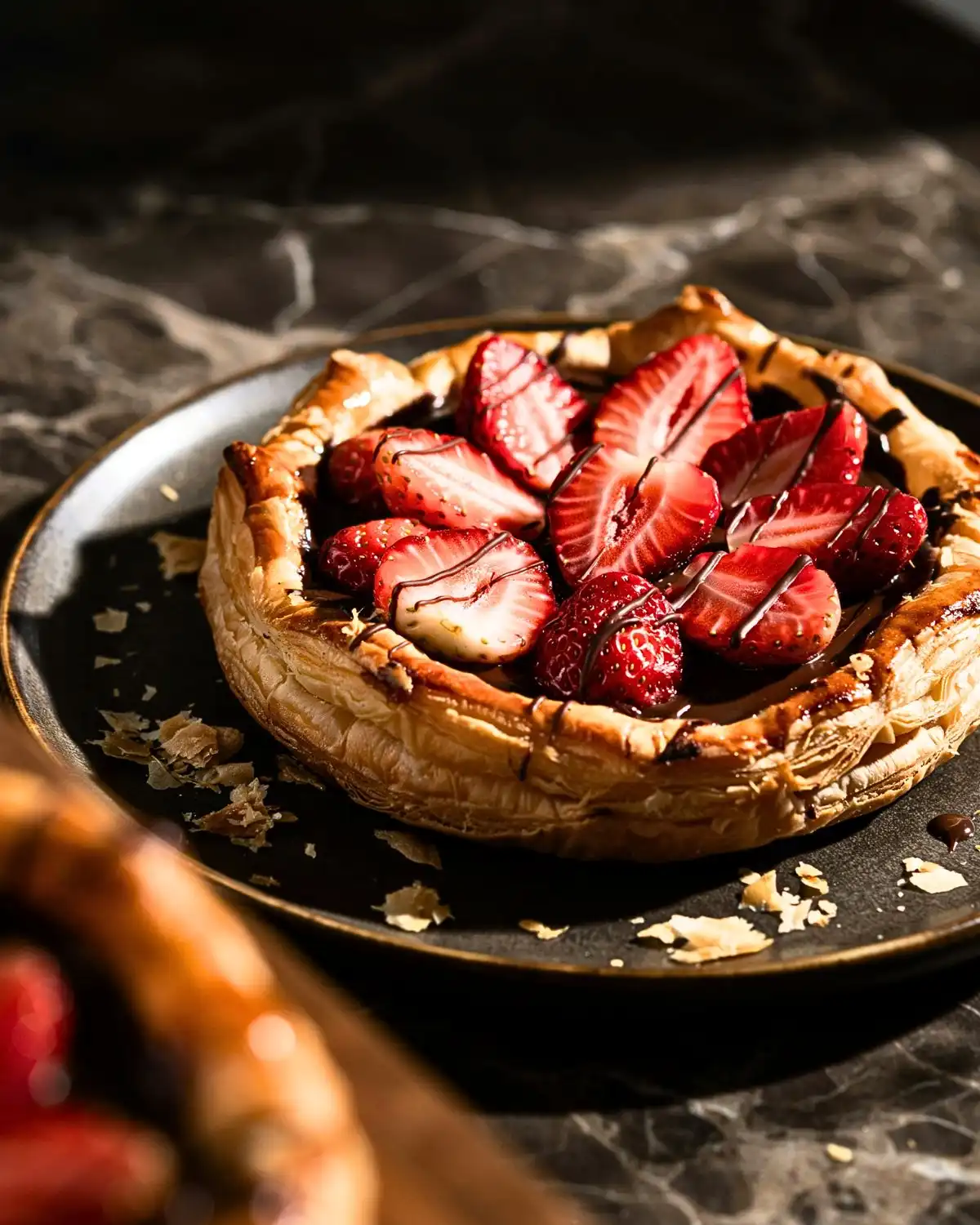
This is one I would make when I need an easy celebration dessert from ingredients I can buy almost anywhere.
For the cleanest look, add fresh strawberries after the baked chocolate pastry has cooled slightly.
16. Tomato Mozzarella Puff Pastry Tart
Tomatoes and mozzarella turn puff pastry into an easy savory lunch or appetizer. Compared with fruit versions, the main challenge is controlling moisture because both tomatoes and fresh mozzarella can release liquid.
Slice the tomatoes, blot them well, and avoid overcrowding the center. You want enough open pastry for steam to escape.
Add basil after baking so it stays fragrant and green.
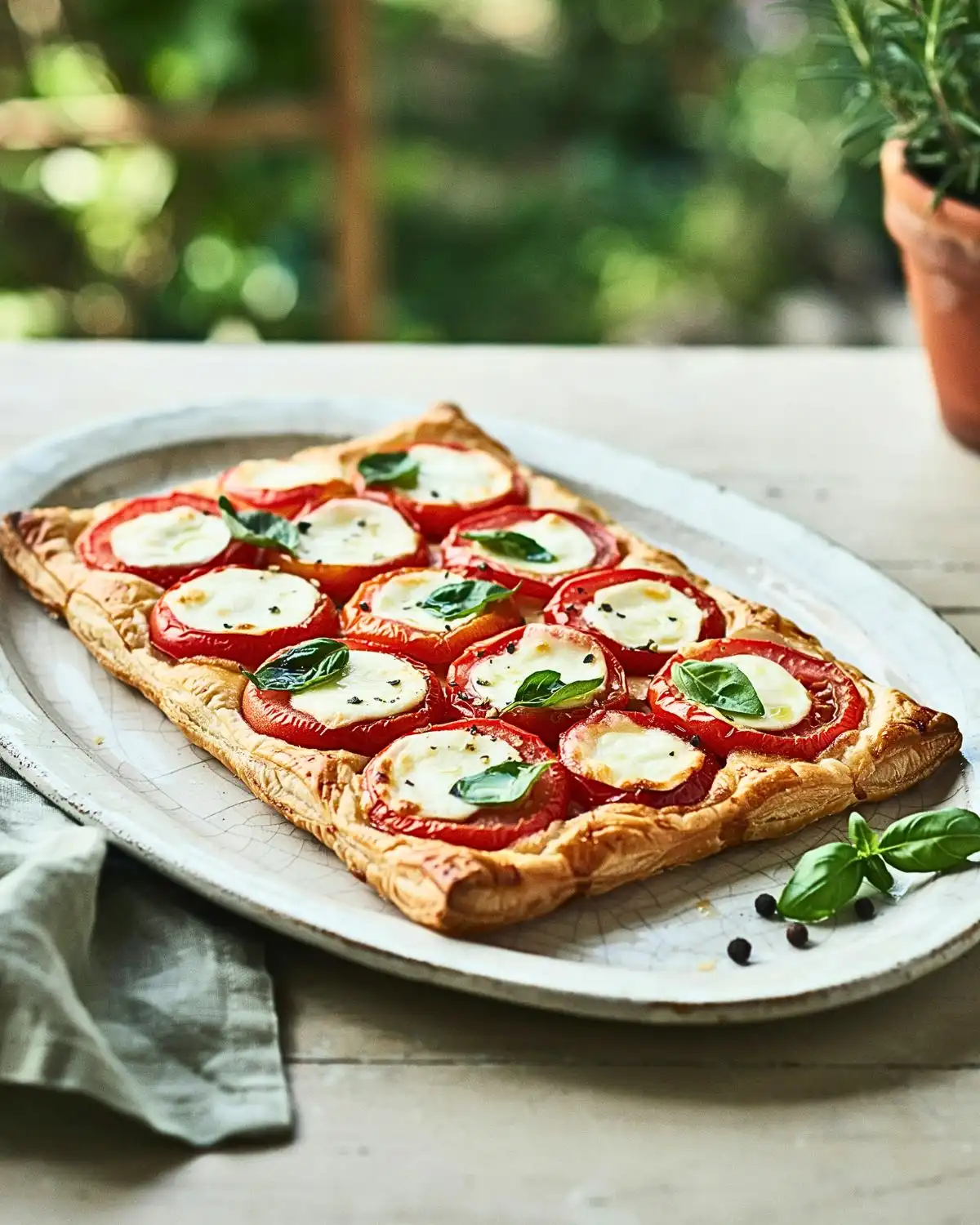
This pastry tart is particularly good during tomato season, when a few high-quality ingredients do most of the work.
17. Mushroom Gruyère Puff Pastry Tarts
Mushroom Gruyère Puff Pastry Tarts have a deeper, more savory flavor than most quick appetizers. Cooking the mushrooms before they reach the pastry concentrates their flavor and allows some of their moisture to evaporate.
That extra step is worth it. Raw mushrooms release considerable liquid while cooking, which can work against the crisp texture you want underneath.
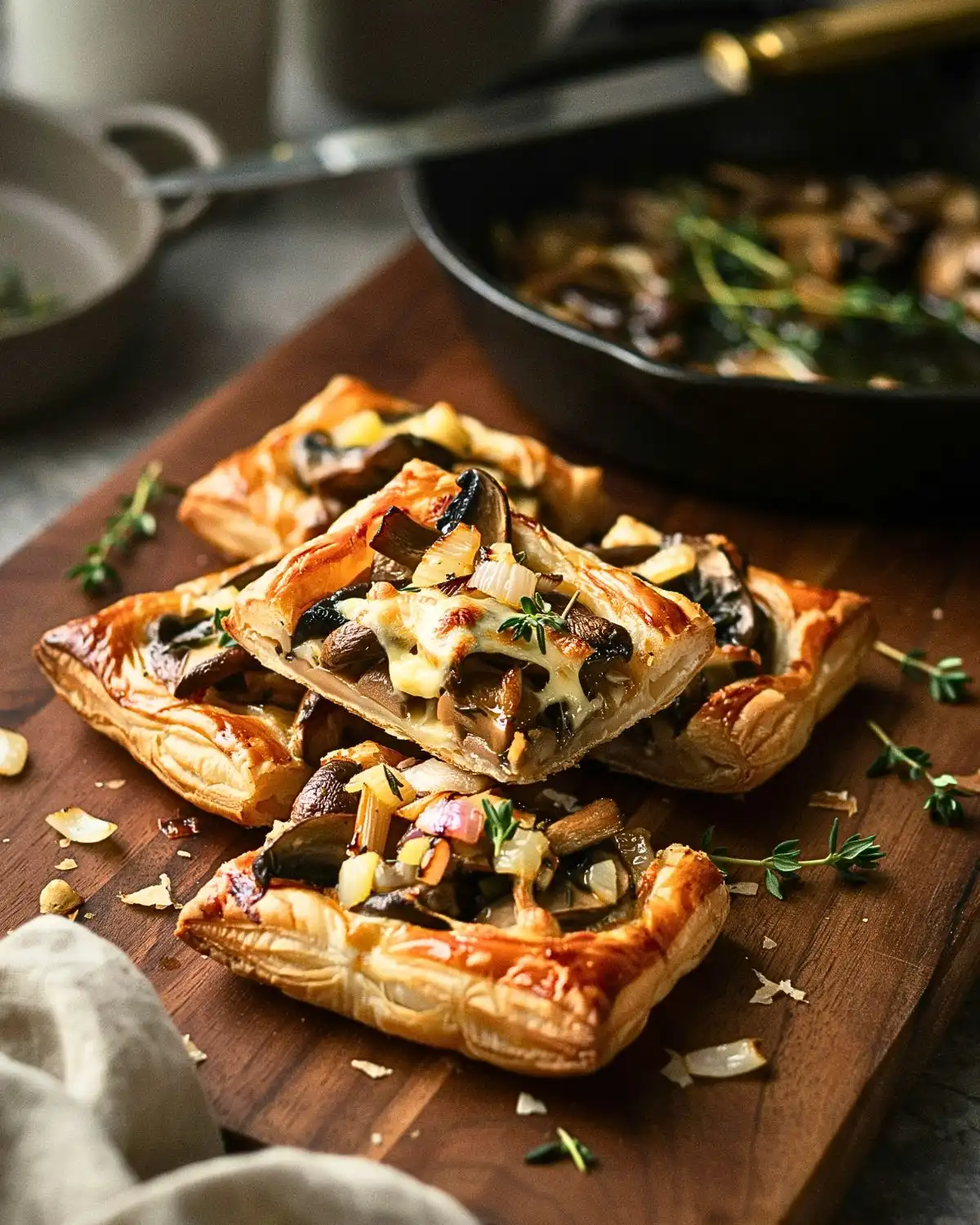
Sauté mushrooms with shallot, garlic, pepper, and thyme, cool them slightly, then spread them over pastry with grated Gruyère.
A similar pre-cooking approach is used in Sally’s mushroom puff pastry tarts, where the mushrooms and shallots are cooked before being added to the dough.
18. Caramelized Onion and Goat Cheese Pastry Tart
Caramelized onions turn sweet and deeply savory when cooked slowly, making them an excellent match for tangy goat cheese.
This pastry tart takes longer than a simple fruit version because the onions need time, but almost all of that work happens in one pan. Once the topping is ready, assembly is easy.
I like cutting this one into small squares for parties rather than
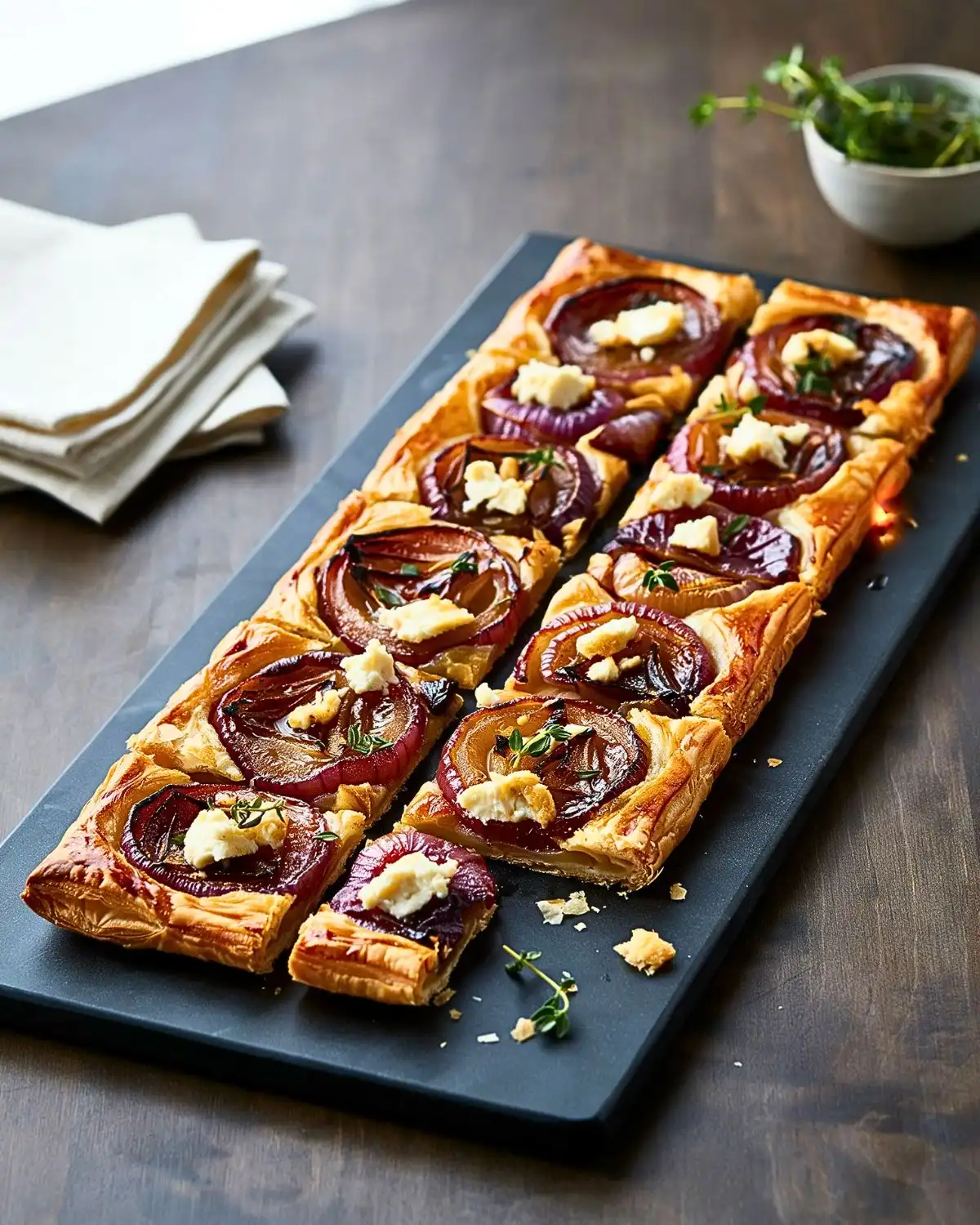
serving it as a large main dish, especially when building a spread of picnic food ideas or easy appetizers.
Add thyme or rosemary sparingly. The onions and cheese already provide plenty of flavor.
19. Spinach Feta Puff Pastry Tart
Spinach and feta bring familiar Mediterranean-inspired flavors to a crisp pastry base. The salty cheese means you usually need less extra seasoning than you might expect.
The main trick is squeezing cooked spinach very well. Excess water is the enemy of a crisp puff pastry tart.
Mix the spinach with feta, black pepper, and a little garlic before spreading it over the center.
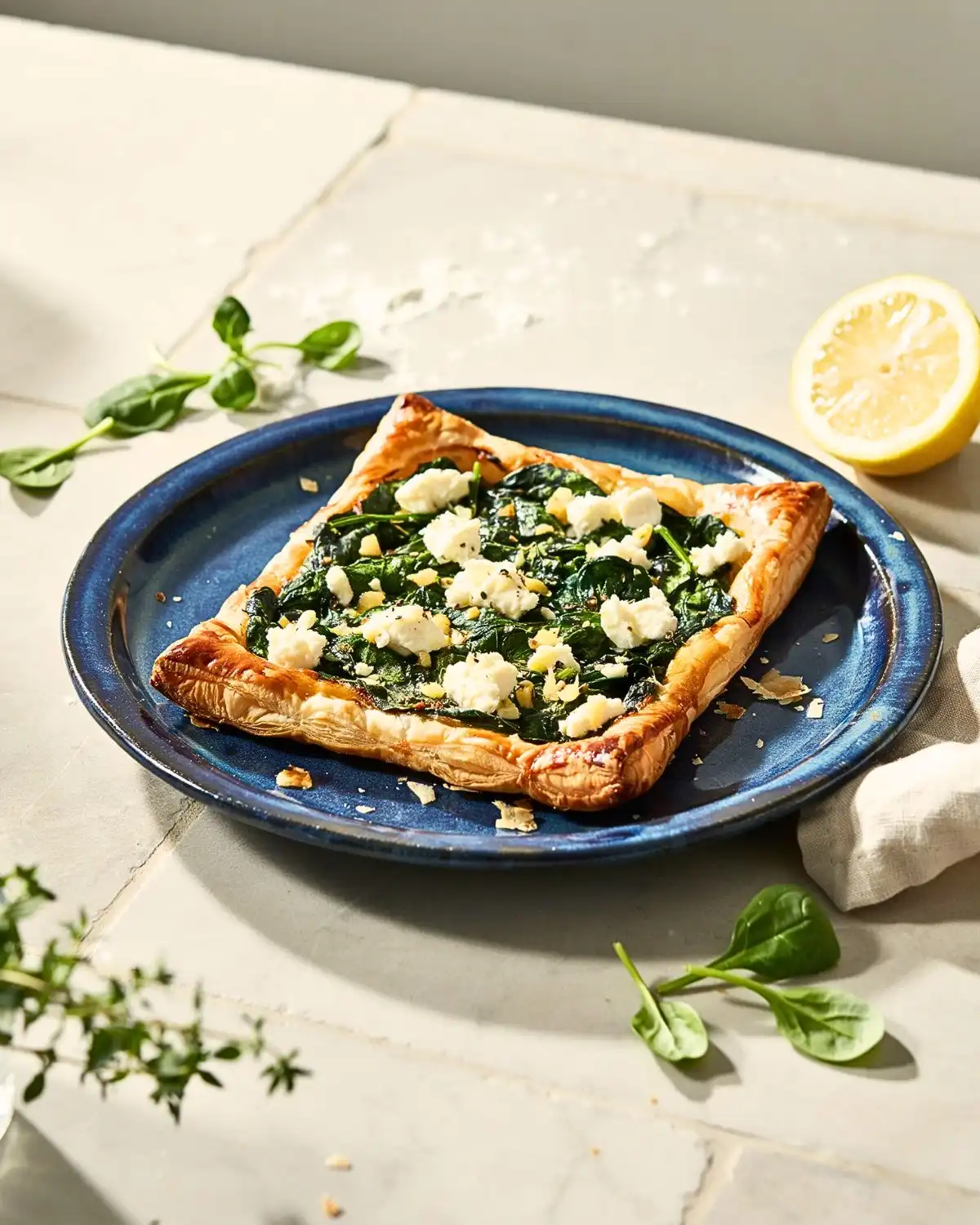
This is a good brunch option when you want something savory that still feels lighter than a breakfast casserole.
20. Pesto Vegetable Puff Pastry Tart
Pesto is basically a shortcut flavor base for a vegetable pastry tart. One thin layer can add herbs, garlic, richness, and seasoning before you even start arranging vegetables.
Zucchini, bell pepper, cherry tomatoes, and asparagus can all work, but avoid stacking too many vegetables on top of one another.
I use this idea when the refrigerator has
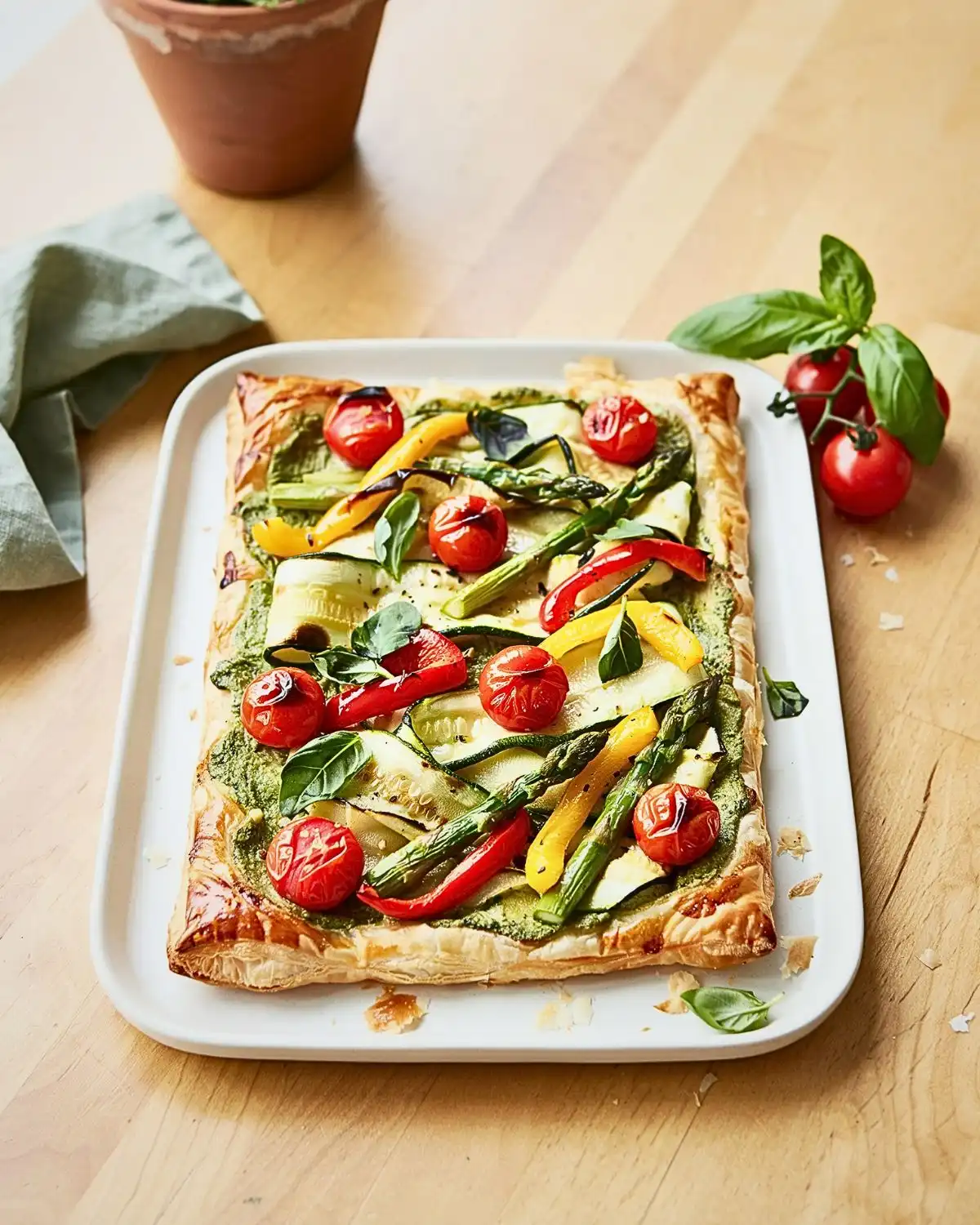
several vegetables that need to be used but not enough of any one vegetable to build a full meal around, making it an easy fit with other summer food ideas.
Bake until the pastry edges are crisp and the vegetables are tender, then add fresh herbs at the end.
21. Asparagus Parmesan Puff Pastry Tart
Asparagus naturally lends itself to rectangular pastry because the spears can be arranged in neat rows with almost no effort.
Parmesan adds enough saltiness and savory depth that you do not need a complicated sauce underneath. That simplicity is what makes this tart particularly useful for spring.
Trim the asparagus so the pieces fit the
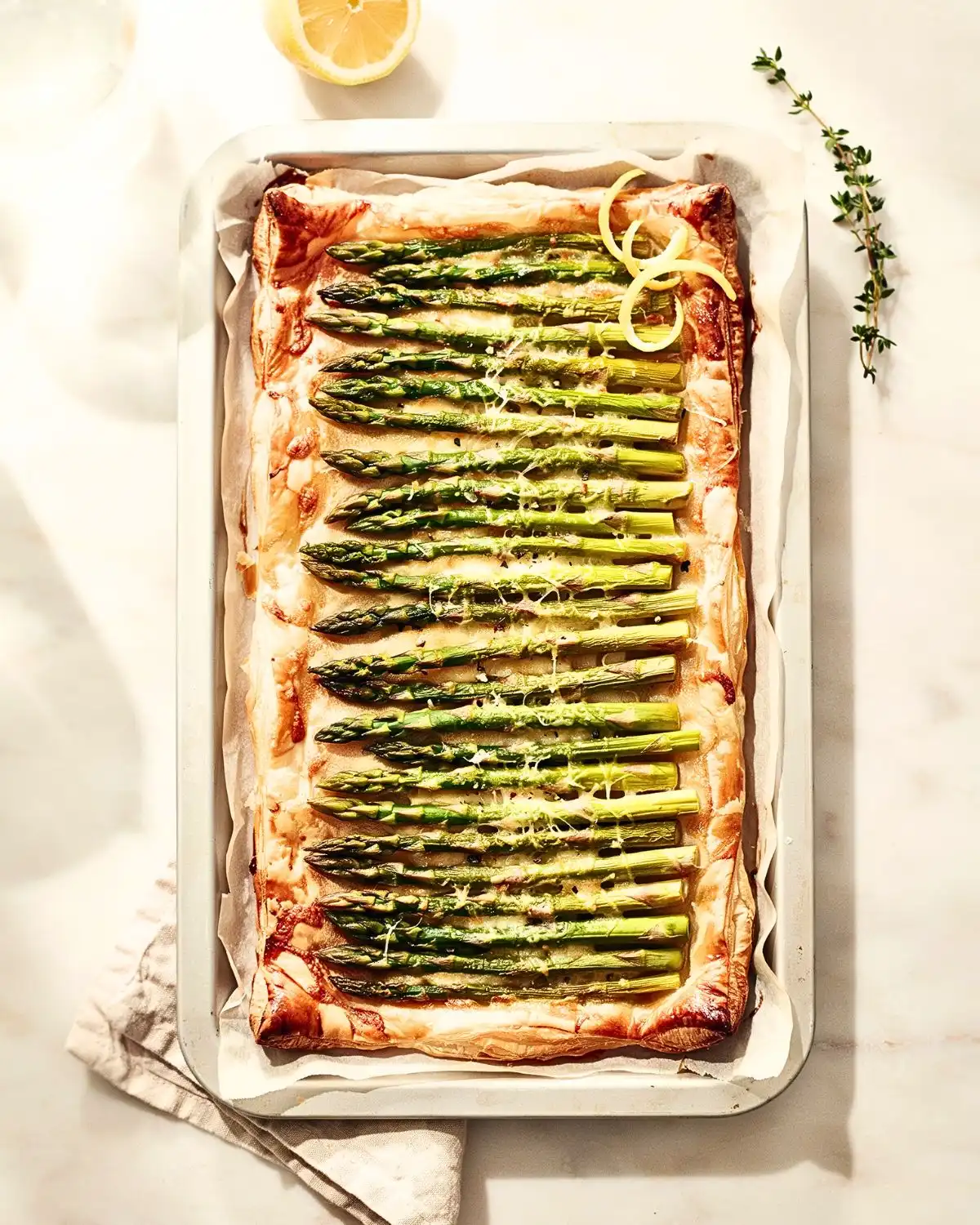
pastry neatly, toss lightly with oil and pepper, and arrange them over a small amount of cheese.
Thin spears are ideal because they can become tender during the same time the pastry needs to brown.
22. Roasted Red Pepper Ricotta Tart
Roasted red peppers have a naturally sweet, concentrated flavor, while ricotta keeps the tart creamy without being too sharp.
This combination works particularly well when you want a meat-free appetizer that still feels substantial. Prepared roasted peppers also make it one of the easier savory options on this list.
Drain the peppers thoroughly before slicing them.
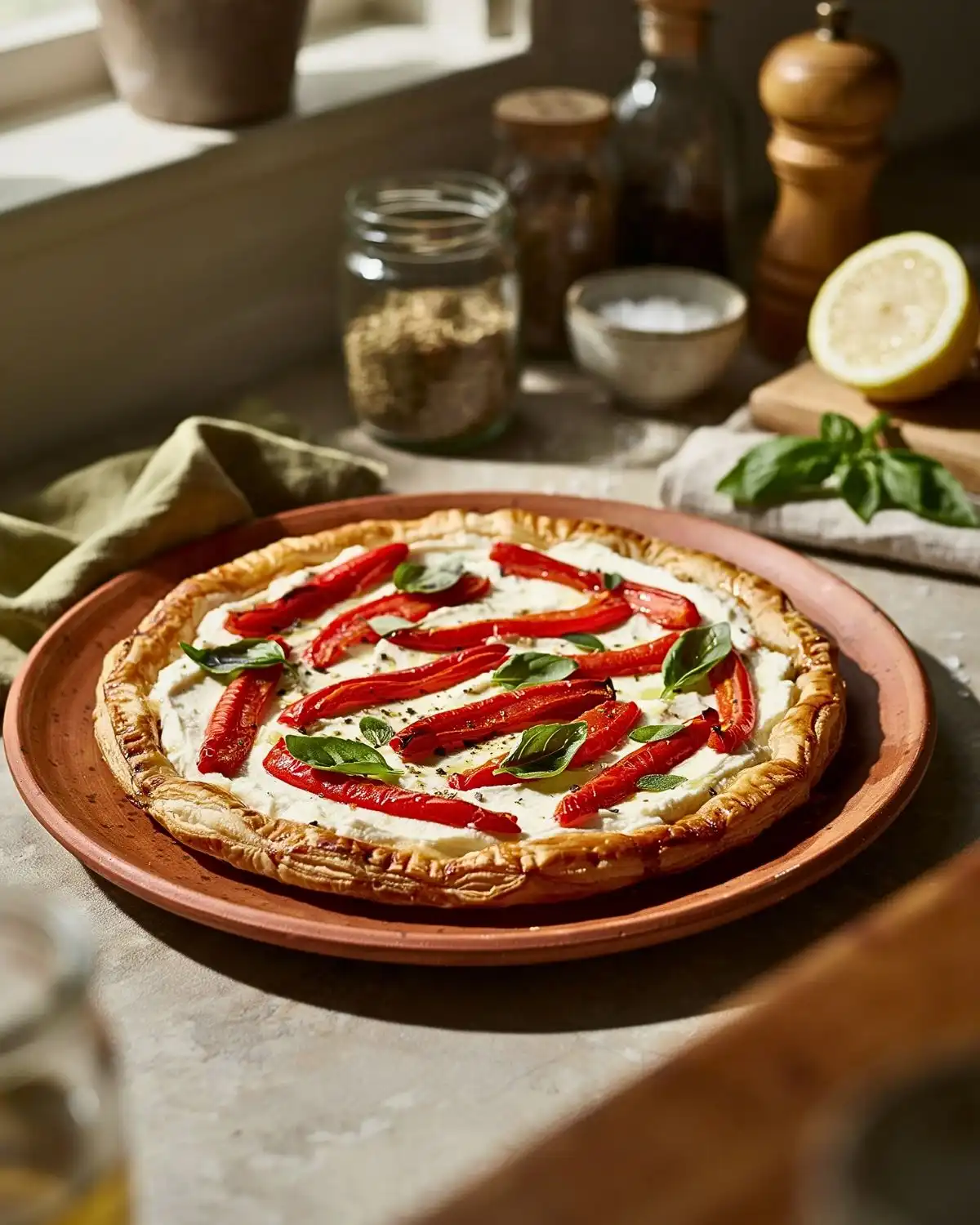
Moisture trapped in the jar should not end up soaking into the pastry.
Spread a thin ricotta layer inside the border, add pepper strips, and finish with herbs after baking.
23. Zucchini Parmesan Puff Pastry Tart
Zucchini may seem like a difficult pastry topping because it contains so much water, but thin slices solve much of the problem.
Salt the slices lightly, let them rest briefly, then blot away the surface moisture before arranging them over the pastry. This gives you a noticeably crisper result than placing thick raw zucchini directly on the dough.
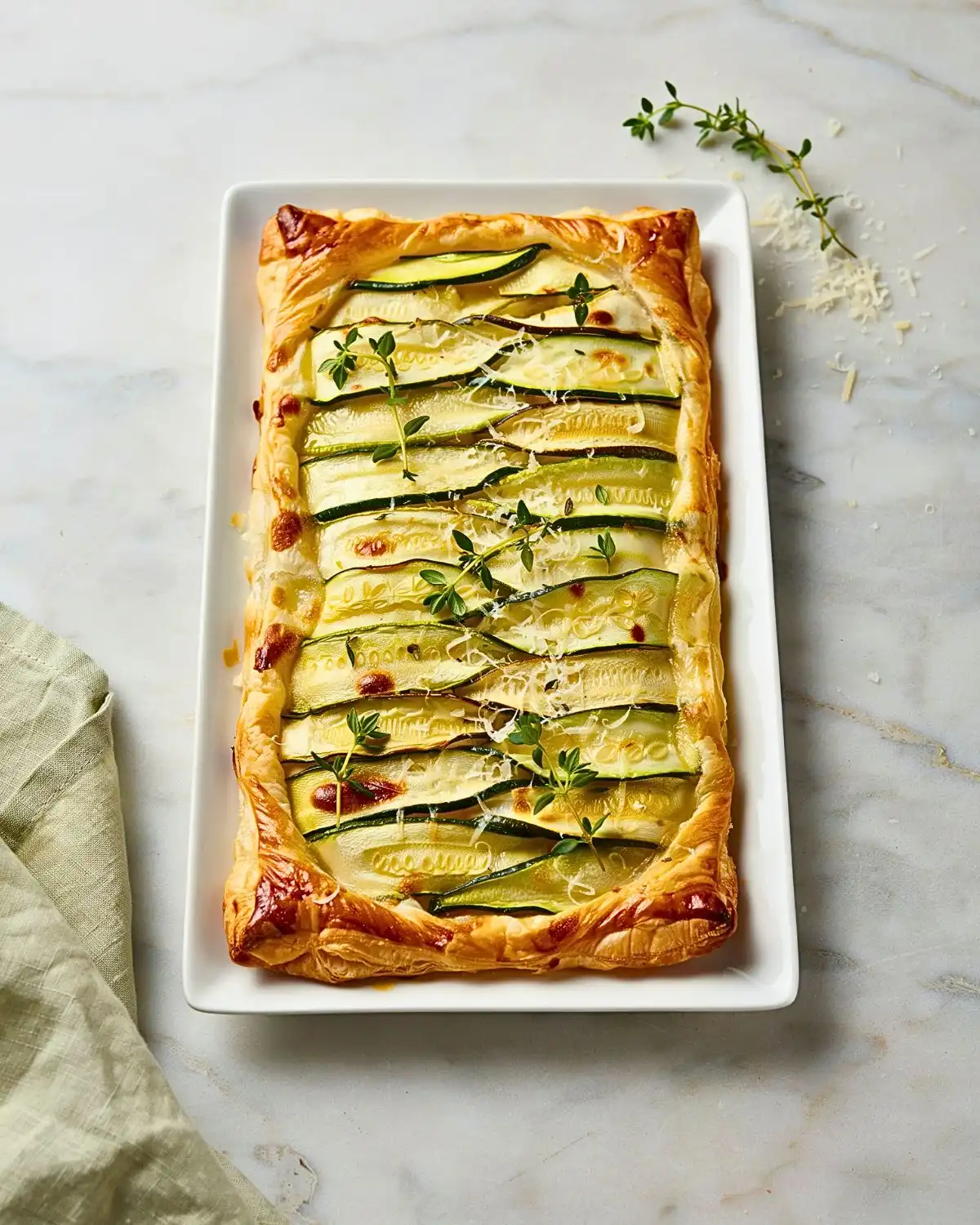
Parmesan contributes plenty of savory flavor while keeping the filling relatively light.
For an attractive finish, overlap the zucchini in long diagonal rows.
24. Brie Cranberry Puff Pastry Tart
Brie and cranberry deliver the sweet-savory flavor people usually associate with holiday appetizers, but a pastry tart makes the combination easier to portion.
The creamy cheese melts into the pastry while cranberry adds acidity and sweetness. You only need a little of each because both flavors are strong.
This is especially useful around Thanksgiving and
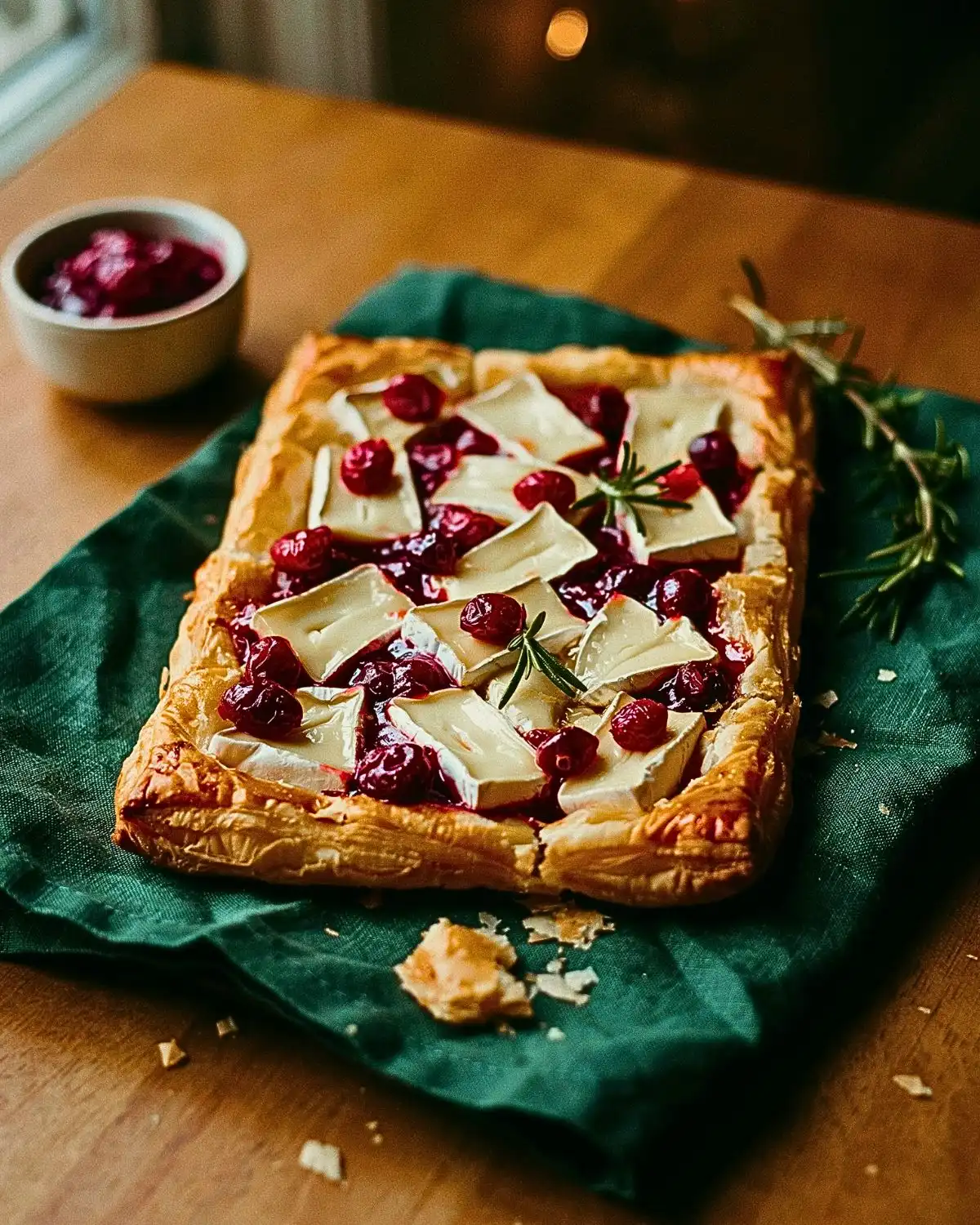
Christmas when you may already have cranberry sauce in the refrigerator.
Cut the baked tart into small rectangles and serve warm rather than trying to turn it into a large entrée.
25. Pear Brie and Honey Puff Pastry Tart
Pear, Brie, and honey make a simple final tart that can move easily between appetizer and dessert.
The pear provides fresh sweetness, the Brie adds richness, and honey connects the two without requiring a separate sauce. Compared with a heavily topped pastry, this one feels elegant precisely because there is so little going on.
Arrange thin pear slices over small pieces of Brie and keep a visible pastry border around the outside.
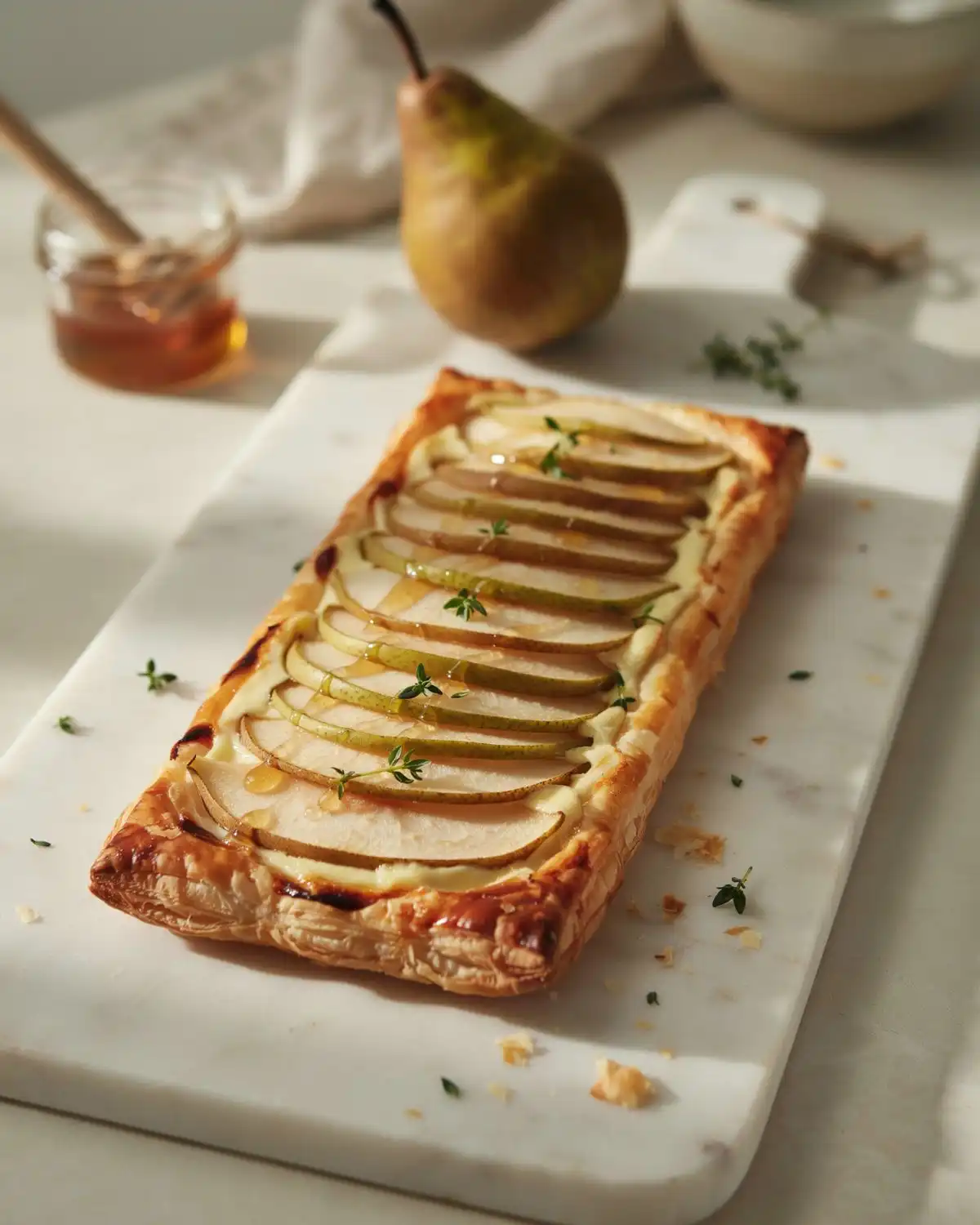
After baking, finish with a modest honey drizzle and, if you like, a few thyme leaves.
What Fruit Works Best for Puff Pastry Fruit Tarts?
Apples, pears, berries, peaches, plums, apricots, cherries, and figs all work well when excess moisture is controlled.
At a Glance
- Choose fruit that keeps some structure.
- Slice large fruit thinly.
- Dry freshly washed fruit before assembly.
- Use juicy fruit in moderate amounts.
- Keep fresh-cut fruit properly refrigerated.
The best fruit puff pastry options are fruits that maintain some structure during baking and do not immediately flood the pastry with juice.
Good choices include
- Apples
- Pears
- Strawberries
- Blueberries
- Blackberries
- Raspberries
- Peaches
- Plums
- Apricots
- Cherries
- Figs
Very juicy fruit can still work, but use smaller quantities and remove excess surface moisture. A pastry fruit tart is usually easier to keep crisp when the fruit layer remains relatively thin.
FDA guidance notes that cutting fresh fruits changes them from intact produce into fresh-cut produce requiring careful hygienic handling and appropriate refrigeration. Wash intact fruit appropriately before cutting, work with clean hands and utensils, and keep cut fruit properly chilled.
Should You Thaw Puff Pastry Before Making a Pastry Tart?
Yes, frozen puff pastry generally needs to thaw until flexible enough to unfold while remaining cold.
At a Glance
- Follow your pastry package instructions.
- Thaw until flexible, not warm.
- Keep dough chilled during preparation.
- Return soft pastry briefly to the refrigerator.
Usually, yes. Frozen puff pastry needs to become flexible enough to unfold or roll without cracking, although you should always follow the directions on your specific package.
The goal is thawed but still cold pastry—not pastry that has become warm and soft.
USDA food-safety guidance recommends refrigerator thawing as the safest general approach for perishable frozen foods because the food remains at 40°F (about 4°C) or below while thawing.
For pastry quality, cold dough is also easier to handle cleanly than very warm dough.
What Temperature Should You Bake Puff Pastry Tarts?
Puff pastry generally performs best in a hot oven, but the exact baking temperature should follow your pastry package or chosen recipe.
At a Glance
- Preheat the oven fully.
- Follow brand-specific baking directions.
- Look for visibly puffed layers.
- Check for a golden underside.
- Avoid judging doneness from the top alone.
Puff pastry is normally baked in a hot oven, but the exact temperature and time should follow the instructions for the pastry brand you are using and the filling on your tart.
For context, Sally’s mushroom tart recipe bakes its puff pastry at 400°F (204°C) until golden, illustrating the relatively high heat commonly used for this type of pastry.
Whatever recipe you use, look for well-puffed layers and a genuinely golden underside rather than judging only by the top.
How Do You Stop a Puff Pastry Tart From Getting Soggy?
Reduce moisture before assembly by drying fruit, pre-cooking watery vegetables, limiting sauces, and keeping the pastry cold.
At a Glance
- Blot wet ingredients.
- Pre-cook moisture-heavy vegetables.
- Cool cooked toppings before assembly.
- Use sauces sparingly.
- Keep borders free for better rise.
Start with cold pastry and relatively dry toppings.
Then remember these four rules:
- Blot juicy fruit and vegetables.
- Pre-cook especially watery savory fillings such as mushrooms.
- Avoid excessive sauces or cheese.
- Leave a border so the pastry edges can rise freely.
If a topping is already cooked, let it cool before placing it on cold pastry. Adding a steaming-hot filling can soften the dough before it reaches the oven.
These same steps are useful whether you are making a savory pastry tart or a sweet puff pastry fruit dessert.
Can You Make Puff Pastry Tarts Ahead of Time?
Yes, many toppings can be prepared in advance, but raw assembled tarts are usually best kept separate until close to baking.
At a Glance
- Prepare fillings ahead when convenient.
- Refrigerate perishable ingredients promptly.
- Assemble close to baking when possible.
- Keep dairy and cut fruit chilled.
- Follow basic food-safety time limits.
Some components can be prepared ahead, but fully assembled raw tarts are often best made close to baking so the filling does not sit on the pastry long enough to soften it.
You can prepare cooked mushroom mixtures, caramelized onions, washed fruit, or cream cheese mixtures in advance and refrigerate them separately.
Once dairy-filled or fresh-fruit tarts are prepared, pay attention to refrigeration. USDA recommends maintaining refrigerators at 40°F (4°C) or below.
USDA also advises refrigerating perishable foods within 2 hours, or within 1 hour when the surrounding temperature is above 90°F (32°C).
How Should You Store Leftover Puff Pastry Tarts?
Refrigerate tarts with perishable toppings promptly and reheat savory versions in an oven or toaster oven when you want to restore some crispness.
At a Glance
- Refrigerate dairy-filled tarts.
- Chill tarts containing fresh-cut fruit.
- Avoid extended room-temperature storage.
- Reheat with dry oven heat when practical.
- Expect refrigerated pastry to soften slightly.
Storage depends on the topping.
Tarts containing cream cheese, soft cheese, fresh-cut fruit, cooked vegetables, or other perishable toppings should be refrigerated promptly rather than sitting on the counter for extended periods.
Keep the refrigerator at 40°F (4°C) or below. USDA notes that foods held above 40°F for more than two hours can become unsafe even when they still look normal.
For texture, puff pastry is usually best close to the day it is baked. Refrigeration can soften the layers, so savory tarts may benefit from reheating in an oven or toaster oven rather than a microwave.
FAQ About Puff Pastry Tarts
Can I use store-bought puff pastry for tarts?
Yes. Store-bought puff pastry is an excellent shortcut for both sweet and savory pastry tart recipes. Keep it cold and follow the package instructions for thawing and baking.
Do I need to blind bake puff pastry for a tart?
Not always. Many toppings can bake directly on the pastry. Very wet or no-bake fillings may work better when the pastry shell is baked separately first.
Why didn’t my puff pastry rise?
Warm dough, compressed edges, excessive filling, or an oven that is not hot enough can all reduce the rise. Keep the pastry cold and avoid pressing down on the border.
Can I make fruit puff pastry with frozen fruit?
Yes, but frozen fruit can release considerably more liquid as it thaws. Use it carefully, drain excess moisture when appropriate, and avoid overcrowding the pastry. This is especially important when a fruit puff pastry recipe relies on a crisp base.
Are Puff Pastry Tarts served warm or cold?
Both work. Savory tarts are usually excellent warm or at room temperature, while cream-filled pastry fruit tarts can be especially good chilled.
Final Thoughts
Puff Pastry Tarts prove that an impressive-looking bake does not have to involve complicated pastry work.
Start with a cold sheet of puff pastry, choose one strong flavor combination, and keep the topping reasonably light. Strawberry cream cheese, blueberry lemon, apple cinnamon, mushroom Gruyère, tomato mozzarella, and pear Brie are all very different, yet the same basic technique works across the entire list.
For Fit Spire Life, these recipes also make a useful foundation for seasonal collections. You can build separate guides around summer fruit puff pastry ideas, holiday savory pastry tart recipes, brunch tarts, or quick desserts using one simple ingredient as the starting point.
The best part is the flexibility. Once you understand how to control moisture and keep the pastry cold, the next puff pastry tart can be whatever is already waiting in your refrigerator.

Leave a Reply