
I used to think getting fit required intense workouts, long runs, or hours in the gym. But for many beginners, that quickly becomes overwhelming. The gym feels intimidating, hard workouts leave you sore, and staying consistent becomes difficult.
That’s why many people are turning to rucking-a simple workout where you walk with weight in a backpack.
But how do beginners start rucking safely? To start rucking,
- Choose a rucksack
- Begin with a light weight (5–10% of your body weight)
- Walk on flat terrain
- Keep a steady pace for 20–30 minutes
- Maintain good posture
- Wear supportive shoes, and
- Always warm up and cool down.
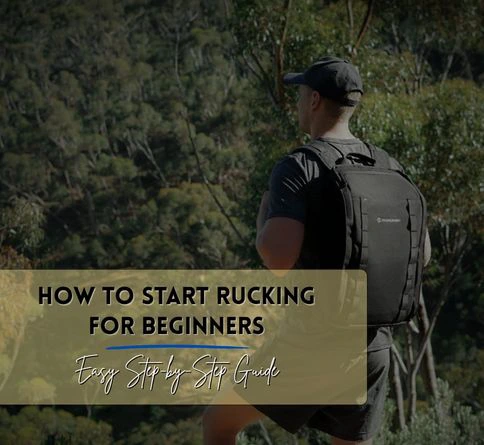
In this guide, you’ll learn exactly how to start rucking for beginners step by step, including the right weight, posture, and training routine to build strength safely.
Key Takeaways
- Begin rucking at 5-10 percent of bodyweight to guarantee a safe rucking weight.
- Start on a flat surface. Walk at an even pace.
- The sessions don’t exceed 20-30 minutes (2-3 times per week).
- Gradually add weight, distance, and duration progressively. It prevents injury and promotes consistent improvement.
In This Post……
- Understanding Rucking
- How Does Rucking Work?
- How To Start Rucking For Beginners?
- Managing Safety and Recovery
- Sample Basic Training (Weeks one through four)
- General Newbie Mistakes to Avoid
- Transition between the Beginner and Intermediate
- Who Should Avoid Rucking?
- Frequently Asked Questions (FAQs)
- Final Thoughts
Understanding Rucking
Rucking is an easy technique of exercising. It involves walking with a weight in a backpack. You do not jog or work out in a gym. Rather, you walk with a heavy rucksack.
But, is rucking bad for your back? The answer is no. Instead, this kind of load-carrying exercises your muscles, but the movement is quite natural and low-impact.
A strength trainer, Dr. Stuart McGill, explains that, when loading the walking, it is vital to have spine hygiene and load management.
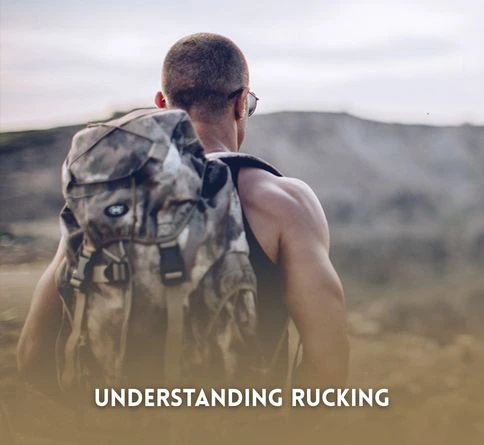
This activity has gained popularity with training programs of the military style and outdoor groups, but it is currently utilized as a highly accessible fitness program. Backpack rucking is also popular with many people due to the fact that it does not need many equipments and is easily fitted into our daily lives.
How Does Rucking Work?
You might ask, but what is beginner rucking?
The principle is simple:
- You put a moderate weight in the pack.
- It exerts more effort on the body than walking.
- The muscles get involved to maintain posture and balance.
- With time, endurance increases with the progression of load.
With safe rucking weight and the loss of comfort and introduction of resistance, you engage your legs, core, and back on a deeper level. The trick is being aligned with the posture, having a straight back, and focusing the main attention on the core involvement in the movement.
How To Start Rucking For Beginners?
Nowadays, the most common question is how to start rucking for beginners. When beginning with rucking, it is good to use a durable rucksack.
- Place a light load (5-10% of your bodyweight).
- Go over flat terrain at a slow pace of 20-30 minutes.
- Develop appropriate posture.
- Use supportive shoes, and train 2-3 times a week.
- Add weight and distance gradually to remain safe and do not get injured.
Follow these step carefully if you are totally new in rucking-
1. Choose the Right Rucksack
Select an effective backpack that has padded shoulder straps that are padded. Proper pack fit is essential. Properly adjust the straps by adjusting the backpack in order to have the bag placed high on your back. Strain is avoided by good distribution of weight.
Heavy objects should be placed near the upper back region to have optimal load distribution.

2. Choose a Rucking Weight Safe to Start
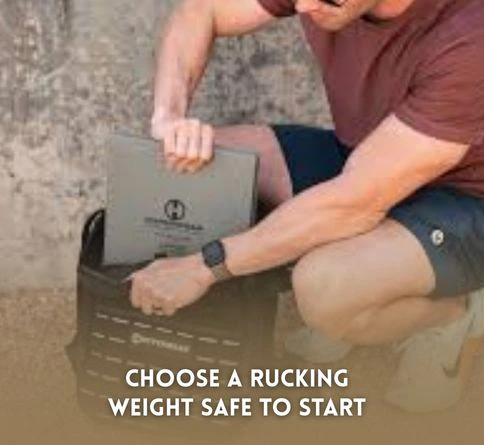
Start light. A general guideline on the weight you should start with on a ruck is 5-10 percent of your bodyweight. This is to guarantee a safe weight in rucking without straining your joints.
Do not spring into heavy loads. Gradual progression of loads is always to be used for sustainable calorie burn.
3. Start on Flat Terrain
In the early stages of your sessions, use flat terrain. Urban rucking is best done on sidewalks. Parks and tracks are also good options.
After feeling comfortable, you may proceed with trail rucking or walking on a light incline.
Be simple at the beginning.

4. Control Walking Pace, Distance, and Duration
Do not rush.
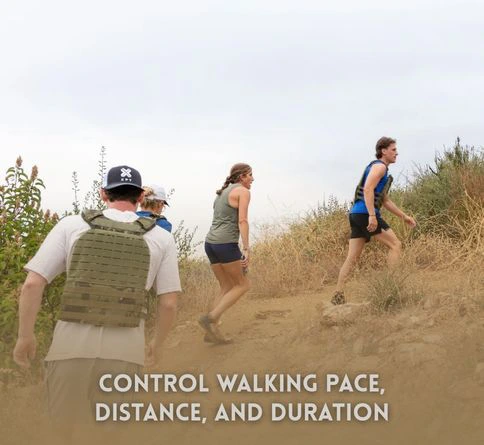
- Start with 1–2 miles.
- Keep a steady walking pace.
- Reduce it to 20 or 30 minutes.
In terms of training frequency, seek to have 2-3 sessions a week.
This will form a moderate training program to train a novice without overtraining.
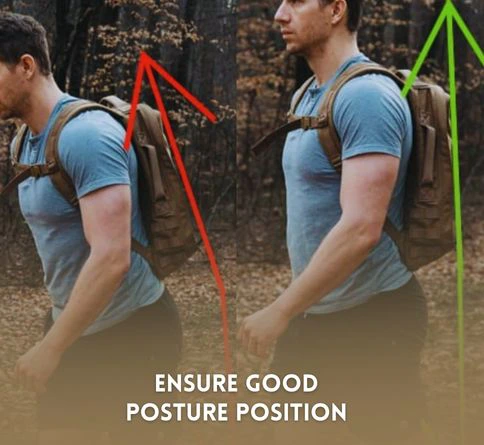
5. Ensure good Posture Position
Good form protects you.
- Hold your chest half raised.
- Maintain a neutral spine.
- Tighten your core to engage it better.
- Do not bend forward too much.
Correct posture helps to enhance the safety of the back. It also minimizes fatigue.
6. Wear Supportive Footwear
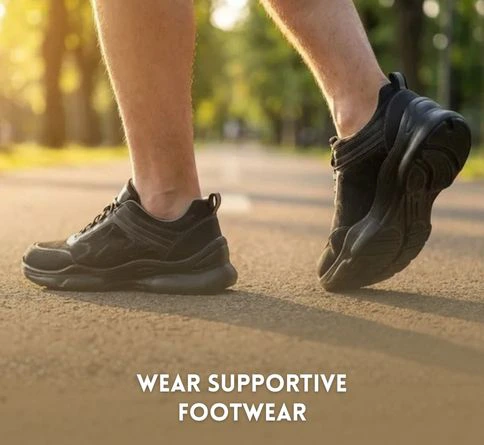
Footwear should never be overlooked. Always wear supportive shoes. Depending on the terrain, select good walking shoes or hiking shoes.
Proper shoes help with:
- Joint stress management
- Knee protection
- Overall comfort
7. Warm Up and Cool Down
Warm up with a light warm-up before beginning. Your body is prepared by simple body swings of the legs and rolling the shoulders.
Once completed, carry out a light cool down and ease with some basic stretching. This enhances faster healing and aids in preventing injury.

Managing Safety and Recovery
When properly done, Rucking is safe. Novices must, however, give priority to:
- Rest days between sessions
- Monitoring soreness
- Gradually increasing load
- Listening to the knee or back pain.
Professional management of stress on the joints will guarantee future development. In case of persistent pain, weight and range of motion should be decreased.
Sample Basic Training (Weeks one through four)
Week 1–2
- Light load (5–10% bodyweight)
- 20–30 minutes
- 2–3 sessions per week
- Flat terrain only
Week 3–4
- Slight increase in weight
- 30–40 minutes
- Add mild incline walking
- Maintain consistency
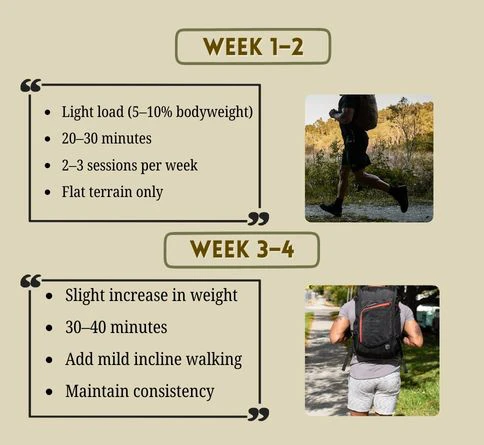
This gradual training routine develops stamina in a non-hazardous way.
General Newbie Mistakes to Avoid
Excessive weight at the beginning.
- Ignoring pack fit
- Skipping warm-up or cool-down
- Getting too far in too little time.
- Rucking without downtime.
Patience matters. Pay attention to continuity, rather than vigor.
Transition between the Beginner and Intermediate
Within 4-6 weeks of regular beginner rucking, you will be able to:
- Increase weight gradually
- Explore longer distances
- Try trail rucking
- Add moderate inclines
- Keep listening to your body. Go at a low pace to prevent harm.
Dr. Michael Joyner,
A performance expert, claims that progressive overload is best when done in small steps and regularly.
Who Should Avoid Rucking?
Rucking is not an advanced sport, though it is not everyone-friendly. Some individuals must not do it or begin with medical advice.
- People who have knee or joint injury – Additional weight may add to joint pressures and exacerbate already existing knee, hip, or ankle problems.
- Recovery after recent surgery or injury – rucking should be avoided until the victim is fully recovered and cleared by a doctor.
- Individuals with balance or mobility impairments – Walking with weight can be another cause of falls.
- Novices with sharp pain or numbness – Stop and decrease weight or time.
- People who have a heart condition or a cardiovascular disorder should not embark on a new workout plan. They should seek medical advice first.
In case of sudden pain, numbness, headache, or continued pain during rucking, discontinue it and consult a professional. It is necessary to avoid injury by starting slowly and with a safe rucking weight.
Frequently Asked Questions (FAQs)
What is the recommended frequency of beginner rucking?
Novices are supposed to run 2-3 times a week. Have at least one day off between sessions. This aids in the recovery of your muscles. It also helps to maintain a gradual movement. Most importantly, it reduces the risk of injuries.
What should be the weight of the backpack?
Use 5–10% of your bodyweight. It is a safe initial weight. A light load is protective of your knees and back. Gradually build up weight as the strength increases.
On trails or roads, is rucking better?
Begin on a level road or a sidewalk. They are less challenging and less dangerous. First put attention to posture and slow pace. Then do trail rucking or rolling hills.
Final Thoughts
It is very easy to learn how to start rucking for beginners. The above guide provides you with the correct approach. Choose a proper rucksack. Start with a light load. Maintain posture alignment. Wear supportive shoes. Increase weight gradually.
No gym is needed to do the rucking. It takes a sense of discipline and patience. Stay consistent. Focus on safe progression. And by degrees prepare your strength.

Leave a Reply